
Grey hair no longer leads as many people to book a full all-over dye appointment every month. In salons, the conversation has shifted, with gray blending becoming popular for its ability to create a soft transition between the roots, lengths, highlights and reflected tones. Rather than producing a uniform block of colour, the finish grows out more gracefully.
Why is gray blending so popular in salons?
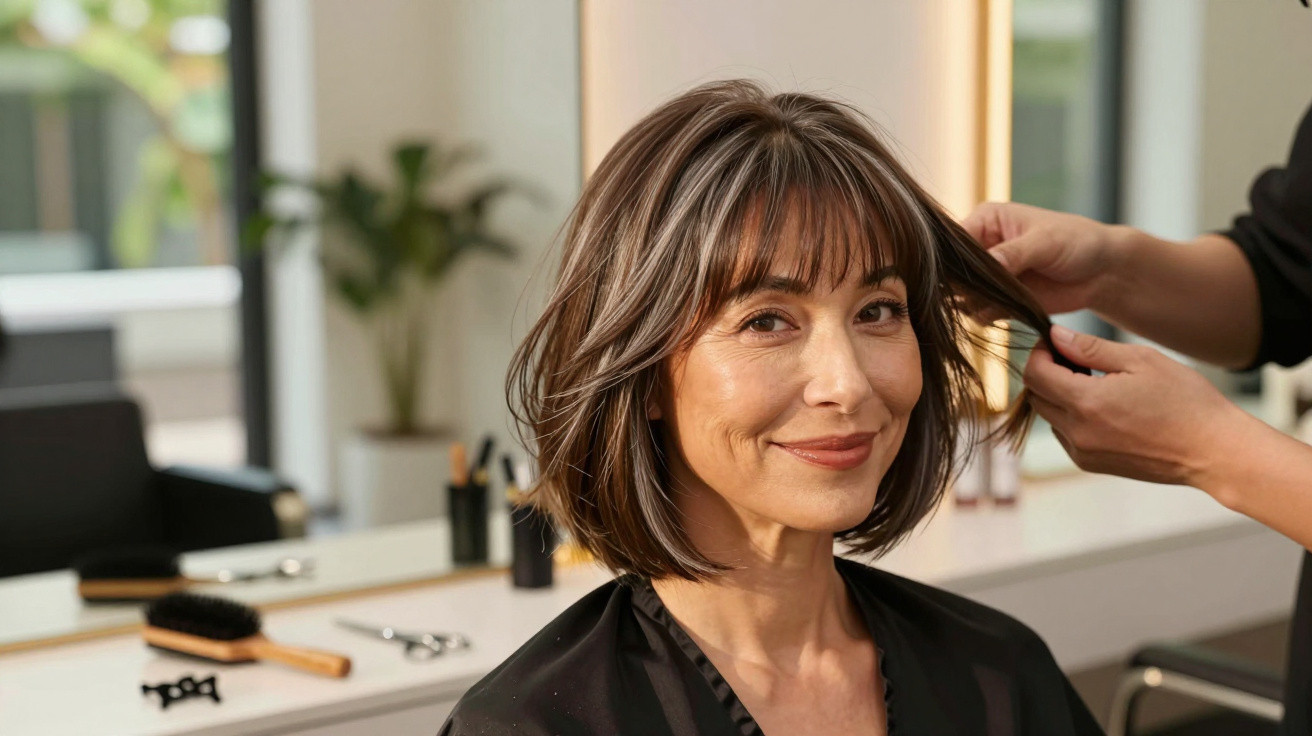
Gray blending is a colouring technique that combines cool shades, delicate highlights and areas of depth to blend grey strands into the rest of the hair. Instead of applying opaque coverage across the whole head, the colourist uses contrast, tonal variation and carefully placed sections to make root regrowth less noticeable.
This has practical implications for upkeep. As the contrast between natural regrowth and coloured lengths is softer, touch-up appointments can generally be scheduled further apart. For people whose grey hair is concentrated around the hairline or crown, this approach often creates a lighter-looking result that works naturally with the hair’s texture.
How does it differ from traditional hair dye?
Permanent dye is intended to provide full coverage through an even deposit of pigment. Gray blending, on the other hand, embraces tonal variation and incorporates grey strands into the overall look. It changes both the appearance and the salon routine, as roots do not reveal the need for a touch-up as quickly.
Before deciding, it is useful to consider the clear differences between the two methods:
- with full coverage, regrowth creates a more visible line at the roots
- with gray blending, highlights break up the divide between grey hair and the base colour
- all-over dye requires more frequent reapplication
- the blended effect usually suits layered cuts and movement particularly well
Can people with lots of grey hair choose this natural-looking effect?
Yes, although the technical plan makes all the difference. Where hair already has a high percentage of grey, the professional assesses the natural base, strand thickness, porosity and distribution of grey hairs before choosing highlights, lowlights, toning or gloss. The aim is not to conceal every grey strand, but to create a colour map that makes the transition look elegant.
Hair that is curly, wavy or straight reflects light differently. On textured hair, the blend can look even more natural because the reflected tones change with the volume. With very dark base colours, the contrast may need to be softened gradually to avoid creating obvious bands around the face.
Which care steps keep gray blending looking its best for longer?
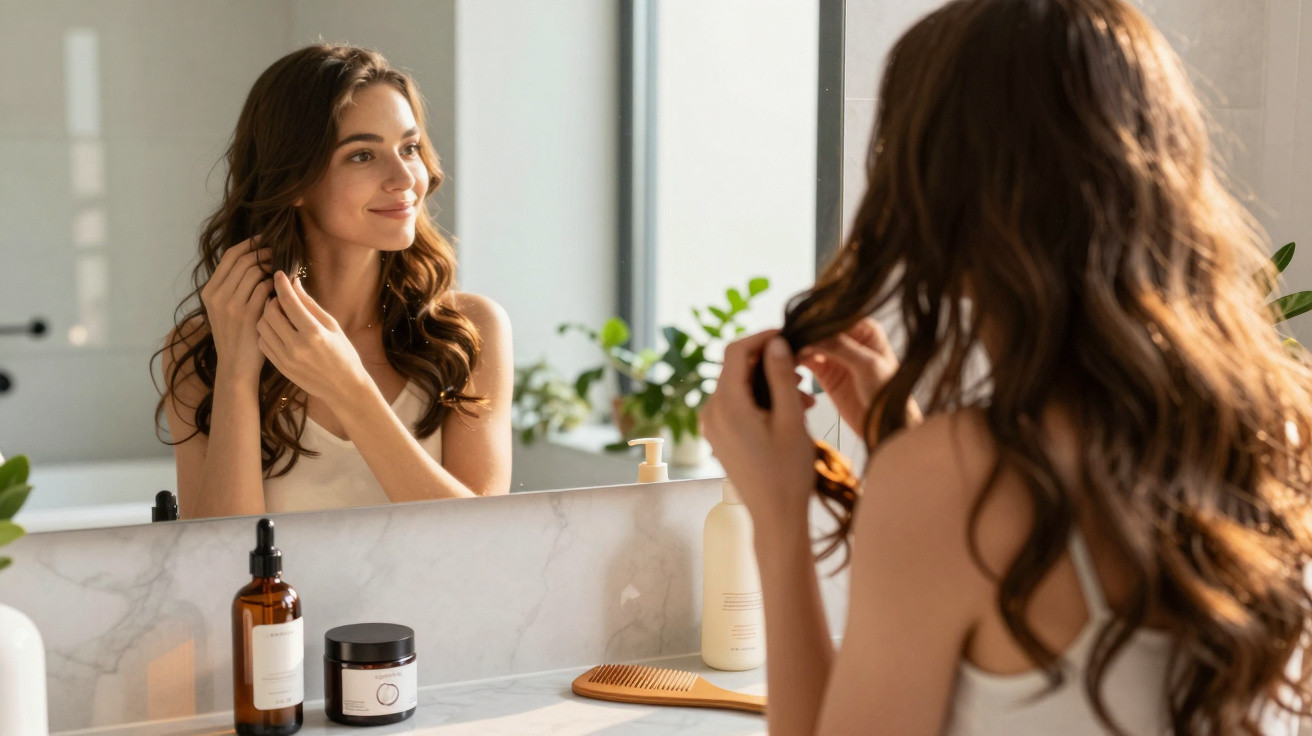
After colouring, maintenance involves more than simply returning to the salon. This natural finish relies on shine, a smooth cuticle and control of yellow tones, especially when grey strands are more exposed between the highlights. Very astringent products or harsh washing can strip away nuance and leave the hair surface feeling rough.
A few habits can extend the finish without adding too much to the routine:
- choose a gentler shampoo and a mask that replenishes lipids
- use heat protection before a hairdryer, straighteners or curling tools
- tone the hair only when genuine yellowing appears
- refresh shine with a gentle toner instead of recolouring the entire head
How should you speak to your colourist to avoid disappointment?
Bringing visual references is helpful, but the consultation needs to go beyond a photograph. Explain how long you have been using hair dye, where the grey hairs first appear, how often you can return to the salon and what degree of contrast you are comfortable seeing in the mirror. These details determine the technique, tone level, maintenance interval and number of highlighted sections.
When the plan takes account of the natural base, hair density and care routine, the look ages better between appointments. This is why gray blending has gained ground: it approaches colour, roots, shine and texture as a whole, without requiring the entire head of hair to remain tied to the rigid timetable of monthly full coverage.







Comments
No comments yet. Be the first to comment!
Leave a Comment