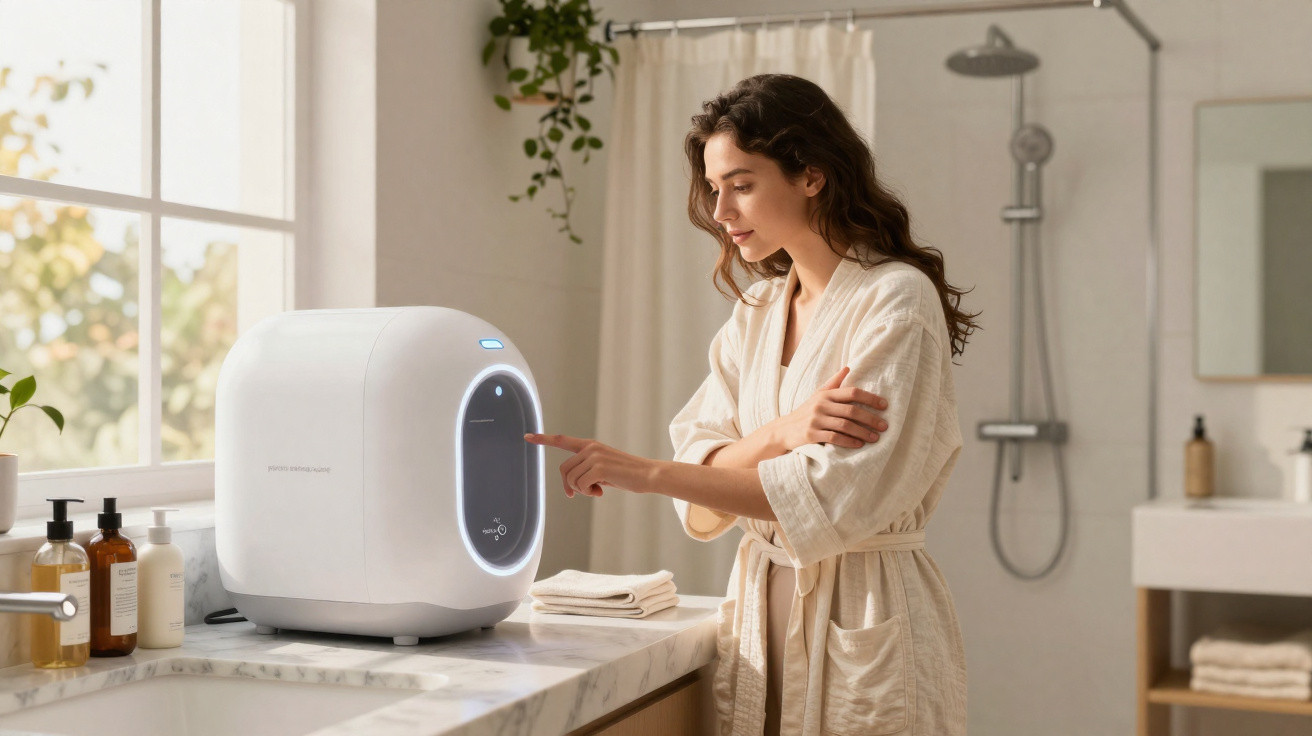
Many people are turning on the shower tap less often – not because they are lazy, but for health, environmental and technical reasons.
Bathroom cabinets may be packed with shower gels and shampoos, yet the daily shower is increasingly being questioned. Dermatologists, environmental researchers and technology companies are collectively prompting us to rethink our relationship with water and soap. Meanwhile, a “washing machine for humans” is even being developed in Japan, taking personal hygiene in an entirely new direction.
Showering less: a trend or a sensible adjustment?
For a long time, the rule seemed straightforward: anyone who wants to be clean must shower every day. Today, that idea is looking increasingly outdated. A growing number of studies indicate that daily hot showers can damage the skin, strip away its natural protective barrier and even aggravate certain skin conditions.
“The idea that only a daily shower is hygienic is coming under massive pressure.”
As a result, many people are changing their routines. Rather than stepping into the shower every day, they clean specific areas only, take shorter showers or choose lukewarm water instead of high temperatures. Public discussions around water shortages, energy bills and sustainability are also driving this change.
What happens to the skin when we shower less often?
The skin has its own natural layer of oils and a microbiome of bacteria that acts like a protective shield. Washing too frequently with harsh surfactants removes precisely this protection.
- Skin becomes dry and feels tight.
- Eczema and atopic dermatitis may worsen.
- Skin can become irritated more quickly by cold, heat or clothing.
- Natural body odour changes – sometimes for the better, as the bacterial flora becomes more stable.
Dermatologists now often recommend thoroughly showering the whole body only every two to three days. On the remaining days, the underarms, intimate area and feet can be cleaned with a little water and mild soap. That may sound radical to many people, but it is now well supported from a medical perspective.
Environmental factors: water, energy and CO₂
Showering is a hidden contributor to climate impact. A five-minute hot shower can easily use 50 to 60 litres of water, as well as a noticeable amount of energy to heat it.
| Showering habit | Average water consumption |
|---|---|
| Five-minute shower, standard shower head | Approx. 50–60 litres |
| Five-minute shower, water-saving shower head | Approx. 30–35 litres |
| Daily shower (per year) | More than 18,000 litres of water |
Reducing how often you shower cuts not only your water bill, but also energy demand and therefore CO₂ emissions. At a time of high heating costs, many households are paying closer attention to how frequently and for how long hot water runs, which is also influencing shower habits.
Technology instead of constant showers: the “washing machine for humans”
Alongside this trend, a company in Osaka is developing a radical alternative to the conventional shower. Science Co. has created a high-tech capsule designed to wash and dry the entire body in around 15 minutes. The system is called “Mirai Ningen Sentakuki”, loosely translated as a kind of “washing machine for the human of the future”.
The process is more reminiscent of a spa visit than a quick rinse:
- The user sits inside an enclosed capsule.
- Water fills the interior while a system of fine microbubbles begins operating.
- These bubbles lift dirt and sebum from the skin without vigorous scrubbing.
- Sensors continually monitor heart rate and further physical data.
- An AI system adjusts water temperature, spray pressure, lighting ambience and sounds.
- At the end, an integrated drying system takes over, allowing the person to leave almost completely dry.
“In around a quarter of an hour, the entire body is meant to be washed, relaxed and dried – at the touch of a button.”
Hygiene meets health tracking
What makes this capsule distinctive is its combination of personal hygiene and health monitoring. During the washing process, the system records biometric data, including heart rate, signs of stress and changes in certain vital parameters.
Its integrated AI analyses this information in real time and adapts the process accordingly. If it detects a high stress level, the machine uses warmer water, gentler pressure and calming sounds. In the event of pronounced tiredness, it could instead select more invigorating settings, such as cooler water, energising light colours and alerting soundscapes.
This means the device goes far beyond the concept of a “quick shower”. It becomes a hybrid of washing machine, wellness cabin and digital health coach.
An old vision, enabled by new technology
The dream of an automatic body-washing machine is not entirely new. The first prototypes appeared at the Osaka World Expo as early as the 1970s. At that time, the fine sensors, powerful computers and AI needed to make such a system suitable for everyday use were still lacking.
The current development now revisits that vision using modern sensors, microbubble technology and intelligent controls. Whether these capsules will eventually be installed in private homes or mainly find a place in hotels, care facilities and wellness centres remains unclear. What is clear is that devices of this kind could significantly change the way we think about personal care.
What does this mean for daily showering?
The combination of new scientific findings, rising energy costs and futuristic concepts such as the “washing machine for humans” leads to a straightforward question: how much water and soap do we really need to remain clean and healthy?
Many experts now advocate a more flexible approach:
- A thorough full-body shower once to three times a week.
- Daily cleaning of the underarms, intimate area, feet and hands.
- Skin-friendly products that are as fragrance-free as possible.
- Lukewarm water rather than a continuous hot stream.
Technologies such as the Japanese capsule could reinforce this development by making hygiene more efficient while putting wellbeing at the centre. Instead of simply becoming “clean quickly”, the focus shifts towards an individual moment of care and relaxation.
Practical everyday tips – without a high-tech capsule
Not everyone is waiting for a futuristic machine to arrive in their bathroom. Simple measures can already help to adapt your own shower routine:
- Set a timer and spend no more than five minutes in the shower.
- Turn off the water between steps, for example while lathering up.
- Fit a water-saving shower head to limit the flow rate.
- Use a cream shower gel only where it is genuinely needed.
- After showering, care for the skin with a simple, rich lotion.
Anyone who changes their shower routine step by step will often notice after a few weeks that their skin feels less tight and redness decreases. Water and heating costs also fall at the same time, an effect that can be clearly reflected in the household budget.
How hygiene, health and technology are becoming more closely linked
The high-tech capsule from Osaka shows the direction in which things may be heading: personal care is becoming data-driven, personalised and more closely connected with health issues. Connections to smartwatches or health apps are conceivable, allowing stress levels and sleep quality to be compared with showering or bathing rituals over the long term.
For people with limitations, such as those in care settings, systems like these could make everyday life easier. They would require less physical effort during washing while also providing better monitoring of circulation, resilience and wellbeing. On the other hand, they raise questions about data protection, reliance on technology and the cost of such devices.
One thing is certain: the conventional daily shower is being debated more than ever. Between showering less frequently, taking a more conscious approach to personal care and using futuristic washing capsules, a quiet but far-reaching change is taking place in the bathroom – with consequences for our health, our bills and our overall use of water.







Comments
No comments yet. Be the first to comment!
Leave a Comment