
She flicks through celebrity photographs on her phone, pinching the screen in and out as she tries to find a look that feels recognisably like her. Behind her, the stylist’s fingers pause by her jaw, move to her shoulders and then lower, assessing the proportions without a word. At last, the comb comes to rest against her collarbone. Almost offhandedly, the stylist says: “Here. This length flatters everyone.”
The woman raises her eyes, taken aback. It is neither overly long nor too short. In the mirror, her face seems gentler, her frame taller, somehow more… complete. She agrees. The first section drops to the floor, bringing that subtle change in the room that comes when someone finally makes a choice they have put off for years. Why does that particular point on the body seem to hold such a hidden formula?
Why the collarbone cut suits so many face shapes
Spend 30 minutes watching a busy salon and a pattern soon emerges. Clients who hesitate, or say, “I don’t really know what I want”, frequently settle on the same point. It is not a bob, nor is it long hair flowing down the back. The stylist studies the reflection, pauses with the scissors, and makes the cut at the collarbone.
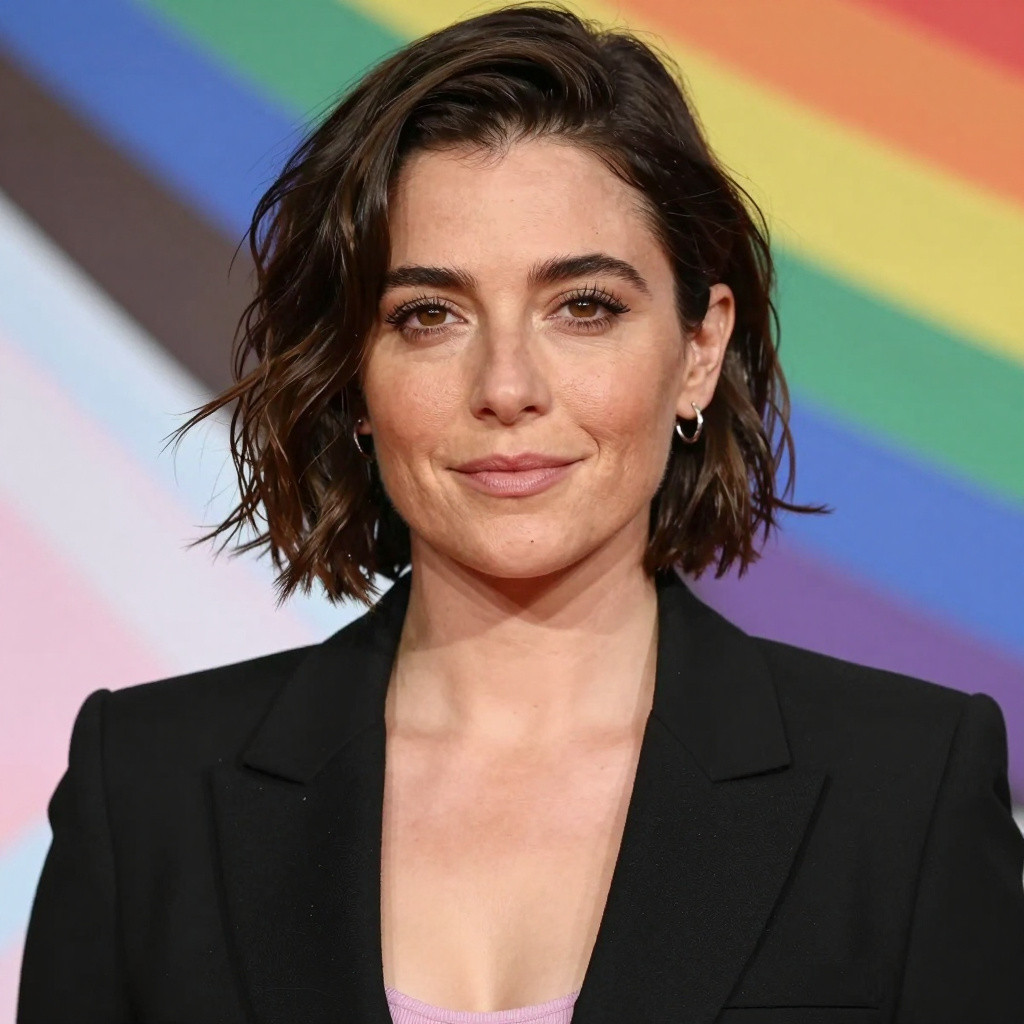
This length seems to work across ages, clothing sizes and face shapes. It adds a vertical line to round faces. It can soften and balance longer faces. Around square jaws, it interrupts the angles just enough. Think of it as the haircut equivalent of a crisp white T-shirt: uncomplicated, subtly considered and remarkably difficult to get wrong.
Ask five hairdressers where they would cut with complete freedom, and at least three are likely to tap the collarbone with their comb. Some refer to it as the “French length”; others call it “safe”. Not safe in the sense of dull, but safe because it is dependable. Wear it loose and wavy on a Sunday, then smooth and tucked behind the ears for a Monday meeting. Statistically, stylists report fewer “I regret it” messages from collarbone cuts compared to ultra-short chops or extreme length. That says a lot.
There is an anatomical reason, too. The collarbone provides a natural visual anchor. Hair ending there outlines the neck rather than concealing it, while framing the face without pulling it downwards. Our eyes respond well to proportions that fall between thirds and halves, and collarbone length occupies that ideal middle ground between “girl with long hair” and “woman with a sharp cut”. It can create the impression of improved posture, even when you are bent over a laptop. That is why so many people instantly feel more polished when the ends sit over the clavicle.
How to request the universal “safe length” and get the result you want
Getting the effect begins with the language you use. Asking for “mid-length” hair can easily leave you three inches shorter than intended. A clearer request is: “I want my hair to sit right at my collarbone - not above it, not past it.” Point to the bone itself rather than to your top.
Clear physical markers are useful to a good stylist. Ask for the longest sections to skim the top of the collarbone when the hair is dry, rather than wet. If your hair is wavy or curly, explain that it springs upwards as it dries. The stylist may need to leave it a finger-width longer so that you do not leave with something closer to an “accidental bob” than an “effortless midi”.
The mistake people make most often is pursuing a photograph instead of the right proportion. A person with a small head and narrow shoulders cannot simply reproduce the same collarbone cut as someone taller with a long neck. What matters is maintaining the relationship between the jaw, neck and collarbone. The cut should reveal the neck rather than overwhelm it. If you feel uncertain, request a dry cut or a “cut in stages”: the stylist can first trim it to just beneath the collarbone, style it, and then refine it millimetre by millimetre.
“The collarbone is my negotiation zone,” laughs London stylist Amélie R. “Clients say they want a change but they’re scared. I take them there first. Nine times out of ten, they fall in love with their face again.”
A handful of small guidelines help keep this length in its flattering, versatile range:
- Leave the back ever so slightly shorter than the front to create a soft, lifting line.
- If your hair is thick, avoid very weighty blunt ends and request delicate, invisible layers instead.
- With a shorter neck, keep the front at the collarbone while raising the back very slightly.
- Fine hair benefits from a subtly blunt baseline, whereas very thick hair needs micro-texturising rather than harsh thinning.
- If you are tall, you can go one or two centimetres below the bone and still retain that “safe” effect.
Living with collarbone hair: everyday life rather than hair-ad perfection
The broad appeal of collarbone length owes less to immaculate salon pictures than to the Tuesday-morning test. You wake up late and have three minutes to deal with your hair. With this cut, those three minutes can genuinely make a difference. A brisk rough-dry with your head upside down, followed by a bend through the mid-lengths using a large brush or curling wand, can make it look as though you made an effort. Even when you did not.
It is long enough for a low bun or half-up knot when real life intervenes - the gym, childcare or a sweaty commute - while remaining short enough to air-dry into a shape rather than becoming a triangle or a limp curtain. One understated technique works for nearly everyone: direct the front sections away from the face, then allow the rest to settle naturally. That small shift opens up the features and prevents the haircut from appearing too block-like.
Emotionally, it is a haircut for when you want a change without inviting chaos. On a difficult day, you can conceal it beneath a cap or twist it up with a claw clip. On a good day, moving the parting to the other side can make it feel like a different style. Most of us have experienced a dramatic haircut that felt like a break-up we were not prepared for; collarbone length is more like moving flats within the same neighbourhood. It feels new, but still familiar.
Let us be honest: nobody truly does all of that every day. Few people have the time or patience to achieve a perfect blow-dry, remember three styling creams and curl every section as if following a tutorial. That is why this length quietly succeeds over the long term. It is forgiving on low-effort days. As it grows, it looks purposeful for weeks instead of becoming untidy after four days. A centimetre of roots? No problem. Missed a trim? It simply eases into a soft shape that brushes the shoulders, rather than turning into a heavy, dragging mass of hair.
It also interacts well with clothing and posture. The collarbone is where necklines, jewellery and hair effectively decide which element takes the lead. When the hair ends there, T-shirts appear more deliberately styled, blazers look less severe and hoodies feel a little less like Sunday laundry-day attire. Fashion stylists value this length because it creates a tidy rectangle of skin between the jaw, hair and fabric: a built-in frame for the face with every outfit.
Over time, many people find something unexpected: they fuss with their hair less. Long hair can encourage constant adjusting - pulling it over one shoulder, twisting the ends, tucking it behind the ear and pulling it back out. A bob, meanwhile, can feel stark, particularly if you already feel self-conscious. Collarbone hair occupies the middle ground: it is present, it is feminine if that matters to you, but it does not become a full-time pastime. That extra mental breathing room may be the most overlooked benefit of this “safe length”.
The understated strength of a cut that does not demand attention
The appeal of collarbone length is not only that it flatters most body types, but that it can adjust as life changes. Weight gain, weight loss, pregnancy, an evolving style, promotions at work and periods of burnout - this haircut generally moves with those changes without requiring a complete rethink each season. One year, you can make it sharper with a blunt edge and centre parting; the next, soften it with curtain bangs and face-framing layers. The fundamental shape remains effective.
There is something reassuring about a haircut that does not confine you to one identity. It does not announce “edgy”, “classic” or “trying very hard”. Instead, it keeps possibilities open. You can wear it to a wedding, job interview, date or doctor’s appointment without feeling that your hair is either excessive or inadequate. That neutrality can be particularly powerful for anyone with a difficult relationship with mirrors.
What makes this length feel almost “universal” is not flawlessness. It is its ability to withstand imperfection - grown-out colour, a missed appointment or that fringe you cut yourself at midnight. The collarbone provides structure even when life is disorganised. Perhaps that is why so many people, after years of trying different looks, gradually return to this precise line on the body and remain there far longer than expected.
It is less about following an ultimate rule of what is “flattering” and more about finding the point where your hair, face and body appear to agree: this works, even on an off day. Ask anyone who has had their first genuinely good collarbone cut. They will say the same thing: it does not shout. It simply, reliably makes you feel more like yourself.
| Key point | Detail | Benefit for the reader |
|---|---|---|
| Collarbone reference point | Ask for a length that precisely skims the clavicle on dry hair | Achieve the expected visual result, without going “too short” or “too long” |
| Facial proportions | Collarbone length can elongate or soften according to face shape | Understand why this cut works with almost every body shape |
| Everyday life | A length that can be tied up, is easy to style and tolerates regrowth | Choose a cut that looks good in real life, not only when leaving the salon |
















Comments
No comments yet. Be the first to comment!
Leave a Comment