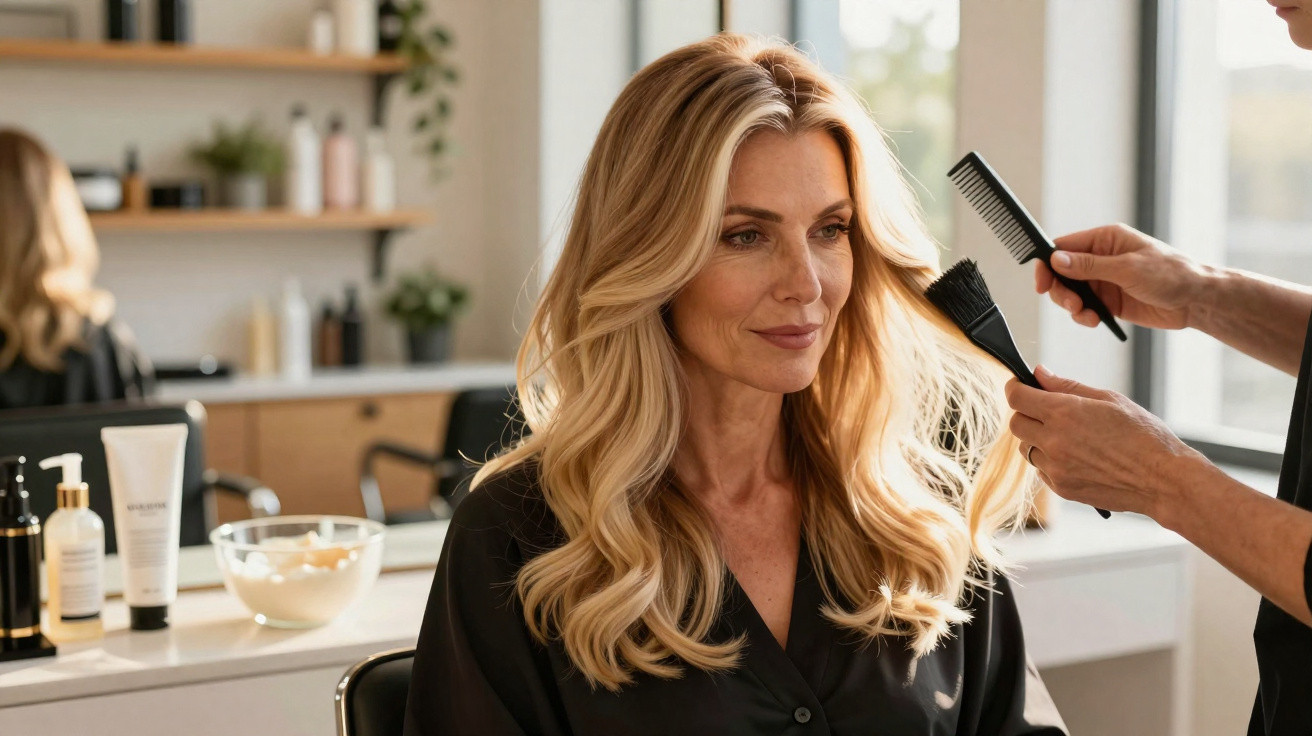
The new salon colour trend, vanilla blonde melt, does exactly that: it softens facial features, reduces the appearance of harsh contours and gives mature skin a subtle radiance. Here is why this shade is attracting so much attention in 2026 and what it can genuinely deliver in everyday life.
The idea behind the vanilla blonde melt trend
Not all blonde shades are alike. A vanilla blonde melt is not about bright platinum or a dramatic transformation; it is a soft, creamy hue designed to blend seamlessly into the natural hair colour.
“Vanilla blonde melt looks like soft light on the face – not like a harsh mask over the hair.”
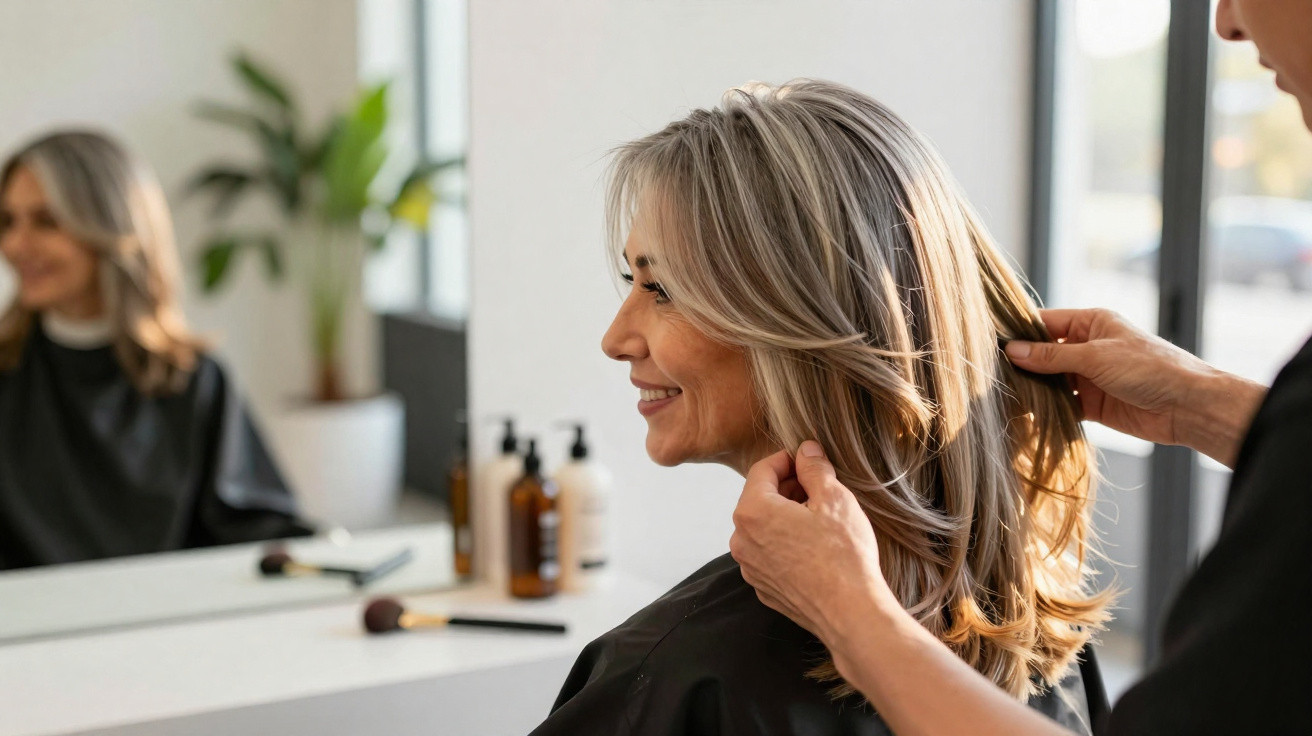
The technique centres on an exceptionally fine balayage effect. The colourist places lighter sections in a way that avoids any stark lines. Roots are left slightly deeper, while the mid-lengths are lightened gradually. This creates a gentle transition reminiscent of naturally sun-kissed hair.
Why this shade flatters women over 50
Complexion changes with age. Skin can appear paler, fine lines become more noticeable and grey hair may become more prominent. An overly dark or cool shade can accentuate these effects. Vanilla blonde melt works in the opposite direction:
- The warm, yet not orange-toned, vanilla shade adds freshness to the face.
- Fine light sections draw attention away from lines and towards the eyes.
- Soft shading at the roots disguises regrowth of grey hair more effectively than one solid block of colour.
- The overall look feels lighter and gentler, avoiding a taut or severe appearance.
Many hairdressers say that clients immediately feel they look several years younger after this colour service, even though no one can pinpoint exactly why. It is this understated transformation that makes the trend so popular.
How a vanilla blonde melt colour service works in the salon
A vanilla blonde melt is not a five-minute tint. Its natural-looking result relies on a carefully structured colouring process.
Fine balayage placement rather than a foil shock
The stylist first adds very fine sections through the lengths and ends. Balayage is often used for this, sometimes alongside hair contouring: sections around the face are deliberately made lighter to emphasise and visually lift the features.
It is essential that the transitions remain seamless. The roots are intentionally kept a little darker so that no obvious line appears as the hair grows out. As a result, the colour still looks soft after several weeks.
Double refinement for added shine
After the lightening stage comes the finishing work. Many salons use two refinement stages, often referred to as a patina or glossing treatment:
- A first toner evens out differing shades and creates a more uniform overall result.
- A second toner with a vanilla tone produces the creamy, light sheen while reducing overly cool or yellow reflections.
This produces a shade that is neither artificially white-blonde nor honey- or caramel-toned. The finish is closer to soft, subtly warm light than to conventional blonde levels.
Which skin tones vanilla blonde melt makes shine
Vanilla blonde melt is particularly effective when matched to the complexion. Hairdressers therefore assess the skin’s undertones very carefully.
| Skin type | Recommended vanilla shade |
|---|---|
| Fair, cool complexion | Neutral vanilla, slightly beige, with little gold |
| Fair, golden complexion | Warmer vanilla with gentle golden reflections |
| Rosy complexion | Restrained, neutral vanilla to avoid emphasising redness |
| Medium complexion with freckles | Soft, sunlit vanilla carefully matched to the natural hair colour |
One advantage of this technique is how easily it can be tailored. Anyone wanting to ease into blonde can begin with only a few subtly placed sections. Those who want more light around the face can gradually go lighter at the next appointment.
Care: how to keep the colour looking fresh for longer
Care is crucial if vanilla blonde melt is to retain its brightness rather than becoming dull. Mature hair in particular needs extra support because it can become dry more quickly.
Gentle cleansing and plenty of moisture
A mild shampoo for colour-treated hair is recommended. It protects the pigments and prevents the cuticle from becoming too roughened. Washing two to three times a week is usually sufficient; anything more can dry out the lengths unnecessarily.
Using a mask with nourishing oils or proteins once or twice weekly can help. It seals in the colour and enhances shine. Those with fine hair should apply it only through the lengths, so that the roots do not look flat.
Managing yellow tones – in moderation
Over time, lighter shades can develop a yellowish cast. This is where purple-toned care products, such as silver shampoo or a specialist mousse, can help:
- Use them only every two to three washes, rather than daily.
- Monitor the processing time to avoid a grey cast.
- Always pair them with a nourishing treatment, as many anti-yellow products can be slightly drying.
A few drops of lightweight hair oil or a shine spray on the ends can also improve light reflection, making the colour look more vibrant and the face appear brighter too.
Styling: hairstyles that enhance the rejuvenating effect
The impact of vanilla blonde melt depends greatly on styling. Rigid, heavily blow-dried hair can quickly look severe, even with a soft colour. More flattering options include:
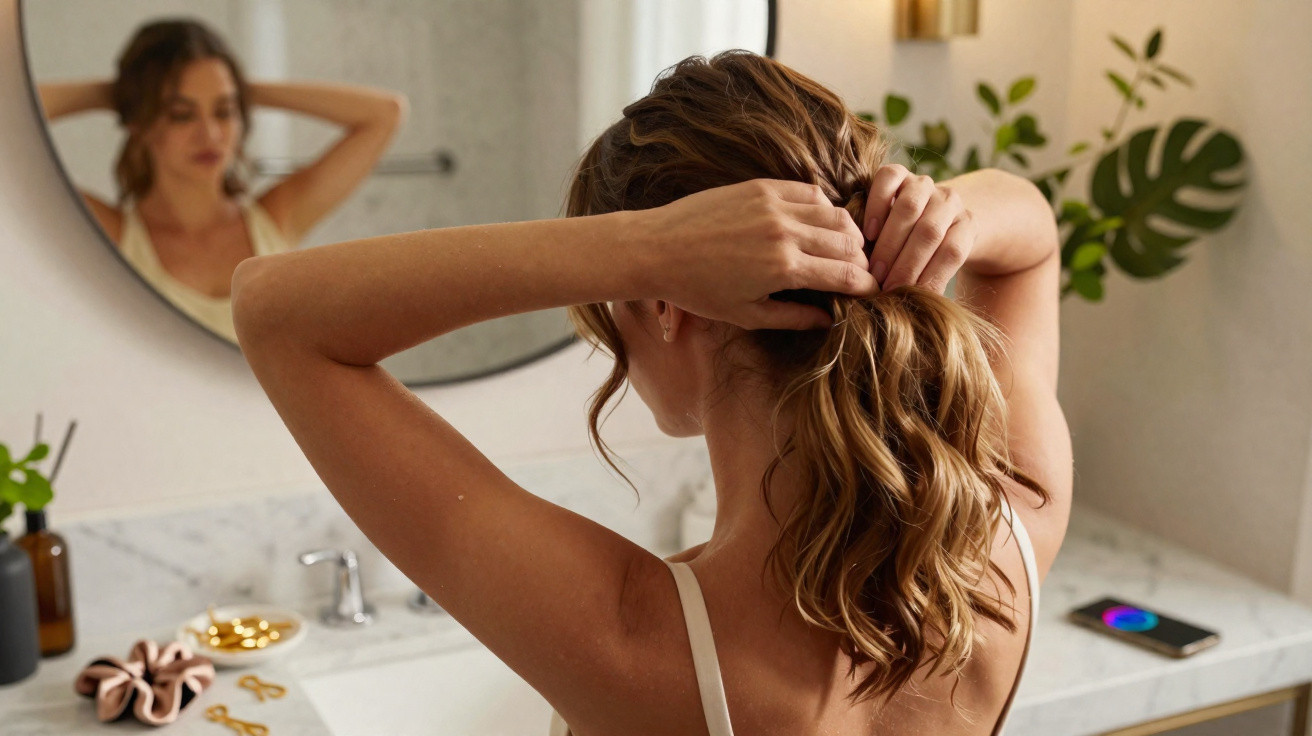
- Loose waves created with curling tongs or straighteners
- Soft blow-dries using a round brush for extra movement
- Layered cuts that frame the face
- Longer fringes or curtain bangs that highlight the forehead area and eyes
With hair contouring in particular, the stylist places lighter strands strategically around the front. Combined with soft waves, this makes the face look fresher, brings out the eyes and visually moves nasolabial folds into the background.
Risks, limitations and who this trend may suit less well
However flattering the trend may be, it does not suit every starting point. Very dark hair requires several lightening sessions, which can place strain on the hair structure. Severely damaged or highly brittle hair should first be strengthened with restorative care.
Anyone with a very olive or ashy complexion also needs careful consultation. An overly warm vanilla shade can quickly look unharmonious in these cases. Professionals often use cooler beige tones instead, adding warm sections only very sparingly.
Practical advice for your next hair appointment
Good preparation helps ensure the result truly suits the face. A few points to discuss before the appointment include:
- Bring recent photos of your own hair colour and usual make-up looks.
- Show pictures of blonde shades you like, as well as shades you definitely do not want.
- Be open about how much care you are willing to commit to: those with limited time need a low-maintenance option.
- Ask the hairdresser specifically for a soft, vanilla-toned blonde with a shaded root.
If you are unsure, it is better to start with a subtle balayage and ask how the colour can be intensified step by step. This helps keep the hair healthy while ensuring the look remains believable at every stage.
Another benefit is that the technique combines wonderfully with other feel-good rituals, such as a scalp massage or restorative treatment. Many women report that, after such an appointment, they not only look younger but feel noticeably younger too – an effect no app or filter can achieve as naturally.






Comments
No comments yet. Be the first to comment!
Leave a Comment