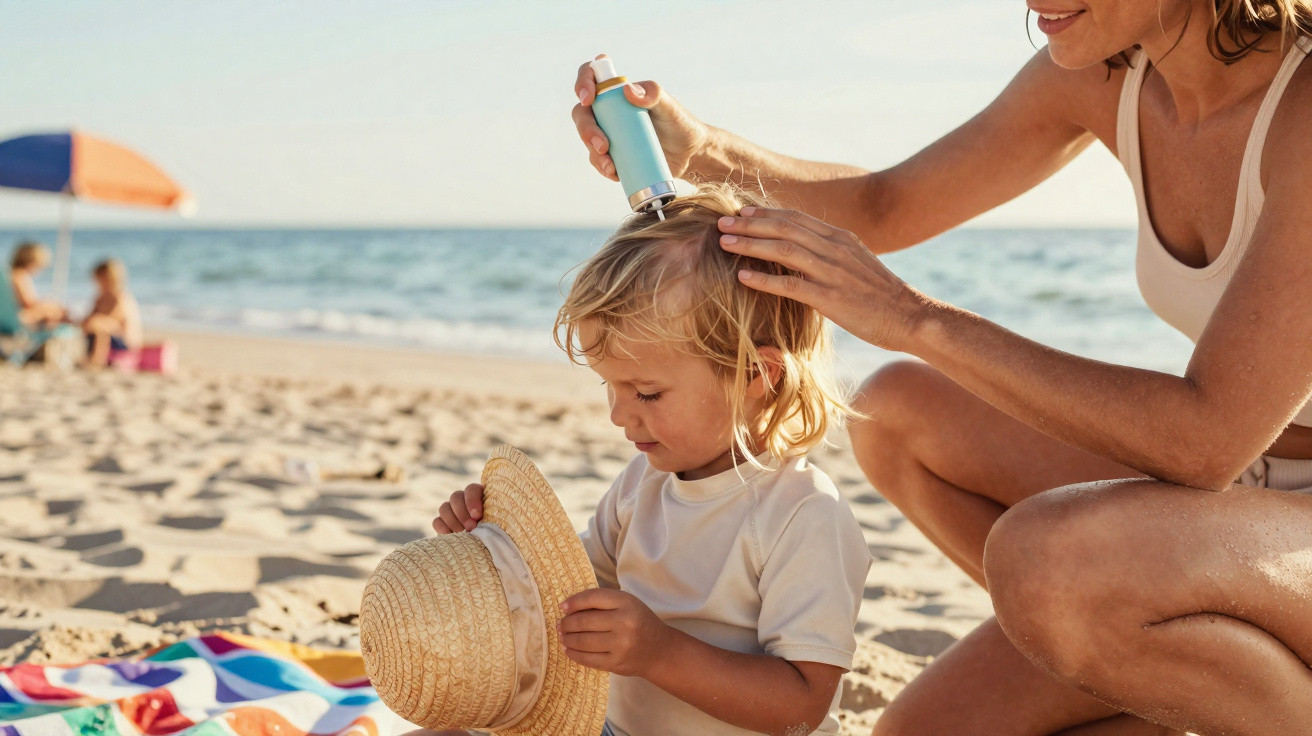
Arms, noses, shoulders and ears – all of them were coated in white cream. Then a little boy with nearly white hair dashed past, his scalp shining like a light bulb in the midday sun. No hat. No spray. Nobody gave it a second thought. His mum had done the “right” thing: SPF 50 on his face, a long-sleeved rash vest and a shade tent at the ready. But a closer look already revealed a faint pink line along his hair parting.
Most parents do not realise that a child’s scalp may burn more quickly than their shoulders. And the children who appear most “protected” – those with fair, fluffy hair – can be the most vulnerable.
The tiny strip of skin nobody protects
What makes scalp sunburn so unusual is how easy it is to overlook. Parents check for bare skin, notice T-shirts, caps and ponytails, and assume they have covered everything. We instinctively see hair as protection: a natural parasol. For thick, dark hair, that is partly the case. But fine, pale or sparse hair can create a misleading impression. The scalp seems covered, while UV rays pass through the soft strands and reach that pale, sensitive skin.
On a clear summer day, a child’s parting, cowlick or thinning fringe may be directly exposed. The burn may not become apparent until bath time, when shampoo stings and the child pulls away without knowing why. Parents might put it down to “sand in the hair” or “sensitive skin”. They seldom connect it with two hours of football in direct sunshine without a hat, when the sole unprotected area was the part of the body they never thought to cover: the top of the head.
Dermatologists often place the scalp among children’s most commonly forgotten sun-exposed areas. For fair-skinned children with blonde, fine or very short hair, the UV exposure on the scalp can be close to that on a bare shoulder. A thin covering of hair offers almost no defence against midday radiation. As the skin there is unaccustomed to direct sunshine, it can react more rapidly and intensely. Think of the last time you changed your hair parting on holiday and noticed that strange burning line at night. For a child, that can be the result of one afternoon in the park.
Sun damage also builds up quietly over time. Repeated scalp burns in childhood may cause ongoing irritation, overly sensitive hair roots and more concerning lesions later in life. Sunburn at an early age is strongly associated with skin issues in adulthood, while the scalp is difficult to keep an eye on. You do not examine it in the same way as a shoulder. Hidden beneath hair, it is both more important to protect and easier to forget.
Practical scalp protection children will tolerate
The simplest solution for protecting a child’s scalp is also the most obvious: a hat they will genuinely wear. Not the attractive one chosen for photographs, but one that stays put during a football match or while building sandcastles. Wide-brimmed hats and legionnaire-style caps with neck coverage provide the strongest protection. For children with especially fair or fine hair, a close-fitting hat with a rear flap can make a meaningful difference to the exposed crown and parting.
Of course, everyday life is not that tidy. Children take hats off, misplace them or fling them into the sand. This is where scalp-friendly sun sprays can help. Choose a lightweight, non-greasy SPF 30 or 50 spray designed for hair or scalp. Separate the hair with your fingers and spray directly on any skin you can see: the main parting, swirls, thinning fringe and crown. Rub it in gently before allowing the hair to settle back into place. Once you have done it a few times, it takes under a minute.
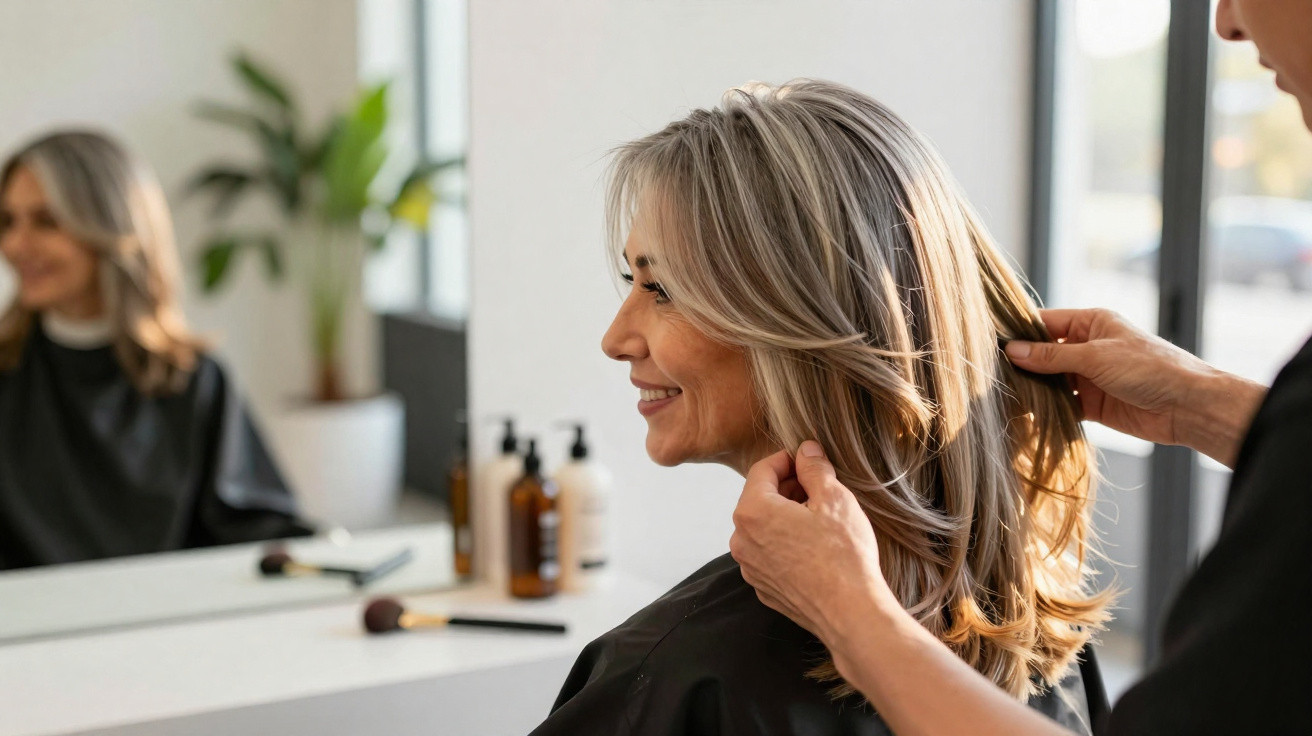
On days when getting a hat to stay on is simply not a battle you can win, focus on habits rather than guilt. In spring and summer, check the top of your child’s head before school just as you would check their teeth or shoes. A quick roll-on application or brief spray along the parting can be enough for the morning. If they have long hair, changing the hairstyle may also help: a zigzag or moved parting distributes exposure, preventing the same delicate line of skin from taking the sun every day. A high ponytail or bun exposes more of the scalp at the back, so it may need another spray.
Let’s be honest: hardly anyone manages this every day. That is why it can help to think in terms of “zones” rather than routines. Face, shoulders, tops of the feet and scalp. On high-UV days, regard the scalp as a “major zone”, rather than an afterthought. If your child dislikes sprays, place a pea-sized amount of light lotion on your fingertips and gently work it into the parting. It may not be flawless, but imperfect protection is better than perfect intentions left in the bathroom cabinet.
A paediatric dermatologist once told me,
“Parents remember the nose and forget the scalp. Yet the burns I see on kids’ heads are often the ones that hurt them the most – they can’t sleep, they can’t comb their hair, they cry in the shower.”
That stayed with me. It is the aspect that rarely comes up in playground conversations about sunscreen. We compare brands, SPF ratings and “reef-safe” labels, but rarely talk about the screaming during hair washing after a long day at the beach. The emotional impact remains unspoken, but it is real. At a deeper level, looking after that unseen strip of skin also means protecting everyday moments – the evening bath or a quick cuddle while towel-drying hair – from becoming a small daily ordeal.
To make it manageable in day-to-day life, many parents find a short checklist useful:
- Prioritise hats that offer coverage over “cute” designs when the sun is strong.
- Spray or dab SPF along every visible parting or thinning patch before going outside.
- Reapply to the scalp at least once if your child swims, sweats or spends hours playing outdoors.
A small habit that reshapes summer memories
Once you begin noticing children’s scalps, they seem to be everywhere: the boy on the bus with a pink line across his blonde crown, the toddler in the park with a wispy tuft and no shade, the teenager on the football pitch with a buzz cut and no cap. You may remember your own childhood sunburns, the ones you only discovered when a hairbrush touched them or you lay on a pillow at night. Suddenly, this “detail” no longer seems small. It becomes part of how you see summer scenes around you.
Protecting a child’s scalp feels surprisingly personal. You are close to them, with your fingers in their hair, looking for that pale strip. It may be a slightly ridiculous moment – sand everywhere, a wriggling child and you trying not to spray their eyes – or a quiet pause in the hallway before school. It is not an exact science. Some days you will forget, the hat will disappear or the spray will remain at the bottom of the bag. The aim is not perfect performance. It is to shift the default, so that the top of the head changes from “invisible” to “on your radar”.
We have all noticed a small sunburn we missed and felt a flash of guilt that stings more than the redness itself. For summer parents, the scalp is often that source of guilt. Yet once the habit is established, it shifts from a cause of anxiety to a quiet act of care: a fast check of the parting, a gentle rub of SPF, a cap pulled down over fine hair. Nothing grand. Just another small, unseen way to say: I’m watching out for the parts of you that even you cannot see yet.
| Key point | Detail | Why it matters to the reader |
|---|---|---|
| Scalp is often overlooked | Fine or light hair can allow UV to reach the scalp easily | Helps parents identify a hidden risk they would usually miss |
| Straightforward protection | Covering hats and targeted SPF sprays or lotions | Provides practical actions that work on busy days |
| Long-term effects | Repeated burns can affect scalp health over time | Encourages lasting habits rather than one-off solutions |










Comments
No comments yet. Be the first to comment!
Leave a Comment