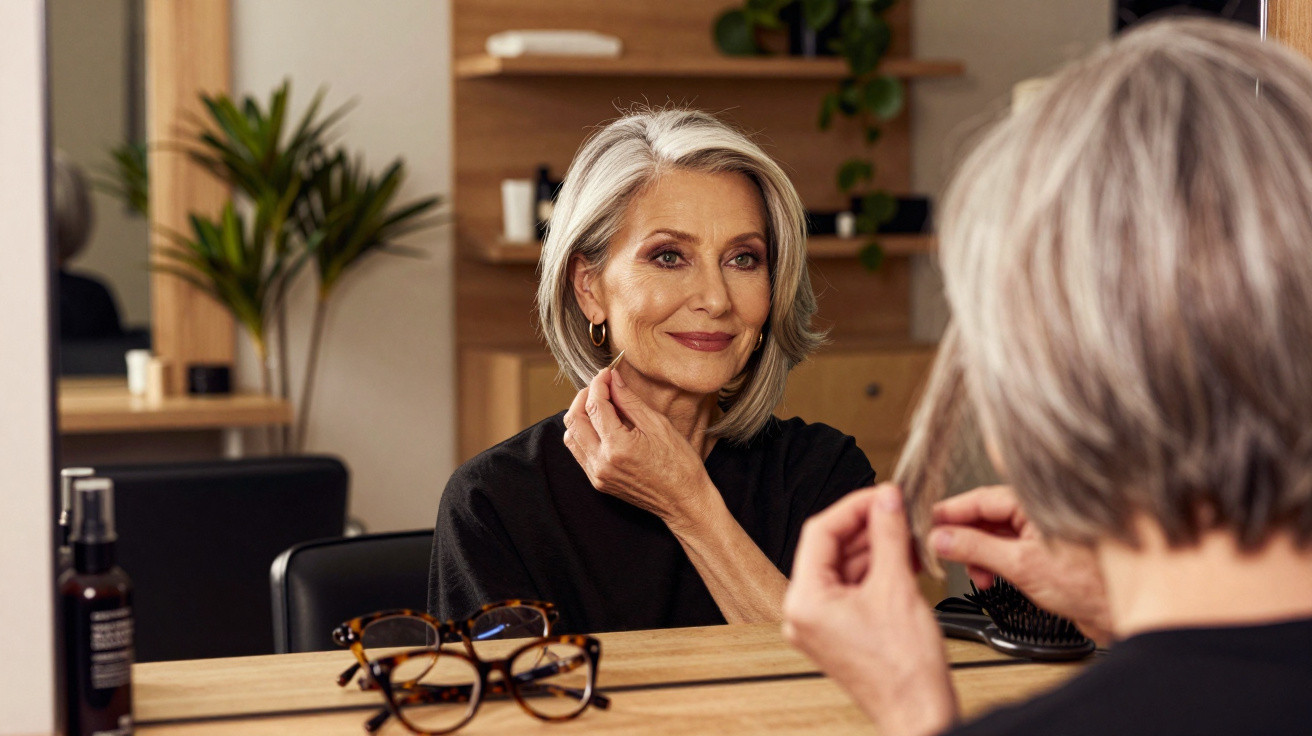
Past 50, hair often becomes finer, whiter and less springy, while the face gradually takes on a different shape. A well-chosen cut can balance these changes, refine your look and make your overall appearance feel fresher - without trying to recreate your 25-year-old self.
The subtle shift after 50: hair and facial shape changing together
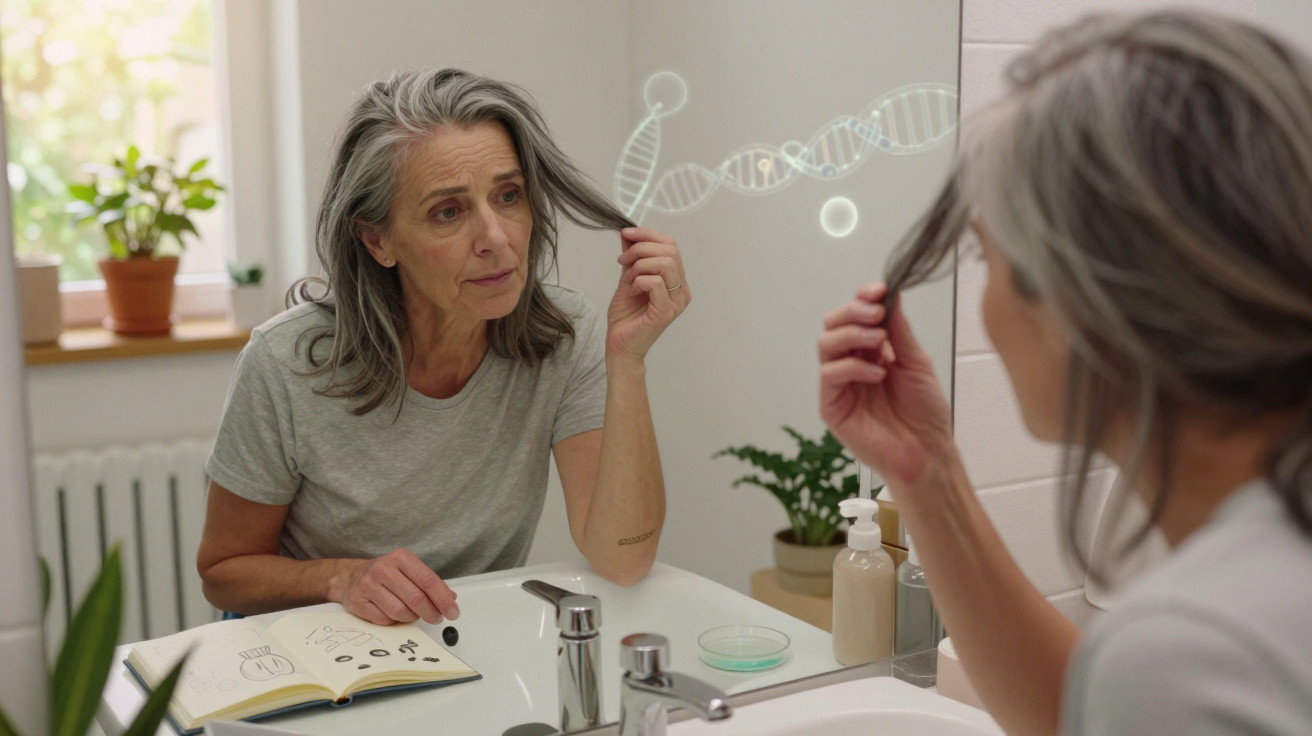
By their mid-50s, many women begin to see two changes happening at once. Hair may become white or salt-and-pepper while losing density, and the previously defined oval of the face can soften as reduced skin firmness makes the jaw appear more angular.
Together, these changes can mean that long, weighty hair pulls the face downwards. Extremely short styles, meanwhile, may seem severe or draw attention to every small change in the skin. This is where the bob comes into its own.
The bob is one of the rare haircuts that flatters almost every face after 50, without ever feeling “mumsy” or dated.
French celebrity hairdresser Franck Provost has promoted the bob for decades, particularly for women seeking a lighter, more youthful-looking frame for the face without losing elegance or everyday practicality.
Why the bob remains timeless
There is a reason the bob has outlasted every trend cycle since the 1920s. It is flexible, easy to adapt and occupies the ideal space between short and long hair.
For women over 50, a bob offers several distinct benefits:
- It lifts the face: hair cut between chin and shoulder length can make the features appear higher.
- It creates volume: shorter hair is generally easier to build up, particularly at the roots.
- It frames rather than weighs down: it can soften the jawline while revealing the neck more elegantly.
- It suits grey and white hair: its defined outline showcases salt-and-pepper tones instead of concealing them.
Because the bob never really goes out of fashion, it won’t make you look like you’re stuck in a hairstyle from 20 years ago.
Most importantly, a bob is highly customisable. Its length, layers, texture and parting can be tailored to your face, routine and hair type, whether your hair is very fine, wavy or curly.
Three bob haircuts that never look grannyish
Bobs are not all alike. A stiff, precisely rounded cut with a helmet-like blow-dry can make features look harder and add years. The most flattering styles retain a sense of softness and movement.
The layered bob
A layered bob combines the classic bob shape with gentle layers through the lengths. The purpose is not to make the hair look choppy, but to shape it around the face.
For women over 50, these layers have several functions:
- They interrupt a solid, block-like outline that may draw attention to sagging.
- They shift focus towards the eyes, cheekbones and lips.
- They provide height at the crown, counteracting the flat-at-the-top effect often associated with ageing hair.
Layers can also lightly cover areas that may make you feel self-conscious, such as lines around the mouth, without obscuring your face. If hair is fine, subtle layers combined with a volumising spray can make a bob seem fuller while preserving its length.
The long bob, or “lob”
The long bob generally falls between the collarbones and the tops of the shoulders. For women who have kept their hair long for years and worry about cutting it “too short”, it is often the simplest transition.
The long bob is the middle ground: long enough to tie back, short enough to lift and soften the jawline.
This style skims the jaw and neck softly. Its line can visually narrow the lower face and move attention away from looser skin beneath the chin. It also remains versatile: loose waves, a gentle blow-dry and a low, relaxed ponytail can all look current.
For naturally straight hair, a lob with barely-there layers and a side part creates an immediately more youthful-looking frame. With wavy hair, lightly blunt ends and a less weighty top help manage volume while allowing the natural texture to stand out.
The textured bob
Rather than prioritising a geometric silhouette, the textured bob is all about the hair’s finish and movement. It works especially well for very fine or thinning hair that lies flat, particularly as grey hairs begin to emerge.
Texture may be added through:
- very subtle internal layers
- razor-cut detail at the ends
- lightweight styling products that plump up the hair fibre
- soft waves created with a curling wand or rollers
The aim is not deliberately messy hair, but light, airy movement. Soft waves and a gently undone finish make the look feel modern and lively. They also visually soften the face, rather than pinning every strand in place and emphasising each line.
A slightly imperfect, textured bob often looks younger than a flawless, stiff blow‑dry, especially after 50.
Selecting a bob for your face shape and hair
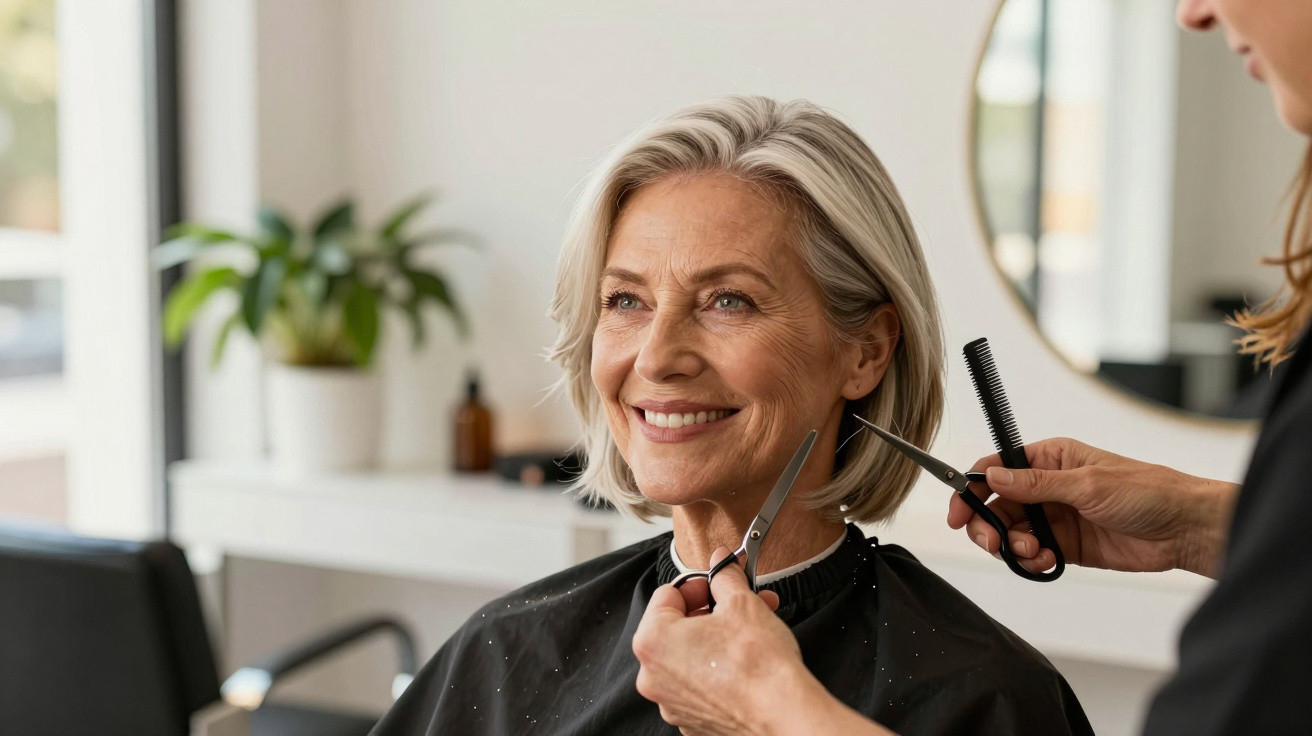
There is no single bob that suits everybody. Before cutting, a skilled hairdresser will assess your face shape, neck length and hair density.
| Face or hair type | Bob to consider | Why it helps |
|---|---|---|
| Round face | Long bob with light layers | Lengthens the face and prevents extra width around the cheeks. |
| Square jaw | Layered, slightly wavy bob | Softens pronounced angles and creates movement near the jaw. |
| Very fine, sparse hair | Textured bob, above shoulders | A shorter shape and texture create the impression of fuller hair. |
| Long neck | Chin-length bob | Brings balance to the proportions and draws attention to the neckline. |
| Short neck | Bob grazing the shoulders | Retains enough length to make the neck appear longer. |
Colour matters too. Delicate highlights, especially placed around the face, can make a bob appear brighter and more dynamic. With naturally white or salt-and-pepper hair, a neat, crisp bob shape makes the colour look deliberate and stylish rather than simply grown out.
How to style a bob without making it look grannyish
Even an excellent cut can appear ageing when styled in a stiff, old-fashioned manner. These straightforward habits help keep a bob looking fresh:
- Retain movement: avoid very firm hairspray and overly set blow-dries.
- Add lift at the roots: apply a round brush or volumising mousse at the crown, rather than only through the ends.
- Alter your parting: changing the side from time to time creates instant lift and prevents flat sections.
- Avoid weighty ends: poker-straight tips that turn under too sharply can appear severe.
- Choose lightweight products: fine hair responds better to sprays and mousses than rich creams.
A bob looks younger when it feels touchable, moves with you, and doesn’t sit like a helmet on the head.
Grey, white and salt-and-pepper hair: making colour part of the cut
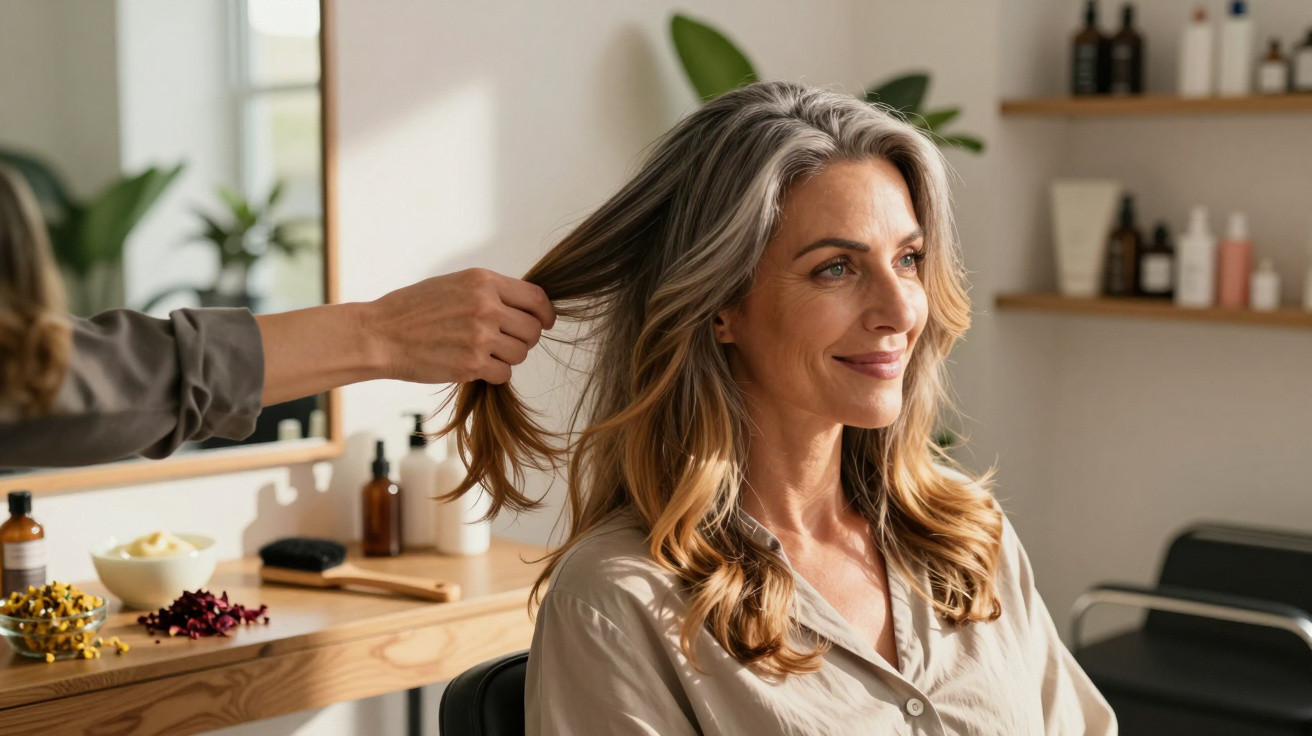
Changing colour is frequently what prompts a new haircut after 50. More women are choosing to embrace their natural grey or white hair, and a bob can make it look particularly striking.
Useful options include:
- Salt-and-pepper with a textured bob: movement within the cut brings out the blend of tones.
- Full white with a clean, blunt bob: the graphic outline makes the colour look purposeful and contemporary.
- Soft highlights on a layered bob: a handful of lighter pieces around the face can brighten the complexion.
For anyone concerned that grey hair may make them look older, shine is crucial. A weekly mask and regular trims keep the bob looking polished, helping grey appear stylish rather than neglected.
Real-life examples: when a bob makes the difference
Imagine a woman in her late 50s who has worn her long, thinning hair in the same ponytail for years. Her jawline has become softer and the ponytail now falls limply. Replacing it with a long, layered bob that brushes the shoulders removes excess weight from the ends and raises the whole silhouette. Adding a loose wave with a curling iron suddenly brings out cheekbones she had forgotten were there.
Consider another woman with naturally wavy, salt-and-pepper hair who has kept it cropped very short in an effort to “tame” it. The cut leaves every line at her temples exposed. Letting it grow into a textured bob between chin and shoulder length allows the waves to fall in relaxed patterns. Her face appears softer, while the grey forms an intentional silver pattern instead of something concealed.
Changing to the right bob is less about chasing youth and more about aligning your hair with who you are now.
Salon terms you may hear, explained
Hairdressers can sometimes use technical language that makes it more difficult to describe what you want. Here are several useful bob-related terms:
- Blunt cut: the ends are cut in a straight line, creating a crisp, graphic finish.
- Graduation: the hair is shorter at the back and gradually longer towards the front, following the jawline.
- Internal layers: layers placed within the haircut to add volume without visible steps in the overall length.
- Texturising: cutting methods used to remove weight or introduce movement, often using specialist scissors or a razor.
Taking along a photograph of a bob you like and discussing these terms can help your stylist tailor the style to your face and hair, rather than reproducing the image without adjustment.
Choosing a bob after 50 is not about following rules; it is about taking control. The style can adapt to grey hair, fine strands and evolving facial features. When properly personalised, it remains contemporary, flattering and, crucially, never becomes overly grannyish.









Comments
No comments yet. Be the first to comment!
Leave a Comment