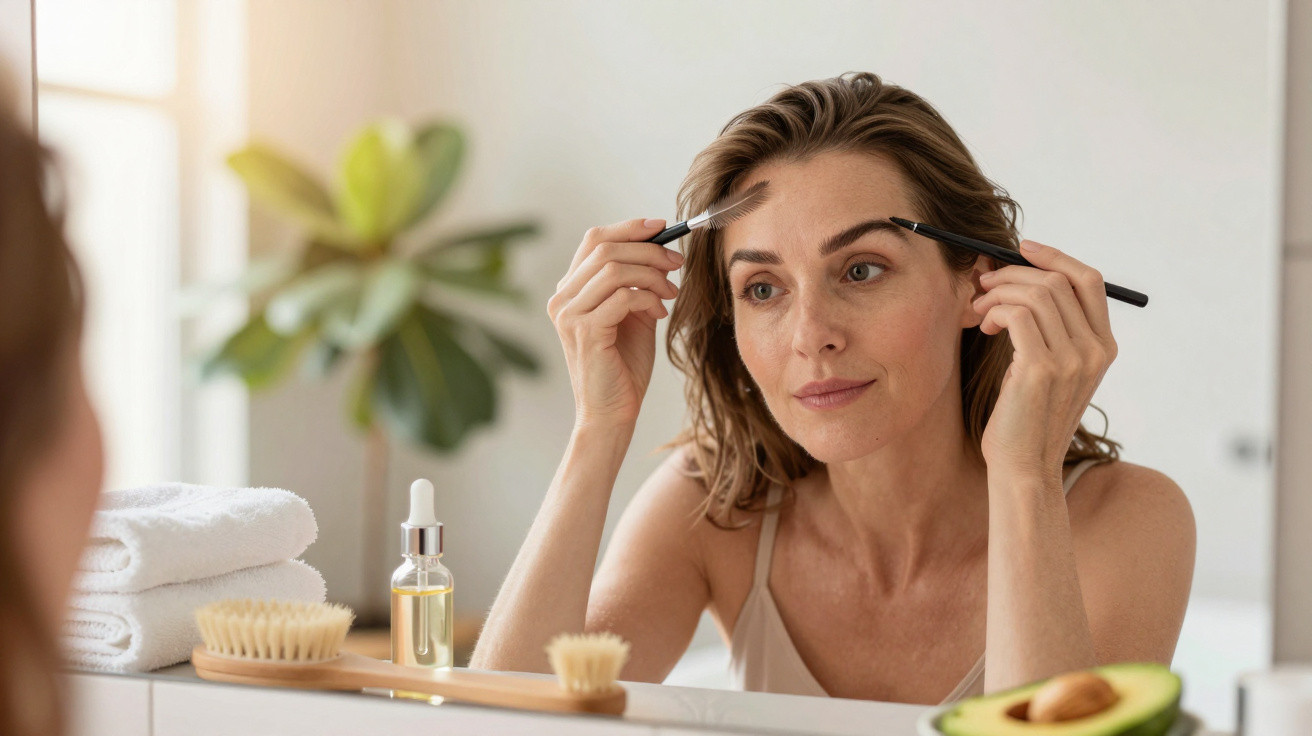
With three simple strategies, your eyes can look more awake again.
Many women are surprised when they look in the mirror: their eyebrows become sparser, small gaps appear and the area above the eyes looks more tired than it once did. This is not imagined; it is linked to hormones, care mistakes and the natural ageing of the hair follicles. The encouraging news is that focused care, clever make-up and a few dietary adjustments can noticeably soften the effect.
Why eyebrows become thinner after 50
Hair growth slows over time, and this applies to eyebrows just as much as it does to scalp hair. Individual hairs become finer, take longer to grow back and break more easily. This is especially noticeable for anyone who used to tweeze heavily: some follicles may be permanently weakened or even destroyed.
Hormonal changes around the menopause also play a part, along with so-called oxidative stress caused by sunlight, smoking or environmental pollution. These factors can put strain on the follicles in the eyebrow area. The result is a less even line, less definition around the eyes, and a face that can appear harsher or more drawn.
Even minor changes to the eyebrows can make the entire face look softer, more awake and younger.
Rather than immediately turning to drastic options such as permanent make-up, it is worth applying three basics consistently. These areas work together: care, visual definition and nutrition.
Step 1: care for and strengthen eyebrows like hair
Many people apply make-up to their eyebrows every day but give them little care. That is a mistake. To support a thinning brow line, treat it as you would a delicate area of hair.
Cleanse gently, then strengthen with targeted care
Start by removing make-up thoroughly but gently. Residue from gels, powders and pencils can weigh down the hairs and irritate the skin beneath them. An oil-based make-up remover or an especially mild cleanser that does not sting or leave the skin feeling tight is ideal.
Then consider using care products containing ingredients that can support the hair follicles, such as:
- Biotin (vitamin B7) for a stronger hair structure
- Peptides, which may stimulate the hair follicle
- Plant oils such as castor oil to nourish eyebrow hairs intensely
These products are best applied in the evening, when no make-up will be layered over them. Use a clean spoolie or cotton bud to apply a small amount along the brow line, then massage it in lightly. After a few weeks, the line will usually appear more filled in.
Castor oil: a home remedy with surprising results
For generations, castor oil has been considered an insider tip for fuller eyebrows and eyelashes. It contains a high proportion of a particular fatty acid that may encourage circulation at the hair root. When massaged in regularly, it may help more oxygen and nutrients reach the follicle.
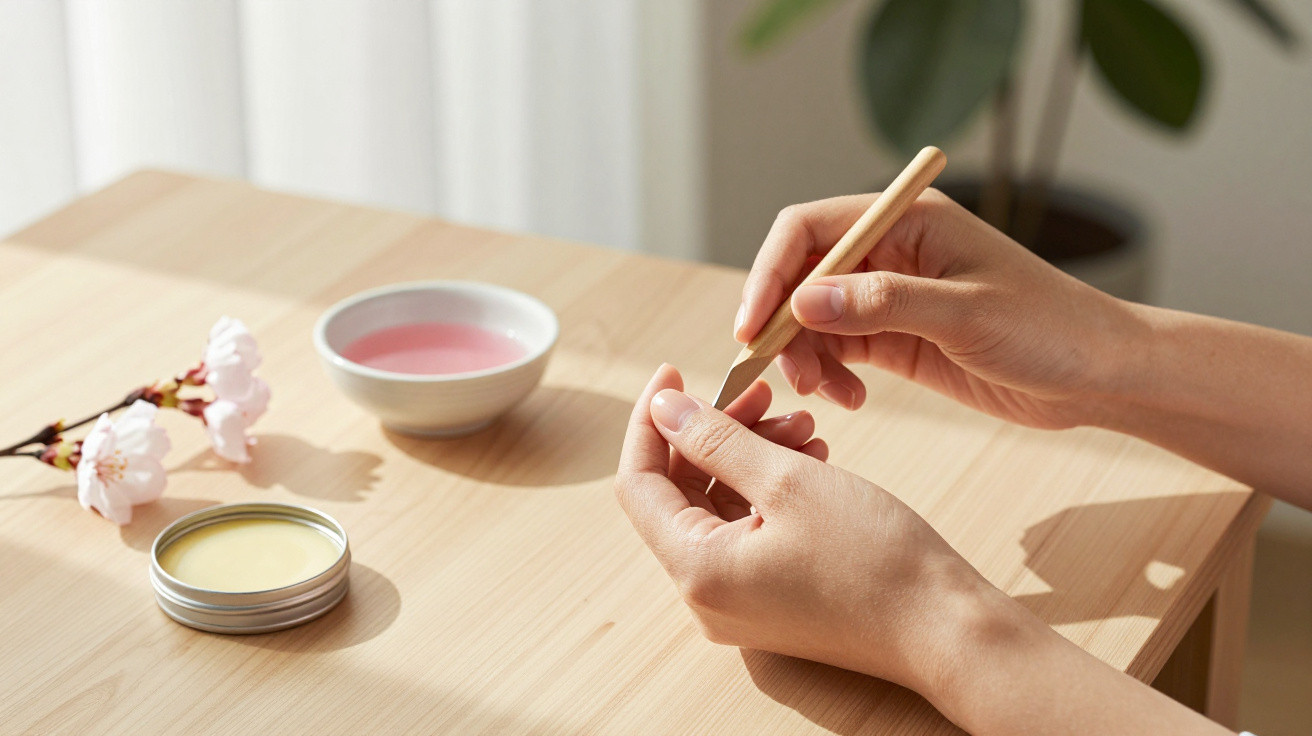
A homemade eyebrow balm is a practical option: melt 1 teaspoon of organic castor oil with half a teaspoon of beeswax in a bain-marie to create a small styling balm. Pour it into a clean jar and allow it to cool. A tiny amount on a spoolie can then be used to comb the hairs into shape. This combines care and styling in one step.
People who use castor oil every day for at least six to eight weeks often see a visibly calmer, fuller eyebrow line.
Step 2: create instantly fuller-looking eyebrows with light and line
Care requires a little patience, but sometimes you want an immediate result. This is where make-up comes in - applied strategically rather than as a heavy layer of colour.
Highlight rather than blocks: make the eyes look more awake
Professionals often work with light. A light, creamy concealer or subtly shimmering highlighter just beneath the brow arch can make a remarkable difference. Follow the natural shape and blend it out softly. This creates a delicate contrast that gives the eyebrows more visual presence without painting over them.
The shade should be only slightly lighter than your own skin tone. Colours that are too pale or highly glittery can quickly make the area look unnatural or overdone.
Imitate hairs instead of drawing them on
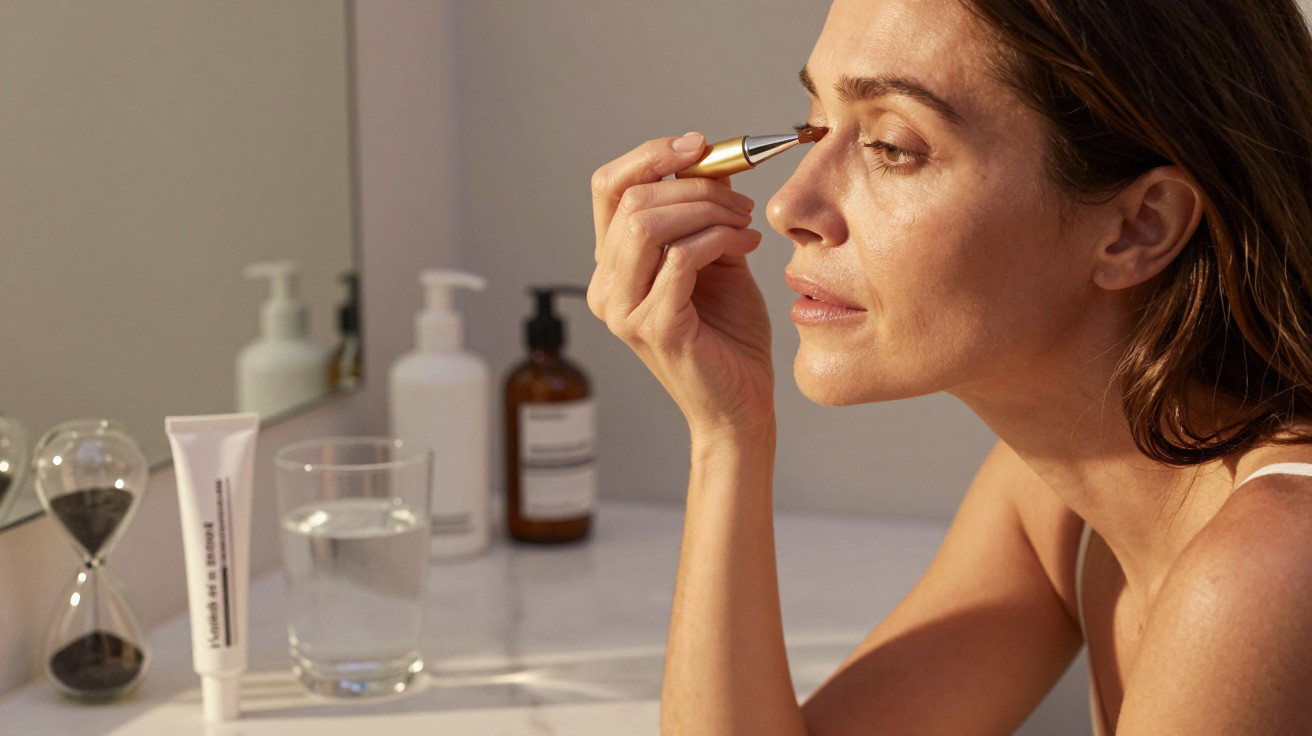
Rather than filling in a solid block, use a hair-by-hair technique. A sharp, fairly dry eyebrow pencil or a fine powder in a precisely matched shade works best.
This is how to achieve the visual lifting effect:
- Identify gaps and fill only those areas with short, fine strokes.
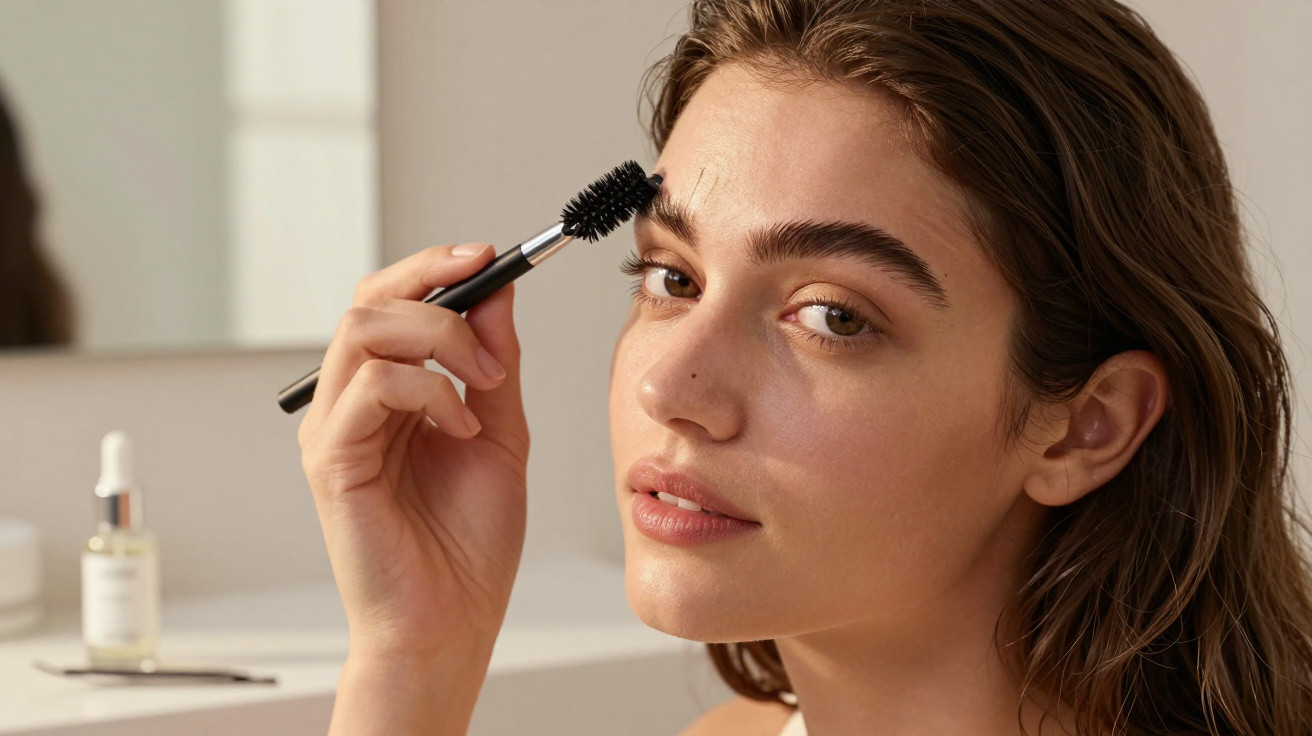
- Brush through the eyebrows gently with a spoolie so that the colour blends with the hairs.
- Finally, brush the eyebrows slightly upwards and outwards to open up the eyes.
Many strong setting gels can leave hairs looking stiff and brittle, or create fine white residue. If your skin is dry or sensitive, lightweight conditioning gels - or a homemade balm - are a better choice.
Take care with permanent methods
Microblading may sound like a convenient long-term solution for many people. However, side effects often become apparent after a few years: the initially fine strokes widen, the colours change and can take on a greyish or reddish cast. Several top-up appointments may also further irritate the already sensitive skin around the eyebrows.
For mature skin in particular, many professionals therefore recommend reversible methods. Mistakes can be corrected, trends can be adapted and the skin gets regular opportunities to recover.
Step 3: fuller eyebrows start on the plate
Eyebrows are simply hairs, and hair is made of protein. Those who do not consume enough protein and certain micronutrients may notice it not only in brittle ends but also in sparser eyebrows.
Nutrients that support connective tissue and hair follicles
The following nutrients are particularly relevant for strong eyebrow hairs:
- Protein for building the hair structure
- Biotin for keratin production and resilience
- Omega-3 fatty acids to support the skin barrier
- Zinc for cell division at the hair root
- Iron for a good oxygen supply to the follicles
These can be incorporated into everyday meals with ease, for example:
- Morning: an egg with yoghurt and chia seeds.
- Lunch: a salad with salmon or mackerel and a portion of lentils.
- Evening: vegetable soup with chickpeas or red beans.
Anyone unsure whether they have a deficiency of iron or other nutrients should discuss it with their GP. A targeted blood test can provide clarity.
How small habits affect eyebrows
Alongside the three core areas of care, make-up and nutrition, daily routines also matter. Frequently rubbing the eyebrows too firmly - when removing make-up or because of allergies, for example - can pull out fine hairs more quickly. Very hot showers or sauna visits without subsequent care may dry out the skin in this area.
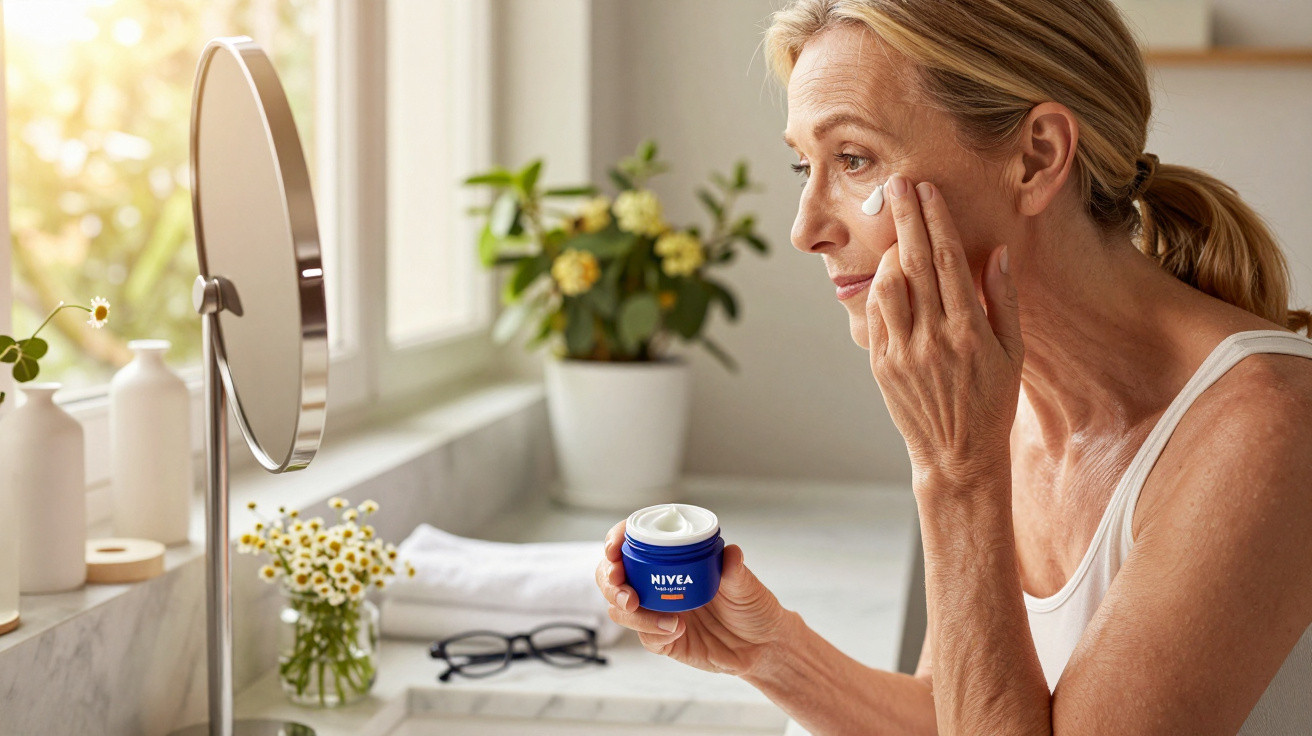
Instead, use gentle movements with minimal pressure, keep water lukewarm and apply moisturising care around the eye area to keep the skin supple.
What is realistic - and what is not
In most cases, it is not possible to create completely new, bushy eyebrows like those you had at 20 once you are over 50. Genetic predisposition, previous tweezing habits and hormonal factors set limits. However, with consistent care, a nutrient-rich diet and a few styling techniques, the existing brow line can be noticeably improved.
It is useful to set aside one or two days each month for an honest look in the mirror. Is the shape still right? Is the highest point of the arch in the correct place, or is it visually pulling the eye downwards? Such details determine whether the expression looks open and friendly or tired.
Three adjustments - care, light placement and nutrition - are often enough to make the face look noticeably younger without appearing “done”.
If you feel unsure about your technique, a one-off consultation with a professional eyebrow specialist can help. A well-tailored basic shape and a few techniques you can copy at home often achieve more than any quick online trend. This allows eyebrows to remain a strong, natural frame for the face after your 50th birthday too.








Comments
No comments yet. Be the first to comment!
Leave a Comment