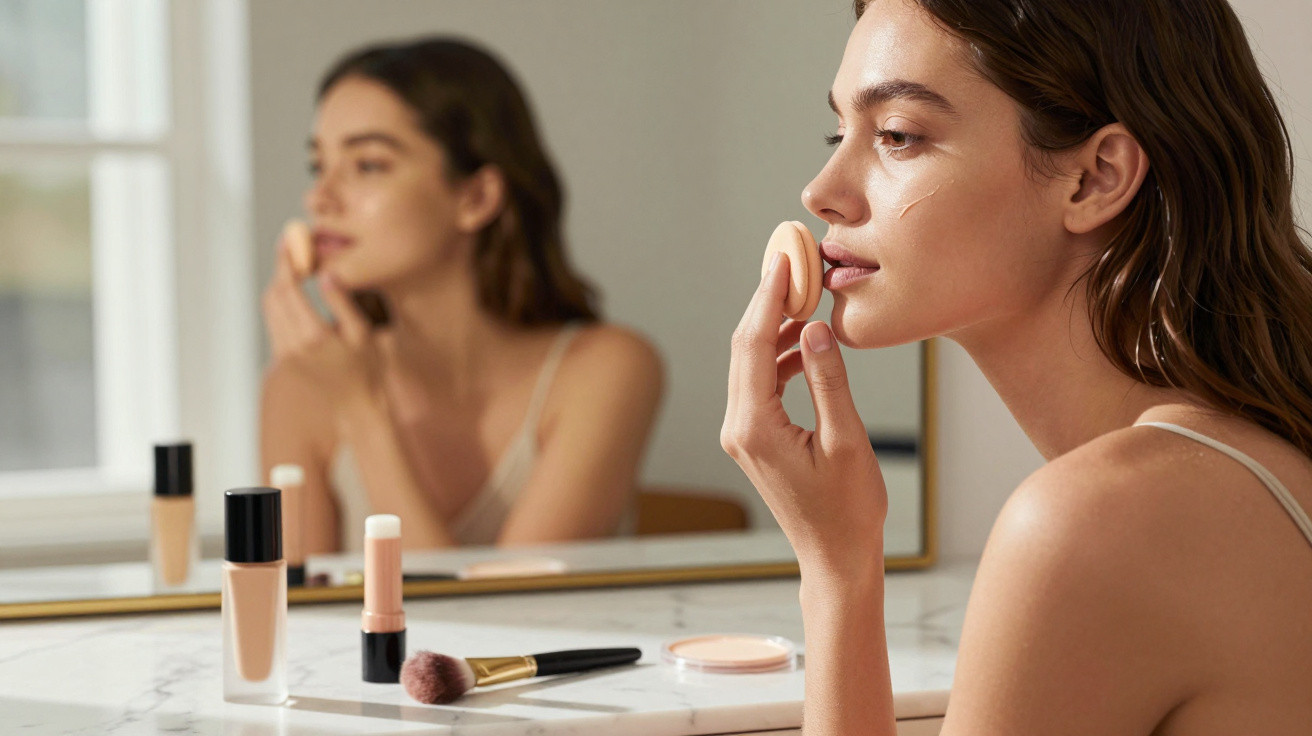
Anyone who has noticed, after hours in front of the mirror, that their foundation has settled into every pore or highlighted dry patches will know the problem: the product is meant to improve the complexion, yet ends up making it look visibly worse. The good news is that this is usually not down to your skin, but to the wrong type of make-up and an unsuitable application technique.
The most important base rule: foundation must suit your skin type
Before considering brands or trending products, one question matters above all: how does your skin behave throughout the day? Is it more dry, shiny, balanced or visibly mature? The answer determines which kind of foundation will genuinely flatter your skin-and which one may make it appear older or less even.
Normal to combination skin: plenty of choice, with the right approach
Normal to slightly oily combination skin offers the widest range of options. In principle, the following can all work:
- liquid foundation with medium coverage
- a tinted moisturiser or skin tint for a barely made-up finish
- compact powder foundation for greater mattifying power
The key is the finish. If your complexion often looks dull, a softly radiant, “dewy” finish can bring back freshness. If shine across the forehead, nose and chin is the bigger concern, a semi-matte finish is a better fit. Completely matte formulas can quickly look flat and powdery, particularly in daylight.
Dry skin: choose creamy formulas over powder
Anyone prone to dry patches, tightness or flakiness needs a foundation with skincare benefits. Good options include:
- liquid formulas with a high water content
- creamy formulations containing lightweight plant oils
- serum foundations with hydrating ingredients such as hyaluronic acid
Pure powder products and intensely mattifying mousses emphasise dehydration lines and can make the skin look dull very quickly. A better approach is light coverage with concealer applied only where needed, rather than wearing one thick layer across the whole face.
“Anyone who ‘kills’ dry skin with too much powder will look older after a short time, no matter how expensive the product is.”
Oily skin: mattify without clogging the pores
If skin becomes shiny quickly or is prone to blemishes, maximum mattification may sound appealing at first. In reality, however, extremely heavy and full-coverage formulas often look cakey and collect around uneven areas.
These options tend to work better:
- oil-free liquid foundations
- lightweight gel textures with a mattifying effect
- mineral powders that absorb sebum without looking chalky
A translucent setting powder used only through the T-zone is usually enough. Powdering the entire face can create a mask-like effect and make product layers obvious, especially later in the afternoon.
Mature skin: lightness beats full coverage
As skin matures, powders and firm mousse formulas can become difficult to wear. They tend to settle into lines and wrinkles, making facial features appear harsher.
Make-up artists therefore recommend:
- very lightweight liquid foundations
- soft-focus textures with soothing or smoothing ingredients
- products with a subtle glow rather than a fully matte finish
“Foundation should not hide wrinkles; it should draw attention away from them-with lightness and a delicate glow.”
The type of foundation that genuinely improves the complexion
Across all age groups, one clear pattern emerges: skin looks its best when foundation sits like a sheer second layer, rather than a heavy mask. Products that achieve this usually share the following qualities:
- light to medium coverage that can be built up in thin layers
- a fluid or gel-like texture instead of a rich cream or dry powder base
- a skin-like finish: neither intensely shiny nor chalkily matte
- skincare ingredients suited to the skin type, such as hydration for dry skin and mattifying components for oily skin
For everyday wear, many people only need a so-called “your-skin-but-better” product. In other words, it is less of a traditional full foundation and more of a lightly tinted complexion enhancer. These products are more forgiving of application mistakes, settle into lines less readily and can be refreshed easily during the day.
Foundation that can make the complexion look worse
Choosing the right formula matters just as much as knowing which products are best left on the shelf. Certain textures can reliably make even naturally good skin look uneven.
Avoid dry, full-coverage powders on fine lines
Very compact powder paired with mature or dry skin is an unflattering combination. It can leave the skin looking dull, make every line more noticeable and take vitality away from the face.
Strongly mattifying mousse textures can also be problematic, particularly on skin with visible wrinkles or enlarged pores. They sit over uneven texture like filler, drawing attention to precisely the features that should be softened.
Heavy camouflage for everyday wear: more harm than good
High-coverage camouflage foundations certainly have their place-for pronounced redness, scars or special occasions in front of the camera, for example. In normal daylight, though, they can quickly appear artificial. Often, all that is needed is:
- a lightweight foundation as a base
- a high-coverage concealer applied only to the areas that need it
This keeps the skin’s texture visible and gives the complexion a lively appearance rather than a heavily plastered-on look.
Application: how foundation can look like real skin
Even the best texture can fail if it is applied incorrectly. For many people, the complexion only begins to look natural when less product is used than they would initially expect.
Less product, more precision
For a fresh everyday look, a small amount-roughly a pea-sized blob-is generally sufficient. Apply it:
- starting at the centre of the face, around the nose and cheeks
- blending it outwards towards the edges
- taking particular care to diffuse it along the hairline and jawline
Fingers, a brush or a lightly dampened make-up sponge can all work well. Fingers create a particularly skin-like result, sponges lift away excess product for a more refined finish, while brushes generally provide a little more coverage.
“Those who apply foundation only where it is genuinely needed almost always look younger and more awake.”
Use powder only where shine is genuinely a problem
A light layer of translucent powder over the forehead, nose and chin sets the make-up without making all of the skin look dull. It is better to leave the cheeks a little more lively, as their natural sheen can make the face appear fresher.
What modern foundations can also do
Many current products combine make-up with skincare. Some formulas contain:
- moisturising ingredients such as glycerine or hyaluronic acid
- antioxidants to address the first signs of skin ageing
- UV filters for additional everyday sun protection
Even so, foundation is no substitute for a reliable skincare routine. Anyone relying solely on make-up with SPF will usually apply too little product to receive meaningful protection. It is better to use sunscreen as the final skincare layer, followed by a lightweight foundation.
Practical examples for choosing the right foundation
A few common scenarios can help provide guidance:
- Dry cheeks, shiny forehead: choose a lightweight, hydrating foundation, then apply a small amount of powder only to the forehead.
- Mature skin with visible pores: use a liquid texture with a subtle glow, apply it very thinly, add concealer only where needed and use hardly any powder.
- Young, oily skin with spots: choose an oil-free foundation with medium coverage, layer it lightly, cover blemishes directly and use matte powder in the T-zone.
If you cannot clearly identify your own skin type, trial different textures for a full day, ideally in daylight. This will quickly reveal whether a foundation settles into lines, becomes shiny, dries the skin out or wears evenly.
Ultimately, no trending product determines whether skin truly looks good. It comes down to the combination of the right texture, a sensible finish and gentle application in thin layers. Those who favour lightness over full coverage will usually achieve what everyone wants: a complexion that looks like healthy skin, not like a lot of make-up.








Comments
No comments yet. Be the first to comment!
Leave a Comment