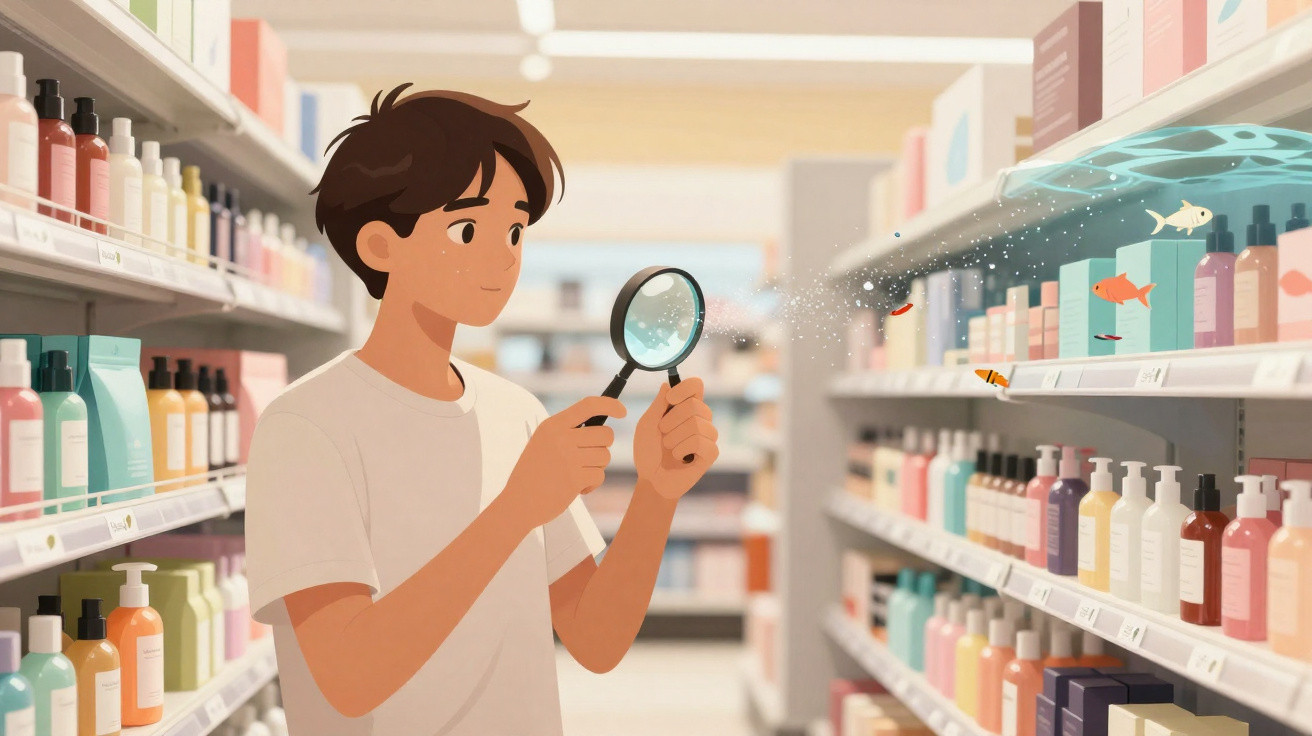
A silent shockwave has hit the beauty aisle: a new cross-border review of everyday cosmetics suggests that microplastics are still concealed in everyday formulas - not only in niche labels. Attention is now shifting towards major names that may already be in your bathroom.
A teenager scrolls through shades of high-coverage foundation; a nurse in scrubs weighs up a “water-resistant” sunscreen; a father studies two baby lotions as though choosing a vintage wine.
Most of us have experienced the reassurance of a well-known label. Then comes the nagging question: what is actually in it? A report notification flashes up, carrying an unsettling claim - microplastics remain in bestselling products, rather than being limited to outdated exfoliating scrubs. Suddenly, the aisle seems more intense, more confusing and more difficult to read.
One brand group catches your eye, followed by another, then another. The list is longer than people would like to acknowledge.
The study that shook the beauty aisle
The latest assessment, drawing on laboratory-supported ingredient-list screening by environmental organisations and independent partners, highlights a persistent problem: microplastics did not truly disappear from beauty products; instead, they took different forms. Microbeads have been removed in many countries, but the polymers remain.
From chemists to premium beauty counters, the same brand families recur in databases including Beat the Microbead and consumer scanning tools such as CodeCheck. In make-up, that includes L’Oréal Paris and Maybelline; in everyday personal care, Garnier and Dove; and in facial and body products, Neutrogena, Aveeno and Olay. Dermocosmetics names include Nivea, Eucerin, La Roche-Posay and Bioderma. This does not apply to every product or every market, but it is a recurring pattern that warrants attention.
What appears in the formulas? Ingredient names easily lost in the small print: Polyethylene (PE), Polypropylene (PP), Nylon-12, Polyethylene Terephthalate (PET), plus film-forming and thickening ingredients such as Acrylates Copolymer, Acrylates/C10-30 Alkyl Acrylate Crosspolymer and Acrylates/Octylacrylamide Copolymer. These substances can provide a silky feel, water resistance and transfer-proof performance. They can also persist in places where they are unwanted.
The difficult finding is this: in a sample of 120 widely used leave-on and rinse-off products, over half included at least one synthetic polymer campaign groups classify as a microplastic. Water-resistant sunscreens and long-wear make-up were the main hotspots. Many formulas contained no visible beads, relying instead on dissolved or finely dispersed plastics that regulators still count.
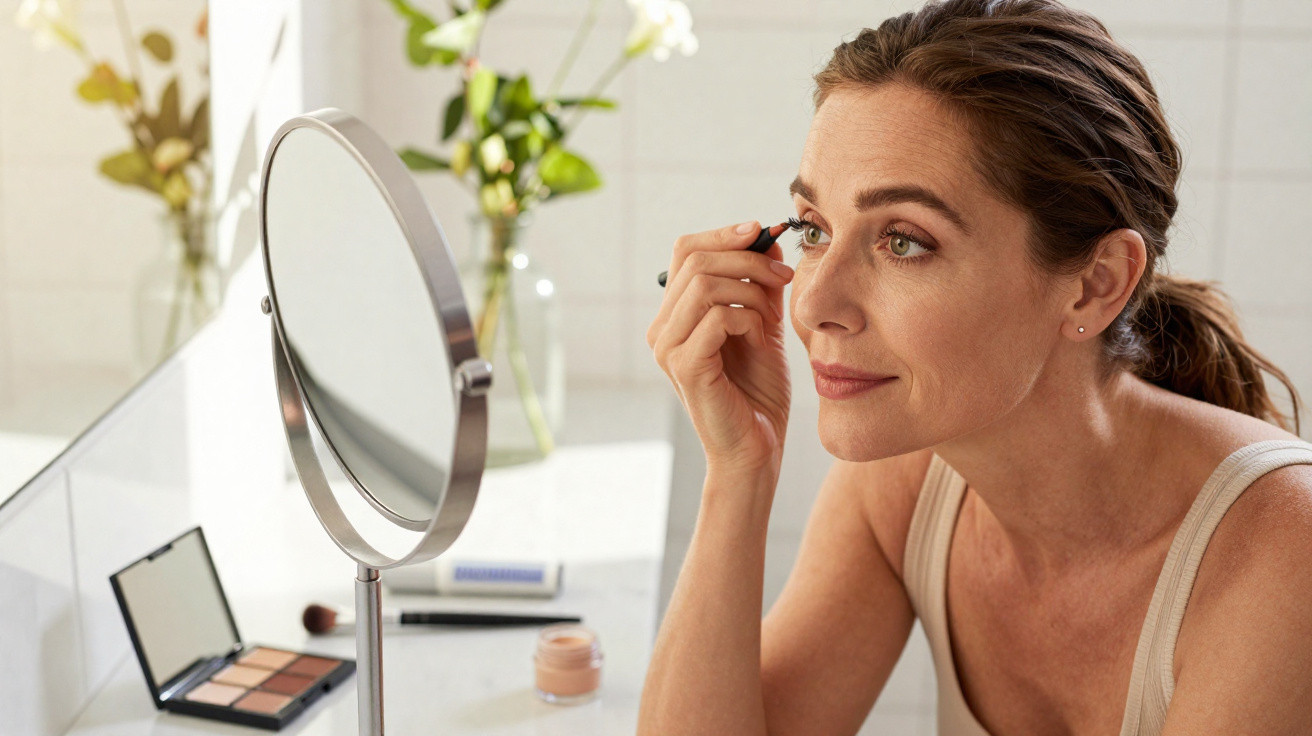
Consider a standard routine: a matte foundation containing Nylon-12, transfer-proof eyeliner made with an acrylates copolymer, a daily moisturiser thickened by crosspolymers, and a “beach day” sunscreen that uses film-formers to stay in place. In store, these are product benefits. Once washed away, they become something very different.
Consumers are left facing a gap in trust. Packaging often advertises what is absent - sulphates, parabens or fragrance - while plastics pass unnoticed under chemistry-style names. A formula may be “microbead-free” while still containing substantial microplastic ingredients. That distinction matters, and it is why the study has struck a chord.
Microplastics are not limited to solid beads. Scientists and regulators now also consider micro- and nano-sized particles, alongside certain persistent, non-biodegradable polymers. Some dissolve in water and others do not. Their common characteristic is persistence, along with the potential to build up in ecosystems and, increasingly, in people.
EU restrictions are already beginning to take effect. A phased REACH ban addresses intentionally added microplastics across industries, with transition periods for cosmetics dependent on synthetic polymers. In practical terms, time is running, but shop shelves will not transform immediately. Brands will reformulate; many have already done so, while many have not.
This is not a reason to panic; it is a case for making informed choices. Learn to recognise the polymer families most often flagged. Give particular attention to the product types most associated with plastic exposure: long-wear make-up, water-resistant SPF, glitter or shimmer finishes, and “blurring” textures that frequently use Nylon-12. The point is not to abandon beauty products, but to assess them in a new way.
How to shop smarter and avoid hidden plastic
Try a 30-second ingredient check. Turn over the product, scan the INCI list and look for warning signs including “polyethylene”, “polypropylene”, “polyethylene terephthalate”, “nylon-12”, “polyacrylate”, “acrylates copolymer”, “acrylates/C10-30 alkyl acrylate crosspolymer” and “acrylates/octylacrylamide copolymer”. Pay twice as much attention to claims such as “transfer-proof”, “blurring” and “water-resistant”. If you are short of time, scan the barcode in the shop using the Beat the Microbead app or CodeCheck.
Start by replacing the categories with the greatest impact. Unless you genuinely require splash-proof performance, exchange daily water-resistant SPF for options without film-formers. For complexion make-up, seek silicone- or starch-based blurring products rather than nylon-based mattifiers. For glitter, choose biodegradable mica or cellulose-based shimmer instead of plastic sparkle. One meaningful switch has more impact than five minor ones.
Use texture as one clue. If something feels like cling film on the skin, it probably contains a film-former. Even so, lightweight gels may conceal polymers, so feel is not enough on its own. If a brand publishes a “No Microplastics” policy, examine the details: some policies rule out beads only, rather than soluble polymers. Where possible, choose independent certifications or brands on the “Look for the Zero” list that pledge to use zero microplastic ingredients.
The most common errors are entirely understandable. A “clean” label can make you stop checking ingredients. “Microbead-free” can sound like plastic-free. Mineral sunscreen may seem automatically free from microplastics, even though a formula can use acrylates to make it water-resistant. In reality, hardly anyone carries out this check every day.
Be selective about where you make changes. Switching daily moisturiser and cleanser is relatively easy and can offer a strong return. Long-wear foundation and “tattoo” eyeliners are more challenging, because reformulation can genuinely affect performance. Test a non-polymer alternative over a weekend, when the pressure is lower. If it performs at brunch, introduce it into your workday routine.
Claims about performance can be misleading. Make-up professionals will say that staying power comes from layering, not polymers alone. Primer, setting product and mist - that combination can last longer than one heavy film-former. Brands repeatedly flagged for polymer-heavy SKUs may also offer polymer-light ranges, particularly for sensitive skin. Leave-on products merit closer attention because they create the longest exposure period. Beat the Microbead is still the quickest database for checking what has changed since the previous season’s launch.
“If it’s tiny and plastic, it doesn’t magically disappear - it just changes audience, from your mirror to the river.”
- Save a scanner app and use it for your next three purchases.
- Make replacements in this order: sunscreen, foundation, glitter.
- Memorise five names: polyethylene, nylon-12, acrylates copolymer, PET, crosspolymer.
- Opt for powders and balms, which use fewer film-formers.
- If unsure, select brands with publicly available microplastic-free policies.
What happens next for microplastics in cosmetics
The industry is progressing gradually. Reformulating a bestseller can take months and sometimes years, while supply chains are complicated. Laboratories are developing plant-based film-formers and biodegradable polymers that can withstand sweat, time and cameras. Some improvements are already available on shelves, though they are not always heavily promoted.
You do not need to wait for a perfect solution to make a difference. Replacing one unnecessary water-resistant product with a straightforward, non-film-forming alternative prevents a flow of plastic from going down the sink. Choosing with your wallet can accelerate reformulation more effectively than an angry social-media post. If a product you value is reformulated, let the brand know what succeeded and what did not.
The study has done what research does best: pushed discussion beyond marketing and back towards materials. What follows depends on habits, peer influence and a little curiosity whenever we pick up a tube. The aisle has not changed; the way we interpret it has.
| Key point | Detail | Why it matters to the reader |
|---|---|---|
| Brands to watch | Repeatedly flagged product lines across L’Oréal Paris, Maybelline, Garnier, Nivea, Dove, Neutrogena, Olay, Aveeno, La Roche-Posay, Eucerin, Bioderma | Direct attention to the areas that matter rather than outliers |
| Ingredients to spot | Polyethylene, Polypropylene, PET, Nylon-12, Acrylates Copolymer, Crosspolymers | Quick ingredient triage in 30 seconds |
| High-impact swaps | Water-resistant SPF, long-wear make-up, glitter/shimmer | Reduce the largest microplastic inputs with minimal inconvenience |



Comments
No comments yet. Be the first to comment!
Leave a Comment