What started as something tucked into a pocket is discreetly evolving into a campus-to-Depop micro-business - and an unexpectedly heartfelt take on sustainable fashion.
The studio carried a slight scent of glue and rain on one of those grey Leeds afternoons when the world seems softened at the edges. A student emptied a small pile of faded bus tickets, with serrated tops and timestamp typefaces that appeared lifted from a vintage cash register. She smoothed one beneath glass, added a drop of clear resin, and saw the ink become crisp and deliberate. What you throw away today could be tomorrow’s heirloom. The paper seemed valueless, until it wasn’t. It all began with an ink smudge.
From pocket lint to pendants: the rise of ticket jewellery
Ticket jewellery feels especially current for a simple reason: it is small, affordable and deeply personal. Students may have limited funds but plenty of imagination, while old bus tickets offer ready-made visuals: grids, route numbers and compact panels of orange or off-white. Old bus tickets carry stories you can wear. As contactless payments remove the ritual of purchasing a fare, a modest paper ticket becomes evidence that you were there - at 08:12, taking the 49 into town.
Everyone knows how a forgotten pocket scrap can instantly return you to a particular place or person. That is the appeal. A second-year textiles student in Brighton told me she wore studs made from the first ticket she bought after leaving home. In Manchester, ticket pendants at a campus-fair pop-up had sold out before lunchtime. Official figures still record billions of local bus journeys in England each year, while TikTok is full of “trash-to-treasure” videos - the audience is ready.
Beyond the sentiment, the idea has an obvious rationale. Upcycling challenges fast fashion by using materials already in circulation. Bus tickets deliver budget-friendly graphic design and sit neatly between nostalgia and sustainability. To make something appealing, students do not require costly metals; they need a proper seal, an eye for layout and a story card. The cost-of-living crisis has accelerated DIY fashion, yet it is the emotional connection - this was my route, this was my city - that continues to drive the trend.
How to turn a bus ticket into a wearable keepsake
Begin by choosing the right ticket. Look for sharp lettering, distinctive route codes or characterful stamps, then use a craft knife and cutting mat to neaten any torn edges. Press the ticket flat overnight in a heavy book, placed between two sheets of baking paper. Apply a light layer of water-based varnish or decoupage glue to each side so the ink does not bleed. After it has dried, cut your chosen form: a tidy rectangle, a small circle made with a 12–14 mm punch, or a narrow bar that highlights the timestamp. Encapsulate it in plant-based or low-VOC UV resin, cure it beneath a lamp, then attach a jump ring and ear wire.
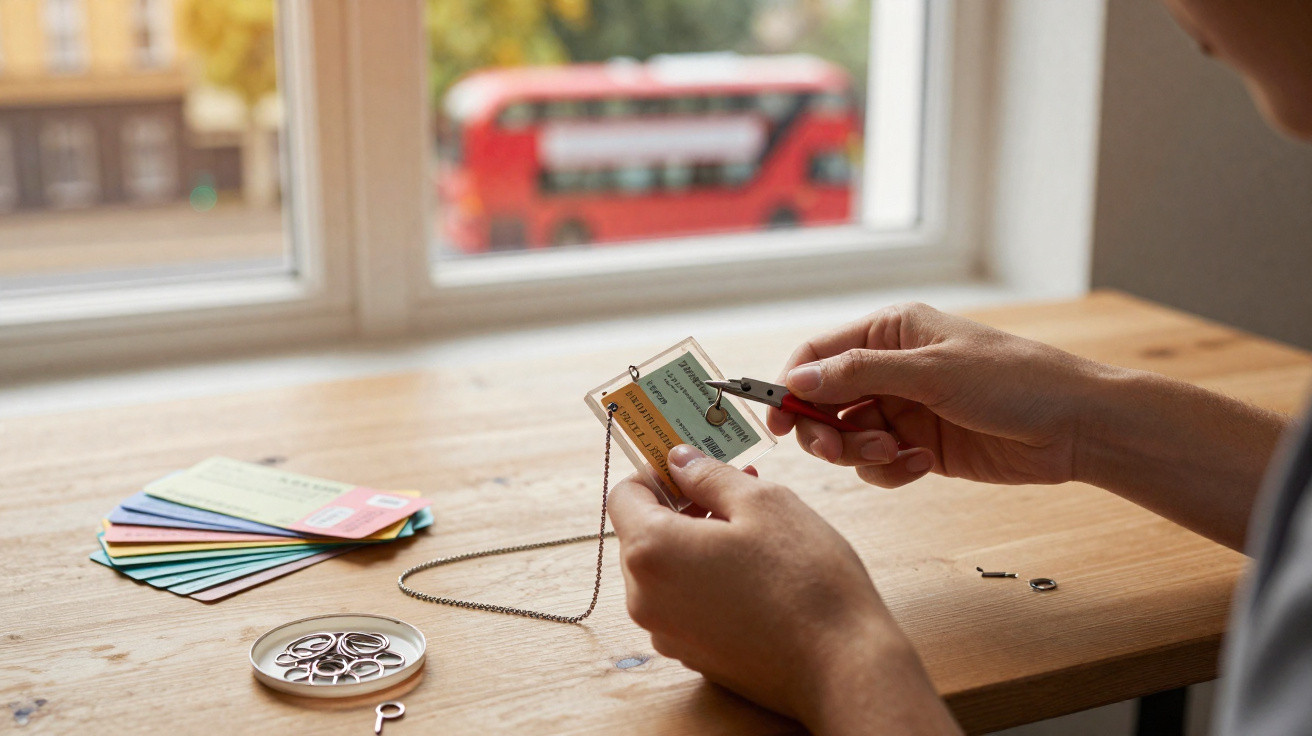
There is also a resin-free option. Place the sealed ticket between two sheets of transparent acetate - or eco-acetate offcuts from spectacle makers - then finish the edges with washi tape or slim copper foil for a smart frame. Make a hole using a pin vice, fit the findings, and it is ready. Realistically, nobody wants to spend a Tuesday evening sanding tiny resin bubbles. Batch your work on a tray, keep fluff at bay, and take before-and-after photographs: buyers enjoy the transformation narrative nearly as much as the gloss.
Avoiding the usual mistakes is straightforward. Thermal tickets may darken when exposed to heat or strong varnishes, so try a small corner first and avoid heated tools. Never miss the sealing stage, as untreated paper absorbs resin and turns cloudy. Keep the drill clear of printed sections to prevent tears, and create a small domed resin edge for extra strength.
“I charge £12–£18 a piece,” says Amara, 20, who studies at UAL and sells on Depop. “Every pendant ships with a route note - where the bus went, what the day meant. That’s what people buy.”
- Include story cards with the route, date and city - specific details matter to buyers.
- Scan every ticket before making it, allowing you to produce matching prints for sets.
- Choose recycled silver or gold-plated findings for hypoallergenic jewellery.
- Style photographs with transit maps or Oyster cards to create scroll-stopping images.
Why this micro-trend matters more than it looks
This is sustainability that feels cultural rather than like a chore. A bus ticket holds local character - Stagecoach orange, London’s former magstripe look, or the washed-out blue of a seaside route - while costing nothing to obtain. Brands discuss circularity; students practise it, transforming discarded materials into emotional hardware. Start small, move fast, and let the paper do the talking. What may appear to be a small trinket offers a wider lesson for fashion’s future: fresh design does not depend on virgin materials. Should contactless payment remove paper tickets altogether, these creations will become even more meaningful - small relics of travel, tied to a time and place that you can identify and say, yes, that was me.
| Key point | Detail | Why it matters to the reader |
|---|---|---|
| Seal before you shine | Water-based varnish on both sides stops ink bleeding and cloudiness | Neater finishes and colour that lasts longer |
| No-resin alternative | An acetate sandwich edged with washi tape or copper foil | A quick, low-mess method suitable for halls of residence |
| Story sells | Add route and date notes, then photograph with transport ephemera | Increases clicks, saves and conversions across social media and marketplaces |

















Comments
No comments yet. Be the first to comment!
Leave a Comment