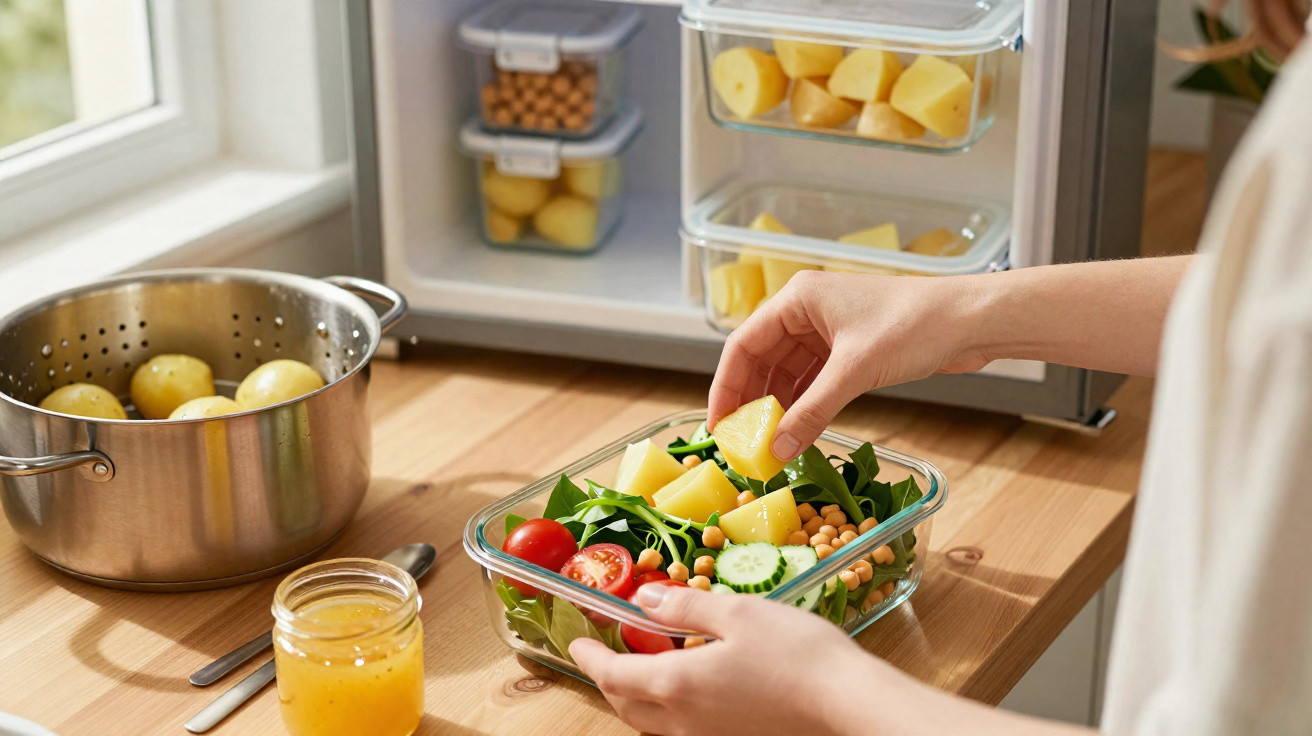
Anyone spending their lunch break with a colourful bowl of salad in spring and summer usually wants two things: few calories but lasting fullness. Pasta or rice are therefore the usual base. Nutrition professionals are now taking a more critical view, however, because a familiar vegetable provides fewer calories, more nutrients and keeps you full for longer when prepared properly.
Why a salad without a filling ingredient rarely satisfies
A bowl of leafy salad with a few tomatoes may look healthy, but it seldom sees you through to the end of the working day. Alongside vegetables, the body needs protein sources and carbohydrates to provide fuel. This is where starchy accompaniments come in, including:
- Pasta, usually made from durum wheat
- Rice
- Potatoes
- Bulgur, couscous or quinoa
Many people trying to cut calories assume that the less ‘heavy’ something feels, the better it is. A small portion of rice often ends up in the salad as the supposedly lighter choice. Yet the measurable figures point towards another classic.
“Fewer calories per 100 grams, a high satiating effect and plenty of vitamins: that is exactly what potatoes offer – when they are prepared correctly.”
Rice, pasta or potatoes: a direct calorie comparison
When cooked, rice and pasta are fairly similar. Average values are:
| Food (cooked) | Calories per 100 g |
|---|---|
| Rice | approx. 110–120 kcal |
| Pasta | approx. 100–120 kcal |
| Potatoes | approx. 70–80 kcal |
Potatoes therefore come in noticeably below rice and pasta. This is a clear benefit for anyone watching their weight: for the same number of calories, a bowl can hold more potato than rice or pasta.
Preparation is crucial, though. These figures apply to boiled or steamed potatoes, not chips, fried potatoes or croquettes from a takeaway. Fat is quite literally absorbed by the potato and quickly pushes up its calorie content.
The overlooked benefits of potatoes in salad
Nutrition experts stress that potatoes are more than a ‘cheap, filling side dish’. They are particularly valuable in a mixed salad, where they offer:
- complex carbohydrates that enter the bloodstream slowly
- fibre to support digestion
- vitamin C, which supports the immune system
- B vitamins for the nerves and energy metabolism
- minerals such as potassium, important for blood pressure and muscles
After a potato-based meal, blood sugar levels remain steadier. This can reduce the risk of afternoon cravings, making the usual reach for the sweets drawer less likely.
“Adding potatoes to a salad does not just mean fewer calories; it also means longer-lasting fullness and more micronutrients.”
Chilled potatoes become even more interesting
For salads, potatoes are generally cooked in advance, cooled and then prepared further. From a gut-health perspective, that is precisely what makes them especially interesting. As they cool, they form what is known as resistant starch.
What resistant starch does in the body
The small intestine can break down resistant starch only to a limited extent. It reaches the lower sections of the gut, where it acts as ‘food’ for certain bacteria. These bacteria produce substances from it that may protect the gut lining and reduce inflammation.
In practical terms, this means that potato salad left to develop its flavours and eaten cold tends to provide more resistant starch than potatoes served steaming straight from the hob. This creates a useful double benefit: fewer calories than rice or pasta, along with a potential digestive bonus.
How potatoes become the ideal base for a salad lunchbox
A few basic rules can turn the humble potato into a modern, practical salad ingredient for everyday meals:
- Choose waxy varieties: They do not fall apart, hold their shape and provide a good texture.
- Cook them in their skins, then peel them: This helps retain more vitamins and minerals.
- Boil or steam them: No extra fat is added, so the calorie advantage remains.
- Allow them to cool completely: This increases resistant starch and makes them easier to slice.
- Combine with plenty of vegetables: Peppers, cucumber, radishes, tomatoes, rocket or spinach all work particularly well.
Those who wish can add a portion of protein: a boiled egg, tuna, lentils, chickpeas, feta or strips of chicken. The result is a complete lunch that keeps you full for several hours.
Watch the dressing: this is where hidden calories lurk
In potato salad, the biggest calorie factor is rarely the potato itself but the dressing. Traditional versions made with mayonnaise, generous amounts of oil and bacon cubes can rapidly turn a light, filling meal into a calorie bomb.
Lower-calorie alternatives that still taste good include:
- A vinaigrette made with a little olive oil, vinegar, mustard and stock
- A yoghurt dressing with herbs, lemon juice and a small amount of oil
- A dash of linseed, walnut or rapeseed oil for healthy fats
This keeps the potato as the ‘light’ filling element in the salad rather than turning it into a hidden problem.
Common misconceptions about potatoes
A number of prejudices persist. Three appear repeatedly in conversations about ‘lighter eating’:
- “Potatoes make you fat”: They contain fewer calories than rice or pasta. What is more likely to add weight is what accompanies them: butter, creamy sauces, cheese or cooking fat.
- “Potatoes are empty carbohydrates”: This is not true. They supply vitamins, minerals and fibre. Compared with white pasta in particular, they often come out ahead.
- “Potatoes are boring”: In salads, they can be varied easily with fresh herbs, mustard, spring onions, vinegar, capers or gherkins.
How much potato belongs in a ‘light’ salad meal?
Nutrition advisers often use straightforward portion guidance: around 150–200 grams of cooked potatoes per meal counts as a side portion. In a large salad bowl intended as a full lunch, 200–250 grams can also be suitable, depending on individual energy requirements.
Anyone wanting to lose weight can use a palm-sized portion of potato pieces, alongside plenty of vegetables and a good protein source, as a guide. This keeps the calorie balance under control without leaving you hungry after lunch.
Practical ideas for everyday potato salads
To make the theory more practical, here are a few ideas for a lunchbox:
- Mediterranean potato salad: Cubed potatoes, cherry tomatoes, olives, red onion, peppers, feta, parsley, and a vinaigrette with olive oil and lemon juice.
- Nordic style: Potatoes, cucumber, radishes, dill, spring onions, and a yoghurt dressing with mustard and a little lemon zest.
- Protein version: Potatoes, rocket, chickpeas, grilled chicken or tofu, peppers, and a light honey-mustard dressing.
These combinations show just how versatile the potato is and how easily it fits into modern eating habits, far removed from heavy canteen-style potato salad.
When potatoes are not ideal after all
Despite their many advantages, there are situations in which rice or other grains may be more suitable. People with certain digestive problems do not always tolerate large amounts of resistant starch well. Anyone who regularly notices severe bloating or abdominal pain after cold potato dishes should reduce the portion or speak to a professional.
Potatoes do not always fit very strict low-carb approaches either, as they naturally provide significant amounts of carbohydrates. For most healthy people who simply want to eat ‘lighter’ while still feeling full, however, boiled potatoes in salad remain an extremely sensible option.

















Comments
No comments yet. Be the first to comment!
Leave a Comment