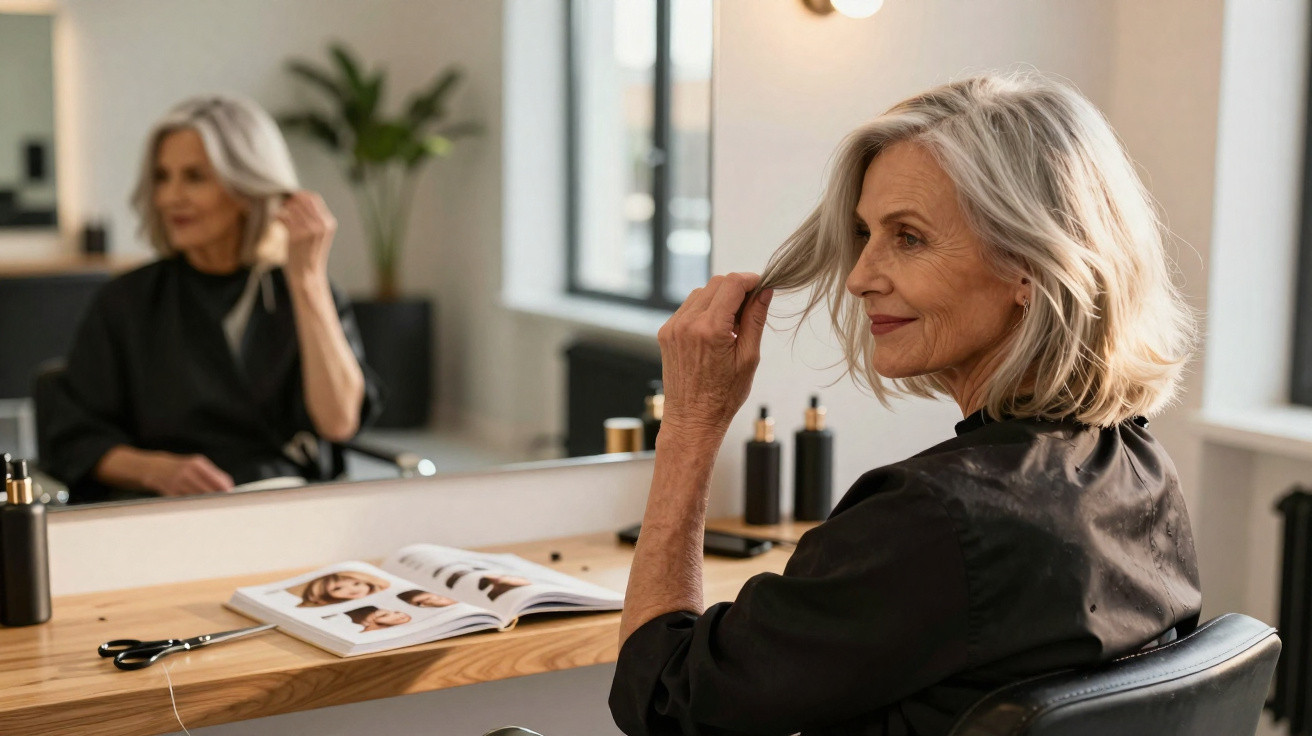
The hairdresser holds up one silver strand between her fingers and smiles. “You’ve got great hair,” she says. The woman in the chair lifts an eyebrow, partly entertained and partly doubtful. To her, her hair feels weighed down and weary, as though it carries every year that has passed. She wants it to feel lighter and more mobile: a style that does not announce “I’m trying to look young”, but gently communicates “I’m still very much here.”
Around her, women of a similar age leaf through magazines featuring models in their twenties. Those hairstyles do not seem to suit their faces, their histories, or their everyday lives of tea breaks and grandchildren’s toys scattered across the floor. They are looking for something different: a cut that honours their age while giving their hair freedom.
One particular haircut keeps appearing in salon mirrors.
The airy layered bob: a quiet revolution after 60
Ask an experienced stylist how to keep mature hair light and supple, and the same answer is likely to arise: a layered bob falling somewhere between the jaw and collarbones. It is short enough to take weight away from the roots, yet long enough to retain softness around the face. Rather than sitting tightly against the head, it seems to float.
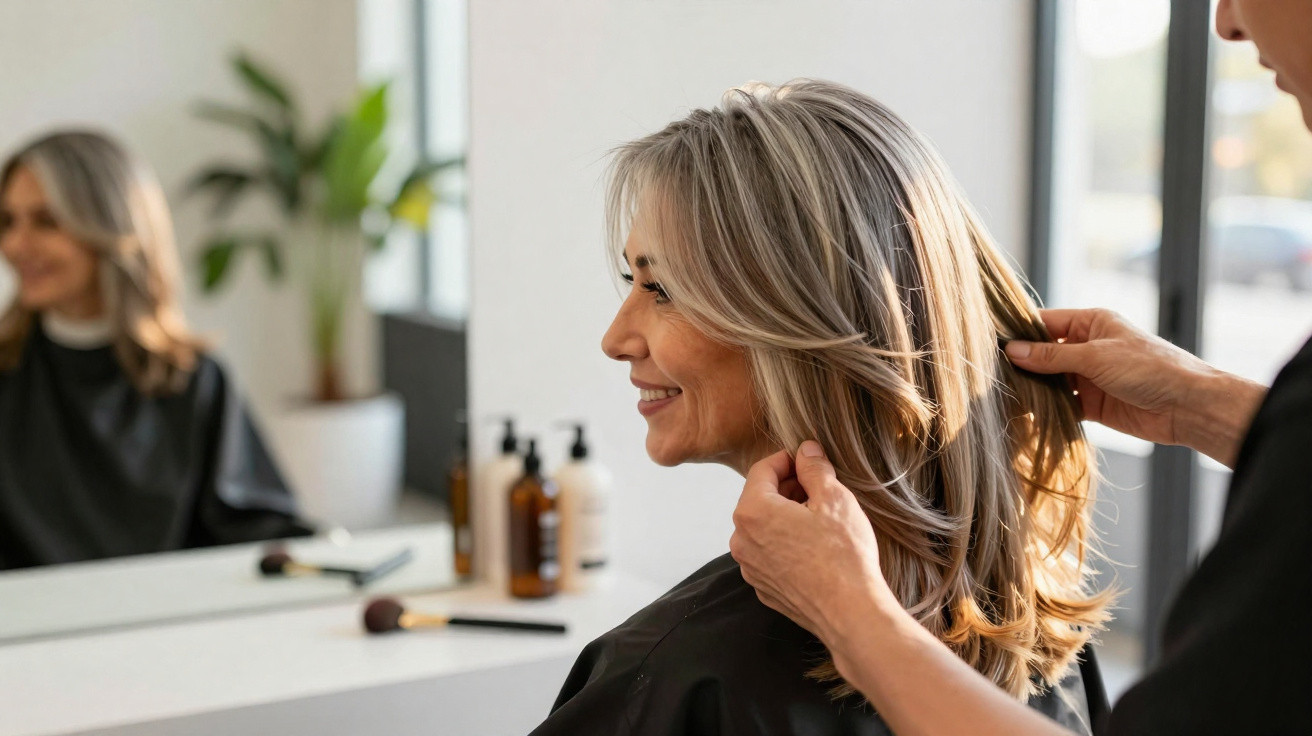
On white, salt-and-pepper or faded blonde hair, soft layers form subtle ripples of movement that reflect the light. The neck remains visible without being overly exposed, while the jawline is outlined rather than made severe. It is a style that works with thinning hair instead of battling it. This is not a dramatic chop, but a subtle change that can alter everything.
Imagine a Tuesday morning at a local salon. A client in her late sixties arrives wearing a long, straight ponytail, having rarely left her hair down for years. It tangles, hangs limp and requires continual blow-drying to appear even reasonably polished. She is nervous about having it cut, because that length feels tied to her identity.
The stylist recommends an airy layered bob sitting just above the shoulders, with gentle graduation at the back and a handful of lighter pieces around the face. Forty minutes later, she passes a hand through her hair and laughs. Her head feels genuinely lighter. The ends softly flick rather than drooping flat. As she walks out, she does not appear “younger” in an artificial way; she looks alert, as though a window has been opened.
The reasoning behind the cut is straightforward. After 60, hair commonly loses both density and elasticity. Long, single-length cuts drag the hair down, exposing the scalp and drawing attention to flat sections. Very short blunt styles, meanwhile, can leave hair protruding like a helmet. The layered bob avoids both outcomes by removing excess bulk at the ends, allowing the roots to lift.
The purpose of layering is not to create volume at any price. It is to redistribute the hair so that it can move naturally. A well-executed version respects the way the hair falls on its own: straight hair gains swing, wavy hair develops natural definition and curly hair has controlled bounce. The secret is not cutting more, but cutting smarter.
How to ask for - and live with - this flexible cut
Everything begins with the consultation. Rather than simply asking for a “bob” and hoping it works, sit down, pause and tell your stylist three things: how your hair behaves when left to air-dry, how much time you truly devote to styling it, and which feature of your face you like best. That final point helps determine where the layers should sit.
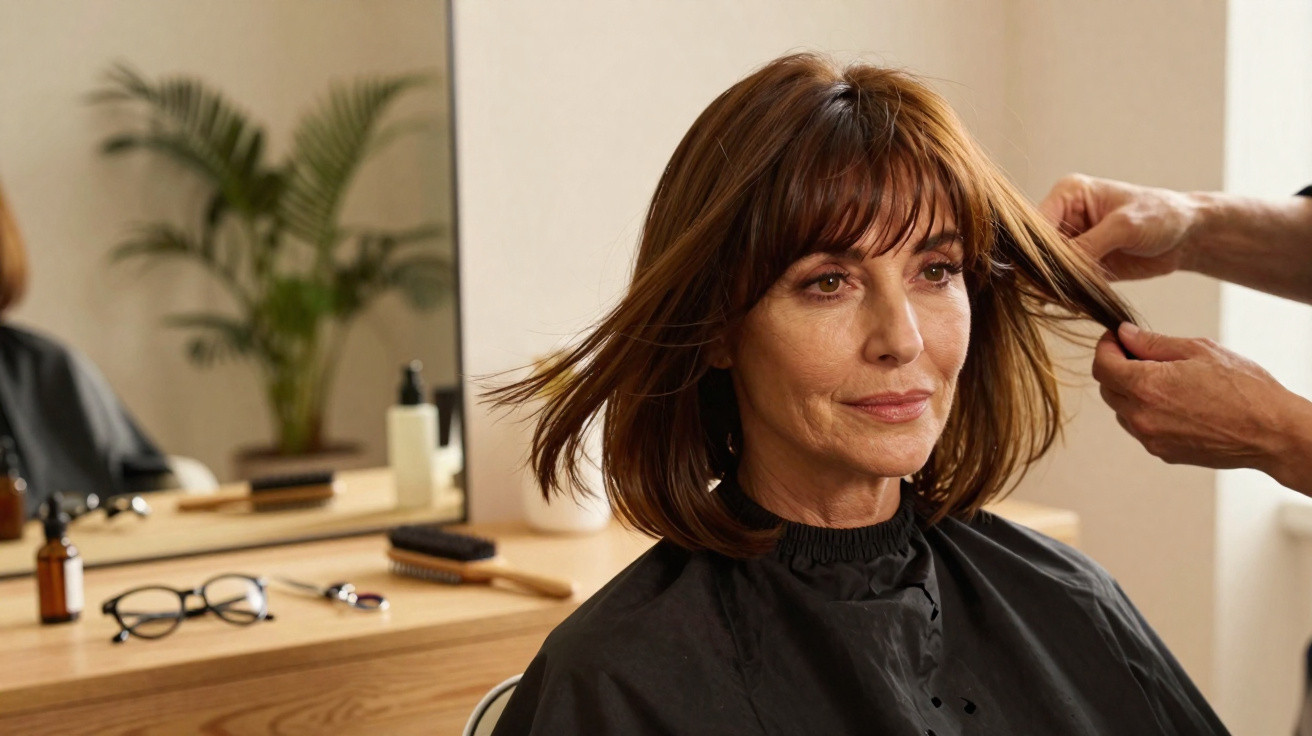
Request a “slightly layered bob, between jaw and collarbones, with softness around the face and no harsh lines.” If possible, bring a photograph, particularly of somebody with a similar hair texture. Make clear that you want movement rather than a geometric shape. For thick hair, a small undercut at the nape can help it sit nearer the neck; finer hair generally benefits more from invisible internal layers, which prevent it from looking too transparent.
Although this cut is forgiving, it is not entirely effortless. It still needs a few simple steps at home. Apply a lightweight volumising spray to the roots and a flexible cream through the mid-lengths while the hair is damp. Allow it to air-dry to 80%, then finish with a round brush or simply your fingers, lifting at the roots as you work. The aim is not flawless styling, but airiness and swing.
We all know that moment when you promise yourself a full blow-dry every morning, only to return to a quick towel-dry by the third day. In truth, nobody keeps that up every day. This haircut succeeds because it does not require it. On “lazy hair” days, tuck one side behind an ear, scrunch in a little styling cream and you can still look purposeful rather than unkempt.
“Past 60, the best haircut is the one that forgives you,” smiles Claire, a Paris-based stylist who works mostly with women over 55. “Hair should be able to collapse and still look good. A soft layered bob falls back into place even after a nap or a walk in the wind.”
- Length sweet spot: Anywhere from mid-neck to just above the shoulders. A shorter length creates more lift, while a longer one preserves softness.
- Type of layers: Keep them fine, internal and face-framing rather than chunky. The scissors should move, not hack.
- Styling routine: Use light products, low heat and either fingers or a medium round brush. Avoid stiff hairspray.
- Salon rhythm: Have a trim every 6–8 weeks to maintain a clean line and buoyant ends.
- Colour bonus: Gentle highlights or lowlights add depth, visually increasing flexibility and shine.
The deeper shift behind a “simple” haircut
There is a change when a woman looks in the mirror and does not immediately begin searching for what is “wrong.” This style does not shout transformation; it suggests ease. The hair appears suited to the life she genuinely leads: active at times, rushed at others, sometimes tender and far removed from glossy advertising campaigns. The light, flexible bob moves through all of that without fuss.
Many women describe an unexpected sense of freedom once those final heavy centimetres have been removed. It is not because they are pursuing youth, but because they have at last allowed their hair to suit their rhythm. The layered bob is almost an attitude: defined lines, gentle edges and movement built into its shape. It is not about appearing younger, but about looking like yourself on a very good day more often.
| Key point | Detail | Value for the reader |
|---|---|---|
| Ideal cut after 60 | Gently layered bob from jaw to collarbone, with soft face-framing pieces | Keeps hair light, modern and easy to manage |
| Technique that creates movement | Internal layers and soft graduation remove weight rather than length | Improves flexibility without making hair too thin |
| Daily routine | Few products, low-heat styling and trims every 6–8 weeks | Reduces styling time while maintaining a polished, natural appearance |
FAQ:
- Question 1 What if my hair is very fine and thinning - will a layered bob make it look even weaker? Done properly, no. The essential point is extremely subtle layering that removes weight from the bottom without cutting heavily into the length. A blunt-looking outline combined with soft internal layers lifts the roots and prevents see-through ends.
- Question 2 Can I wear this cut with my natural gray or white hair? Absolutely. Gray and white hair suit this shape beautifully because the movement catches the light. If the colour feels flat, a gloss treatment or very soft highlights can create dimension.
- Question 3 How do I explain “light and flexible” to my hairdresser without sounding vague? Say that you want a bob that moves when you turn your head, without a heavy straight line at the bottom, and that it must still look good when air-dried. Use those precise words; professionals understand that language.
- Question 4 What if I have a bit of a double chin or a softer jawline? Request front sections that skim just beneath your chin and curve in slightly. This softly frames the area without concealing the neck, while the eye follows the hair’s vertical lines rather than resting on the jaw.
- Question 5 How often do I need to go back to the salon to keep the effect? Every 6–8 weeks is best for keeping the layers balanced and the ends bouncy. You can stretch this to 10 weeks, but beyond that point the cut begins to lose its airy structure and may feel heavy again.












Comments
No comments yet. Be the first to comment!
Leave a Comment