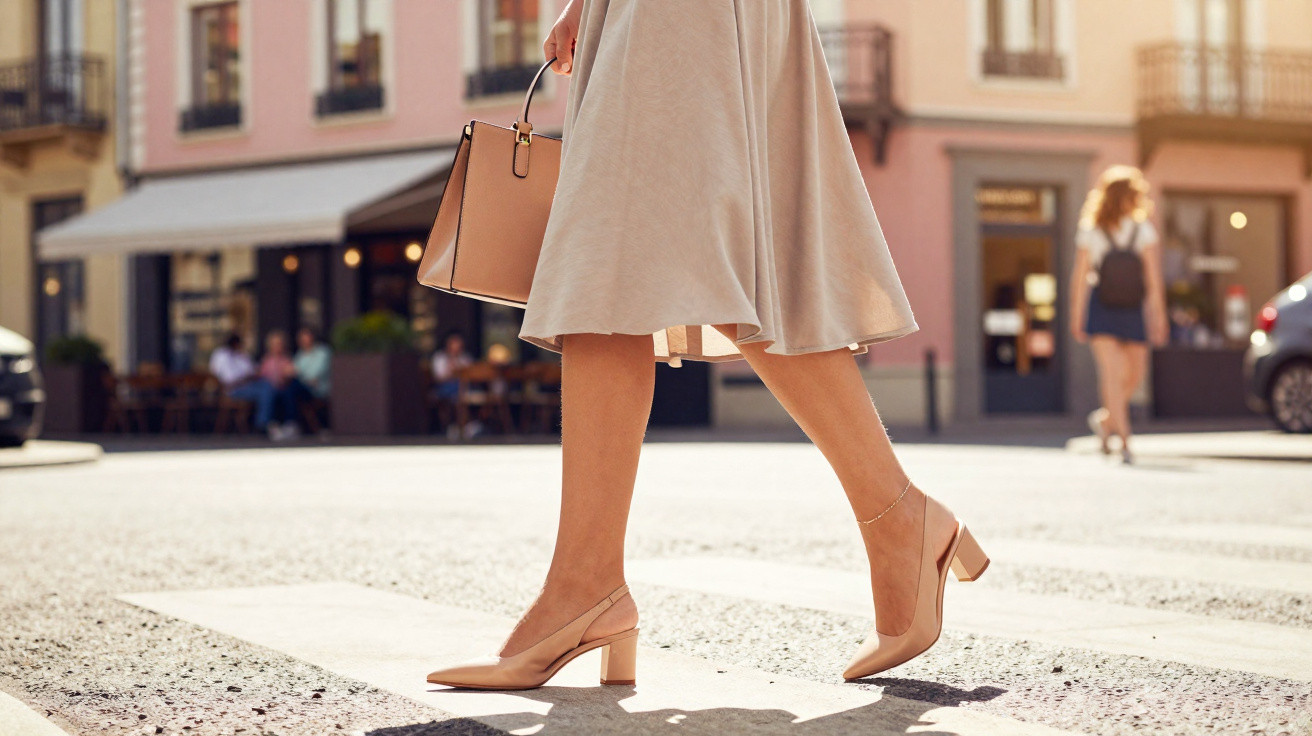
A different shoe shape can create the illusion of longer legs far more comfortably.
Anyone who is not naturally tall often reaches for high heels out of habit. For years, the rule seemed to be: the higher the shoe, the more elegant the silhouette. Yet feet soon protest, the back tenses up and the walk becomes unsteady. Fashion advisers and stylists now agree that there is a much smarter alternative. One particular type of shoe can make legs appear longer, remain comfortable and still look very chic.
No more torture from high heels
Why extreme heights can make petite women look shorter
Many people still believe that petite women need heels of at least 10 centimetres to look “properly dressed”. In practice, the reverse is often true. Very high, slim heels throw the body off balance and force the foot into a steep, unnatural position.
For petite women in particular, this can quickly create an “on stilts” effect: the upper body appears compact while the lower half is overemphasised. That imbalance is visible, and it takes away the relaxed elegance of the overall look.
“Elegance comes from balanced proportions, not from the maximum heel height.”
Choosing moderate heel heights instead, while paying closer attention to shape, vamp and colour, tends to make most outfits look more assured and harmonious.
A confident walk beats any designer heel
It is immediately obvious whether someone can “handle” their shoes. An unsteady walk, tense shoulders and a strained expression ruin even the most beautiful gown. A secure, relaxed stride conveys calm and confidence.
Shoes should therefore suit your own anatomy: enough room at the forefoot and a heel that lets you take the stairs or run for the bus without thinking twice. Anyone who feels stable on the pavement automatically looks more stylish. This is where the shoe shape petite women should know comes in.
The real game changer: pointed shoe shapes
How the “arrow effect” makes legs look longer
The key visual trick lies not in the heel, but in the toe box. A gently pointed shoe directs the eye forwards, like a small arrow. It lengthens the line of the foot, making the leg line appear to continue.
The point does not need to be dramatic. A subtly tapered shape is entirely enough to elongate the foot and improve proportions. Paired with a slim, clean cut, even very simple outfits suddenly look more polished.
“A pointed shoe works like a small lengthening filter for the entire silhouette.”
Why round toes can make the silhouette look shorter
Round-toed styles such as classic ballet flats or Mary Janes may look sweet, but they can quickly interrupt the silhouette. The rounded toe acts as a visual stop: the eye ends at the foot rather than being led onwards.
The result is that the foot appears shorter, the leg looks fuller and the whole outfit feels less dynamic. Those who are petite and want more visual length will usually do better with pointed shapes, even when the sole is flat.
More visible foot, more length for the leg
The shoe vamp as a secret styling tool
One frequently overlooked factor is the shoe vamp. When the upper reaches high towards the ankle, it clearly separates the leg from the foot. The visible length of the leg then appears shorter.
If the top of the foot is left more open, however, foot and leg visually merge into one line. This creates length. Styles with a low, curved vamp across the instep are therefore a real ace up the sleeve for petite women.
- High, closed shoe vamp: visually shortens
- Low vamp across the instep: lengthens leg and foot
- V-shaped front: draws the eye upwards
V-shaped shoe vamps: a small cut with a major effect
Styles with a V-shaped opening at the front, or a slightly diagonal cut, are particularly interesting. Their lines move upwards rather than across. This makes the foot look lighter and flatters ankle-length jeans or shorter skirts as well.
These cuts work especially well in spring with cropped trousers, midi dresses or airy skirts. The legs look longer without the need for a high heel.
The colour trap: tonal dressing beats bold contrast
Nude shades as a visual leg-lengthening cable
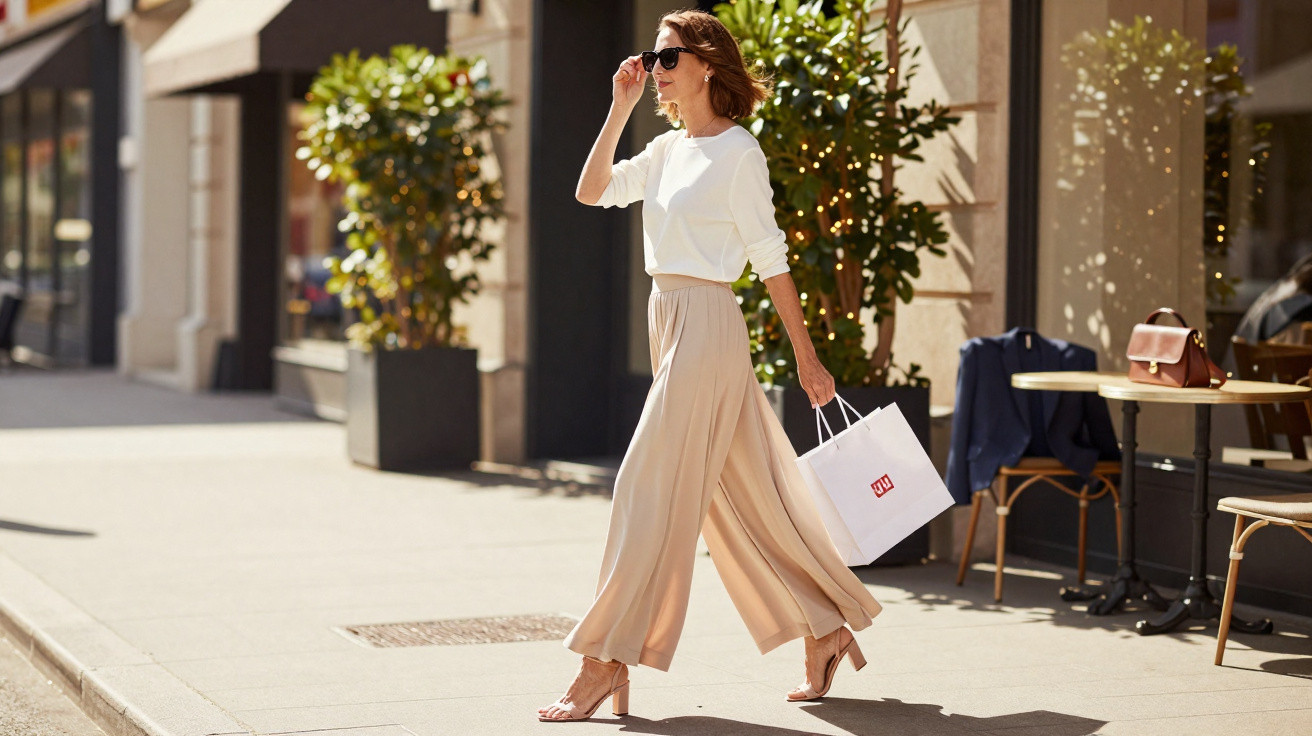
Shoe colour also affects how long a leg appears. When legs are bare, shades as close as possible to your own skin tone are ideal. Beige, soft rosy hues and warm sand tones practically blend into the leg.
“The lower the contrast between shoe and skin, the longer the leg appears.”
This removes the harsh edge between foot and ground. The silhouette gains a few centimetres visually-nothing more, but clearly noticeable. It is precisely this principle that has made nude court shoes popular for years, particularly with petite women.
Use contrasts deliberately, not with bare legs
A black shoe worn with bare legs creates a distinct dividing line. For tall women, that can look striking. For anyone petite, it can split the body into two shorter blocks.
The rule of thumb is:
- Dark shoes with dark trousers or tights
- Light, skin-close shades with bare legs and light outfits
- Metallic shades such as gold or champagne for festive looks-they appear light and elongating
More height, less pain: the triumph of the small heel
Why 3 to 5 centimetres is often the ideal height
The shoe does not have to be completely flat. Slightly raised heels between three and five centimetres place the body in an upright, elegant stance without overloading the forefoot. They lengthen the instep, subtly shape the calf and remain practical for everyday wear.
These “mini heels” can be found on slingbacks, elegant heeled loafers and classic court shoes with a small, delicate heel. Many people use the term “kitten heel” for exactly this height.
“A small, stable heel changes your posture-not your walk into a balancing act.”
Why a wider heel is often the best choice
Anyone worried about cobblestones, tram tracks or slippery floors is better off choosing stable shapes. Square or gently trapeze-shaped heels distribute weight more evenly and provide greater support.
They also look modern and make an otherwise very classic shoe feel less formal. Such styles can be worn easily to the office, a restaurant or family celebrations-without carrying spare trainers in your bag.
The biggest stumbling block: ankle straps and more
How a narrow strap line cuts off the leg
Despite their delicate appearance, straps around the ankle are among the greatest enemies of an elongated silhouette. They place a horizontal line across the leg and visually announce: this is where it ends.
This is especially true of sandals with narrow ankle straps that contrast strongly with the skin tone: they make the leg look noticeably shorter. Everything previously achieved with a pointed toe, low vamp and colour can disappear in seconds.
Minimalist designs let legs breathe
Instead of numerous straps, knots and buckles, it is worth considering pared-back styles. Smooth lines, few seams and hardly any horizontal details let the shape of the leg take centre stage.
These minimalist shoes also date more slowly in fashion terms. A simple pointed nude court shoe or an elegant low-heeled slingback works across several seasons-and with far more outfits than you might initially expect.
Shoe styles that are particularly worthwhile
| Style | Suitable for petite women? | Why |
|---|---|---|
| Pointed ballet flat with a low vamp | Yes | Flat, comfortable, and elongating thanks to the pointed toe and open instep |
| Slingback with a small heel | Yes, if the strap sits very far back | Gentle height, elegant look, and the leg remains largely uninterrupted |
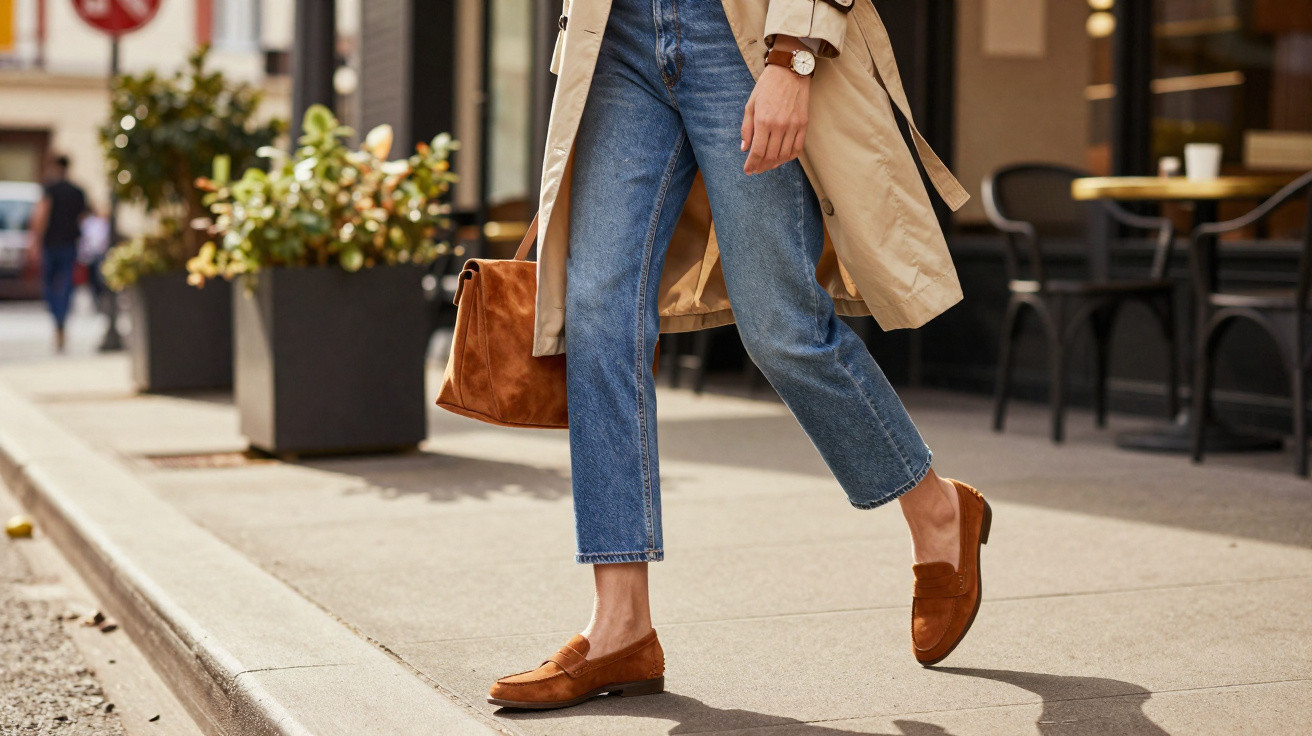
| Pointed nude loafer | Yes | Office-appropriate, with an elongating shape and understated colour |
| Sandal with a wide ankle strap | Rather not | The horizontal line at the ankle visually shortens |
| Very high stilettos | Only for short occasions | Highly demanding on the body and can quickly look unnatural on petite frames |
Practical styling examples for everyday wear
Work, a date, city shopping: how to use the trick
For the office, try a pointed loafer in light beige with slim tailored trousers ending just above the ankle. The instep remains visible, the colour creates no break and the leg appears long.
For a date, a simple midi dress with pointed, low-heeled slingbacks in a shade that matches your skin or dress is often enough. The outfit looks polished rather than overdone, and you can comfortably walk several streets.
For a city shopping trip, pointed ballet flats with soft soles are an appealing option. In nude or soft gold, they work with jeans, shorts or summer dresses and make the figure look taller without making feet suffer.
Why this shoe concept is beneficial in the long term
Avoiding extremely high heels on a permanent basis relieves not only the back, but also the knees, hips and toe joints. Misalignments, pressure points and tension become less common. The difference is clear in everyday life: longer walks, less fatigue and more enjoyment of movement.
At the same time, your sense of style develops. Rather than focusing on centimetres, attention shifts to proportions, lines and colours. Many women say that these looks make them feel more authentic-and that they no longer feel they have to “dress up” to appear taller.
So, when buying your next pair of shoes, deliberately look for pointed shapes, a low vamp, calm colours and small, stable heels. You gain on two levels: visual height and genuine comfort.






Comments
No comments yet. Be the first to comment!
Leave a Comment