Grey curls, colourful trainers that seem entirely at odds with her walking stick. Beside her stands a man in his mid-fifties, wearing a sports jacket and holding a phone – his face contorted with pain as he bends towards his rucksack. It is one of those quiet moments when you realise that mobility does not disappear overnight. It gradually erodes. Almost imperceptibly, in everyday moments: pulling on socks, looking beneath the sofa, trying to lift shopping bags from the boot. We often talk about muscles, about “doing more exercise”, about fitness targets. Yet we rarely discuss the one small habit that acts like an unobtrusive anchor, helping us stay mobile as life becomes more demanding. It is a mini-routine that can fit into almost any day. And, ultimately, it may determine whether we one day have to ask someone: “Could you pick that up from the floor for me?”
Why our mobility declines sooner than we expect
Anyone who has watched a child get up from the floor will quickly spot the contrast. It is one smooth, flowing movement, without groaning, bracing themselves or hesitating. For many adults, it looks more like a small building site in the living room. One knee here, one hand there, then a sigh. We all know that moment when we think: this used to be easier. Even so, we put mobility into the “I’ll deal with it later, when I have more time” drawer. But later, the distance to the floor grows a little greater every year.
A physiotherapist in Berlin says she is increasingly treating people in their mid-forties who only wanted to “bend down briefly for a box in the cellar”. Then their disc goes, their neck locks up or their hip objects. Studies paint a similar picture: from around the age of 30, we lose noticeable muscle strength and joint mobility with every decade if we do nothing to counter it. What is striking is that many of these patients already exercise. They run, cycle and lift weights. Yet one thing is almost always missing: regularly moving through their full range of motion, slowly and deliberately, without performance pressure. It is not just about stamina or strength. It is about the simple ability to touch the floor, turn, stretch and kneel. That is exactly where this small habit comes in.
Our bodies are uncompromising pragmatists. Anything we do not use gets reduced. Joint capsules stiffen, fascia becomes restricted, muscles shorten and tendons lose elasticity. If we spend most of the day sitting – in the car, at a desk or on the sofa – the body takes note: “Right, this is the range of movement I need.” Then it adapts. The result can be hips that feel like rusty door hinges and shoulders that creak while you put on a jacket. The plain truth is this: let us be honest, nobody completes a perfect 60-minute mobility session every day. But one small, almost unremarkable movement woven into something we already do can make the difference between “stiff, but I manage” and “I can get back up without help”.
The small habit: consciously get down to the floor once a day – and back up
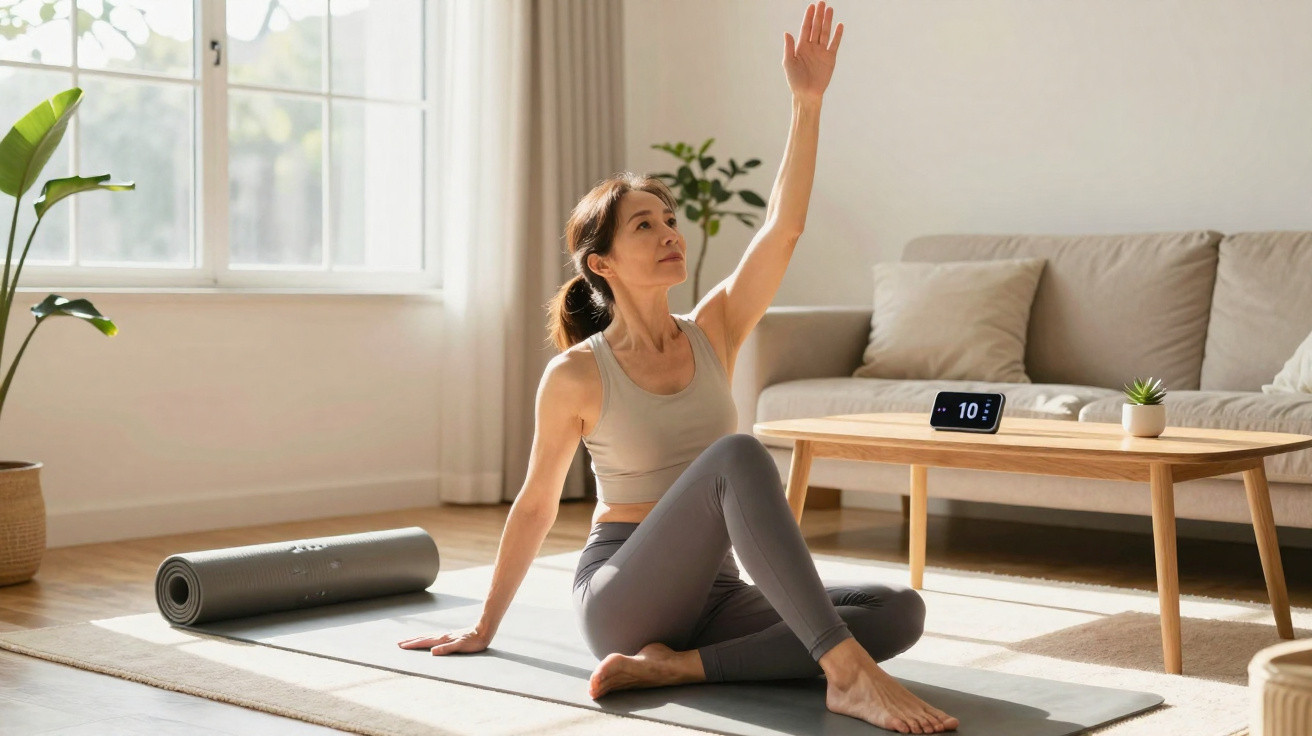
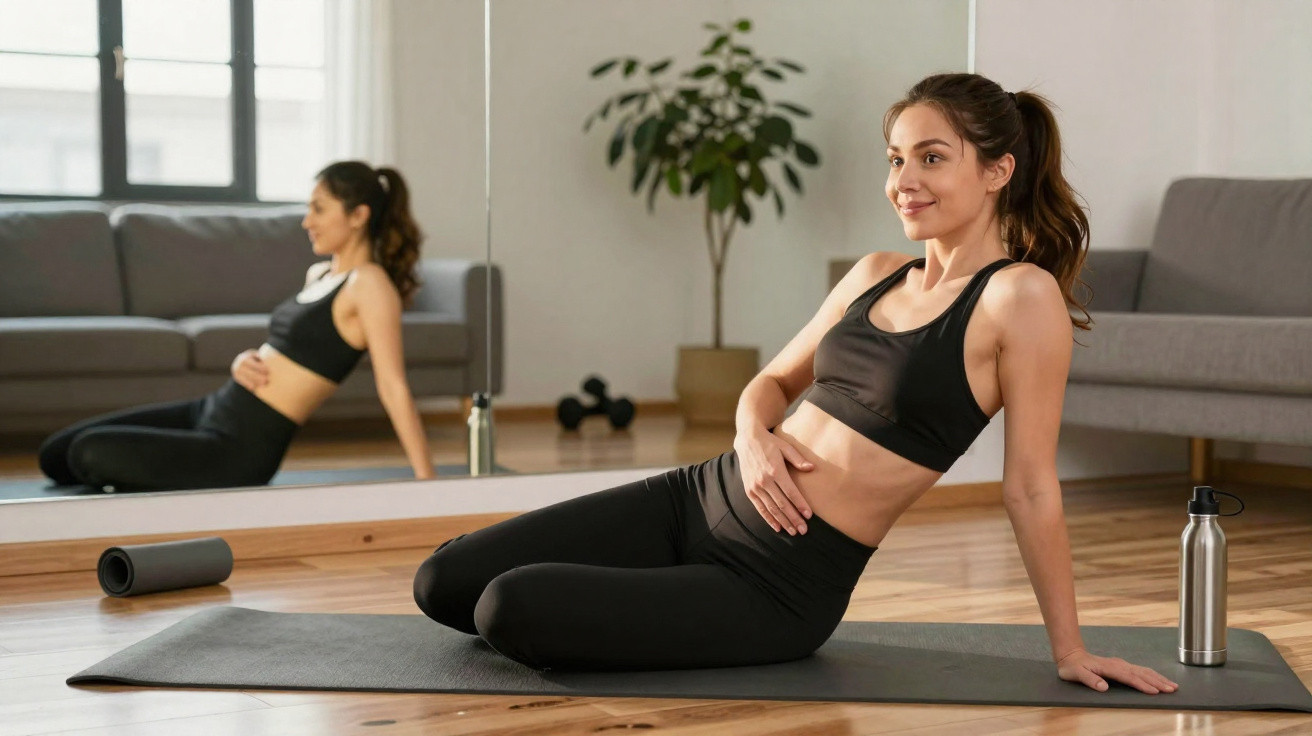
The habit sounds almost absurdly simple: deliberately get down to the floor once a day, then get back up again. There is no need to rush; go at your own pace. That might mean sitting on the floor, staying there briefly and standing up again. Or lowering yourself from kneeling into a heel sit. Or performing a slow, controlled squat in which your fingertips briefly touch the floor. The movement itself can vary. What matters is that your body experiences the journey downwards and the journey back up as normal and safe every day. Just as brushing your teeth is routine for your teeth, “getting down to the floor” becomes a routine for your joints.
Many people no longer willingly get down to the floor, especially beyond a certain age. They fear they will not be able to get back up. They worry about embarrassing themselves. Perhaps they suddenly feel “old” in their own living room. Yet this very avoidance makes the issue worse. A good starting point is to choose a fixed time, such as after brushing your teeth in the evening. Put a chair nearby. Lower yourself once, slowly, using support if necessary; remain there for 20–30 seconds, notice your hip and knee joints, then come back up. That is all. No stretching marathon, no flexible-yoga video, no performance pressure. Just you, the floor and one more calm breath than you thought you needed.
“As long as someone can sit down on the floor and stand back up without assistance, they have a kind of mobility reserve that may later determine their independence,” says a rehabilitation doctor who has worked with older people for 20 years.
- Start with support – Use a chair, sofa or the edge of a table as a safety anchor until you feel more confident.
- Only increase the time once the movement feels familiar, rather than when your perfectionism demands “more”.
- Each day, choose a version of the floor movement that feels like 6 out of 10 for effort: challenging, but manageable.
- Link the mini-routine to something fixed: your morning coffee, evening news or toothbrushing.
- Accept weaker days instead of fighting them – if all you manage is halfway to the floor, that still counts.
How this mini-routine quietly reshapes your whole life
People who keep up this small habit for a few weeks often notice entirely different changes first. Suddenly, it is easier to put on jeans while standing. Looking under the sofa becomes less of a nuisance. The pull in the lower back when tying shoes may not have vanished, but it has eased. Something unspectacular yet profound happens: the body stores the message that “the floor is normal”. This removes fear, reduces hidden tension and makes movement smoother. Over time, the structures adapt: more freedom in the ankles, softer hips and knees that do not protest on every step of the stairs. Without making a big deal of it, your self-image begins to shift: from “I’m just not flexible” to “I can do more again”.
It is striking how strongly this tiny routine can affect the mind as well. When you consciously make contact with the floor every day, you start noticing your movements differently. You may spot small compensations: the same leg always leading when you stand, a shoulder turning away or a hip that never fully bends. Some people suddenly choose to read on the floor again, build Lego with children or work on a laptop cross-legged for a while. Not because they “should”, but because their body has once again made the position available as an option. One habit creates more possibilities. And more possibilities often bring a quiet but powerful sense of freedom that no fitness tracker can measure.
Perhaps you will never make a point of explaining this routine to anyone. It simply happens in the background, somewhere between a meeting and dinner, like a brief, private check-in with your future self. That is precisely what makes it so effective. There is no gym contract, expensive equipment or punishing bootcamp. Just a few controlled seconds closer to the floor every day. Some call it a “movement snack”; others call it “mobile toothbrushing”. In the end, the name does not matter. What matters is the moment, a few years from now, when you bend down for something, straighten up again and notice: it was easy. And somewhere deep down, you know that was no accident.
| Key point | Detail | Benefit for the reader |
|---|---|---|
| Daily contact with the floor | Consciously move down once and get back up, using support where needed | An easy-to-integrate routine that preserves mobility over the long term |
| Small steps rather than perfection | Brief duration, a low barrier to starting and a pace that can be adjusted individually | Less pressure and a better chance that the habit will genuinely last |
| Greater body awareness | Notice patterns, compensatory movements and progress | A stronger sense of control and independence in everyday life |
FAQ:
- Question 1: I have knee problems – can I still try this floor habit? Yes, but adapt it. Use a sturdy chair, go only as low as you can without sharp pain, and stop halfway if necessary. If symptoms are acute or severe, seek advice from a doctor or physiotherapist first.
- Question 2: How much time should I set aside for this mini-routine? Often, 1–3 minutes is enough. Do one to three slow repetitions, stay down briefly, breathe calmly and come back up. Consistency matters more than duration.
- Question 3: Is this habit enough to stay fit in the long term? On its own, it does not replace exercise, but it acts as a basic safeguard for your mobility. Ideally, combine it with everyday movement, some strength work, some endurance activity – and this daily floor routine.
- Question 4: What time of day is best for this exercise? The best time is the time you will actually stick to. Many people prefer the evening because the body is warmer and it feels like a small way to wind down. In the morning, it can help loosen “the rust of the night”.
- Question 5: How will I know it is working? Typical early signs include squatting more easily, finding it simpler to tie your shoes, needing less support when standing up and feeling more supple overall. Sometimes everyday life notices first – not the mirror.












Comments
No comments yet. Be the first to comment!
Leave a Comment