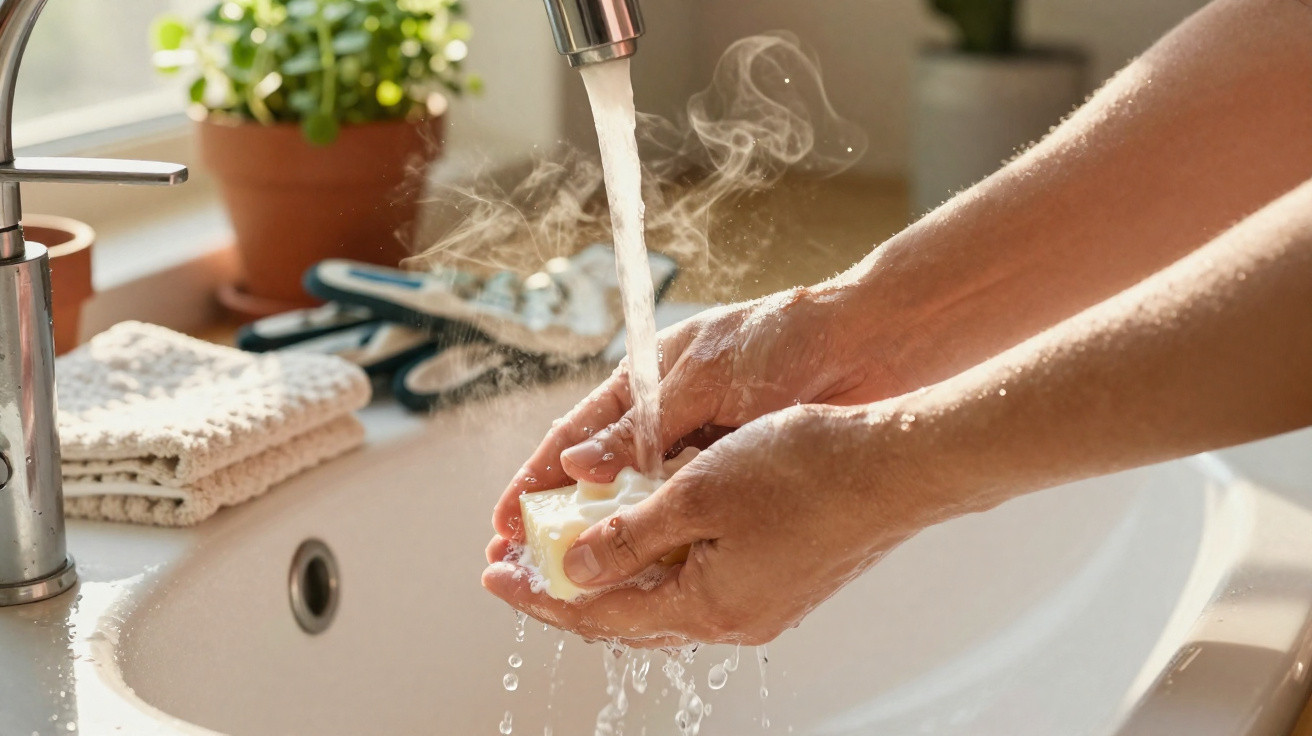
The answer is often not in the tube, but at the tap.
When their skin feels tight, many people instinctively reach for another “ultra-hydrating” hand cream. It can offer short-term relief, certainly. Yet the real cause of dry, cracked hands is usually rooted much more deeply in everyday habits: how we wash, dry and put them under strain at work. Altering a few details here can greatly reduce the need for skincare products while still leaving hands softer.
Why more hand cream cannot help if the basics are wrong
The usual pattern is simple: hands feel dry, so a thick layer of cream is applied. Soon afterwards, they are washed again, become dry again, feel tight again and need more cream. It is a familiar cycle.
“People who constantly reapply cream are often merely disguising a problem caused by washing, rather than solving it.”
The outermost layer of skin uses a natural lipid film to guard against moisture loss and irritants. If that film is effectively washed away every time you clean your hands, even expensive creams have limited benefit. The oils in the cream simply go down the drain with the next wash. Skin gets hardly any opportunity to restore and stabilise itself.
The hidden main suspect: tap water and its pitfalls
Tap water may seem harmless, but in some areas it contains high levels of limescale. Limescale and other minerals can leave deposits on the skin. This draws out moisture and makes the sensation of tightness worse.
- Hard water: more limescale, more deposits and greater drying
- Frequent washing: more repeated exposure to these minerals and less time for skin to recover
- Combined with harsh soaps: the skin barrier can break down dramatically
Anyone whose job involves regular handwashing – in care work, hospitality or a laboratory, for example – or who has young children at home will recognise the issue: hands remain rough despite using cream. This is exactly when it is worth adjusting your handwashing routine.
The 30–35-degree rule: lukewarm water instead of a hot-and-cold shock
The temperature of the water used for handwashing partly determines how much the natural protective layer suffers. Many people still assume, “The hotter it is, the cleaner it gets.” That is not actually true.
What extremely hot water does to your skin
Very hot water dissolves oils – as you will notice when washing greasy frying pans. Unfortunately, it also strips away the body’s own oils from the surface of the skin.
Consequences of overly hot water include:
- the protective film being washed away almost completely
- skin looking dull and feeling tight immediately after drying
- redness and cracks appearing more quickly
Ice-cold water is not a sensible alternative either. It slows circulation, so nutrients reach the skin less effectively, and hands become more sensitive, especially in cold weather.
Why lukewarm water is the best compromise
Dermatologists identify a range of around 30 to 35 degrees as ideal. That means approximately body temperature, or a little below it: water that feels lukewarm, rather than hot or cold.
“Washing your hands consistently in lukewarm water protects the lipid film while still cleaning thoroughly.”
The benefit is that dirt and germs can be removed effectively without placing excessive strain on the skin barrier. The difference becomes particularly noticeable when hands are washed frequently: they feel less tight, fewer micro-cracks develop, and less hand cream is naturally needed.
The right type of soap: why superfatting products make such a difference
Water on its own is rarely the issue. The real damage is caused by combining water with the wrong soap. Conventional liquid soaps and many shower gels contain harsh surfactants, often sulphate-based. They clean efficiently, but they also remove protective oils and disrupt the skin’s pH balance.
What superfatting soaps do differently
Superfatting soaps, sometimes called “surgras” soaps, contain extra conditioning ingredients. Typical components include:
- plant oils such as almond oil or olive oil
- shea butter or cocoa butter
- glycerine to provide moisture
These products cleanse more gently and leave behind a light lipid layer that supports the skin’s natural protection rather than stripping it away entirely. Studies show that soaps of this kind can significantly reduce the degree of dryness.
“People who switch from ordinary liquid soap to a superfatting version often notice a difference within just a few days.”
How to spot a skin-friendly soap
A few straightforward points can help when shopping:
- terms such as “superfatted”, “replenishing lipids” or “for dry/sensitive skin”
- short ingredient lists, ideally without harsh sulphates
- solid soap bars rather than heavily fragranced gels in bright colours
There is also a practical added benefit: solid soaps often need no plastic packaging and last longer. That means less waste, lower costs and happier hands.
Drying hands: the overlooked step that damages your skin
After washing, skin is swollen with water and more vulnerable. This is precisely when many people rub their hands vigorously with a towel. It may feel “thorough”, but it damages the skin a little each time.
Why vigorous rubbing causes tiny injuries
Rough rubbing creates small, invisible injuries in the outer layer of skin. Possible results include:
- redness across the backs of the hands and around the knuckles
- rough-feeling patches that barely settle down
- increased itching after washing
For anyone already dealing with sensitive skin or eczema, drying too roughly can make the problem markedly worse.
The patting technique: pat gently rather than rubbing
Dermatologists recommend not rubbing hands dry, but gently patting them with a towel instead. In practice:
- let excess water drip off briefly
- place the towel over the hands and press lightly
- pat between the fingers dry carefully
“Gentle patting protects water-softened skin – and extends the skincare benefits of lukewarm water and mild soap.”
Clean, soft cotton towels are the best choice. If you are in an office or a public toilet and only have paper towels, pat rather than rub there too.
Spring, gardening and the workshop: extra strain on hands
In spring, many people head outdoors to garden, prepare the balcony or tackle DIY jobs in the garage. For hands, this can be a demanding period.
How soil, tools and changing temperatures challenge skin
Digging in soil or handling tools creates constant friction against the skin. Even when gloves are worn, oils are lost. At the same time, people move from warm indoor air into cool, sometimes damp conditions outside. These fluctuations place further pressure on the skin barrier.
Trying to get everything clean afterwards with very hot water and vigorous scrubbing combines several irritants at once: friction, temperature shock and harsh soap. It is hardly surprising when hands sting afterwards.
Gentle cleansing after gardening and similar tasks
After activities that leave hands heavily soiled, it is particularly worthwhile to slow the process down deliberately:
- keep the water temperature within the 30–35-degree range
- use a superfatting soap and massage it in for a little longer
- for stubborn dirt, choose two short washes rather than one session of “scrubbing as hard as possible”
- then pat hands dry gently and, if necessary, apply a small amount of cream where needed
People who maintain this routine for a few weeks will usually find that less hand cream is enough to achieve the same, or even better, softness.
How a “tip” becomes an everyday habit
Changing from hot to lukewarm water sounds minor, but it represents a genuine break from habit in daily life. At first, you need to consciously adjust the tap; after a few days, it becomes automatic. Many people then notice that their hands feel less tight in the evening, even after frequent washing.
Those who also replace ordinary liquid soap with a superfatting option and switch from rubbing to patting dry address the most common sources of damage with three simple steps. Hand cream remains a useful extra rather than a desperate rescue measure after every wash.
For people with atopic dermatitis, contact allergies or highly sensitive skin, this three-part approach may even provide noticeable relief. It is not a replacement for medical treatment, but it does remove a substantial share of everyday stress from the skin. Anyone who still experiences severe symptoms despite making these changes should ask a dermatologist whether particular ingredients or occupational pressures could be involved.
The cost effect is worth noting too: fewer hot washes, milder soaps and less hand cream not only ease the burden on skin but can also save money over time. This is exactly what many people describe in forums and everyday accounts: “Since I started washing my hands differently, I hardly need any hand cream any more.”









Comments
No comments yet. Be the first to comment!
Leave a Comment