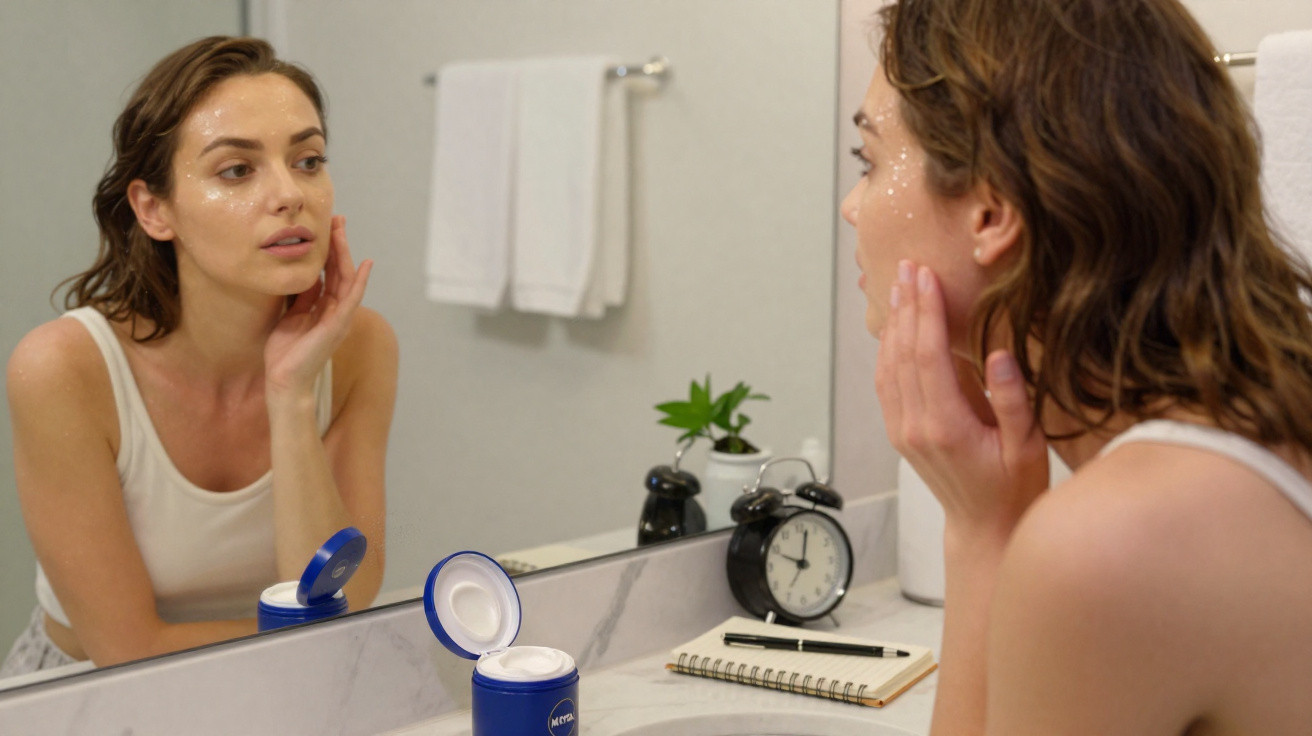
The idea struck while I was standing in front of my bathroom mirror beneath its unforgiving yellow light. One half of my face appeared more worn out than the other, as though it had endured a marginally tougher week. My phone, balanced on the sink edge, was filled with before-and-after images labelled “Nivea blue cream miracle” - those oddly compelling transformations that always seem just a little too perfect.
So I chose to do precisely what skincare brands would probably dislike: use my face as a science experiment.
Left cheek: nothing. Right cheek: a generous application of the well-known blue Nivea cream every evening for seven days. No serum, eye cream or elaborate routine. Only this thick, traditional cream that my grandmother used on her hands.
Seven nights. One face. Two noticeably different outcomes.
Nivea blue cream vs my face: the strange experiment
On the first evening, the cream was almost startling. It was rich and dense, with that familiar clean-soap fragrance that immediately took me back to childhood bathrooms. It first spread across my right cheek, then seemed to push back slightly, as if my skin were asking, “Wait, what is this?”
I looked slightly absurd: glossy on one side and matte on the other, like a before-and-after image frozen halfway through loading. I went to sleep expecting to wake with one clogged cheek and one entirely ordinary one. What I saw in the morning was something else altogether.
My right cheek seemed… calmer. It was not dramatically changed or filtered-looking, but it appeared a little less creased from the pillow.
By the third night, it was increasingly difficult to overlook the contrast. The untreated left side still showed its familiar signs of too much laptop time: fine dehydration lines, some redness around my nose, and the dullness that only becomes obvious when you get very close to the mirror.
Meanwhile, the side receiving its nightly blue coating began reflecting light differently. My skin seemed plumper, as though it had just had a large glass of water after a lengthy walk. I could also feel the change under my fingertips: a smoother surface and fewer tiny bumps.
At first, nobody else spotted it. Then, over coffee, a friend tipped her head and said, “You look oddly fresh today, but like… only from this angle.” That was when I understood that the experiment was producing a genuinely real-world result.
There is a reason this iconic metal tin has outlasted the age of 12-step regimens and daunting ingredient lists. Nivea’s blue cream contains occlusives, including paraffinum liquidum and waxes, which form a protective layer over the skin. Applied in this way, it reduces water loss and retains the moisture already present.
On the “treated” half of my face, that protective layer stopped my natural hydration from disappearing overnight. On the bare side, my skin faced its usual exposure to central heating, pillowcase friction and the quiet dehydration that occurs during sleep.
That’s really all that changed: one side kept its water, the other side lost it. There was no magic and no mystery - simply basic skin physics at work across my cheeks.
How I applied Nivea blue cream and what I would change
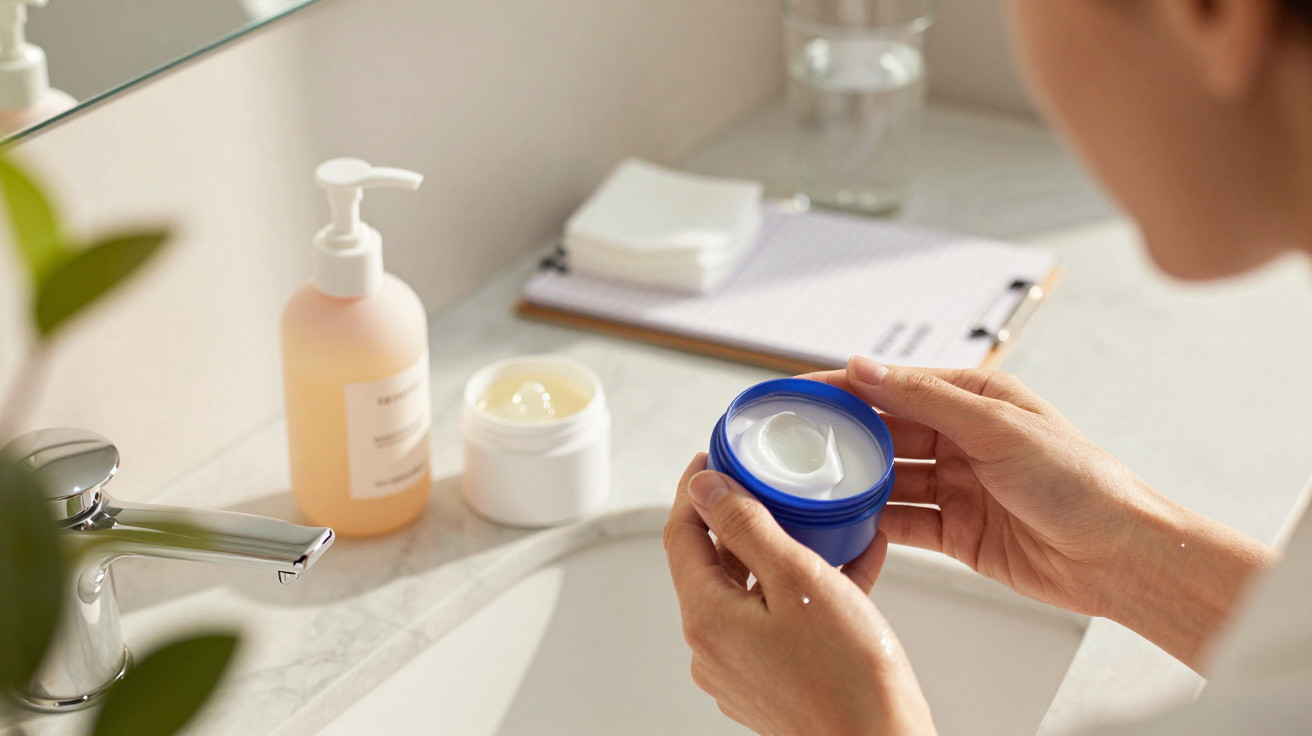
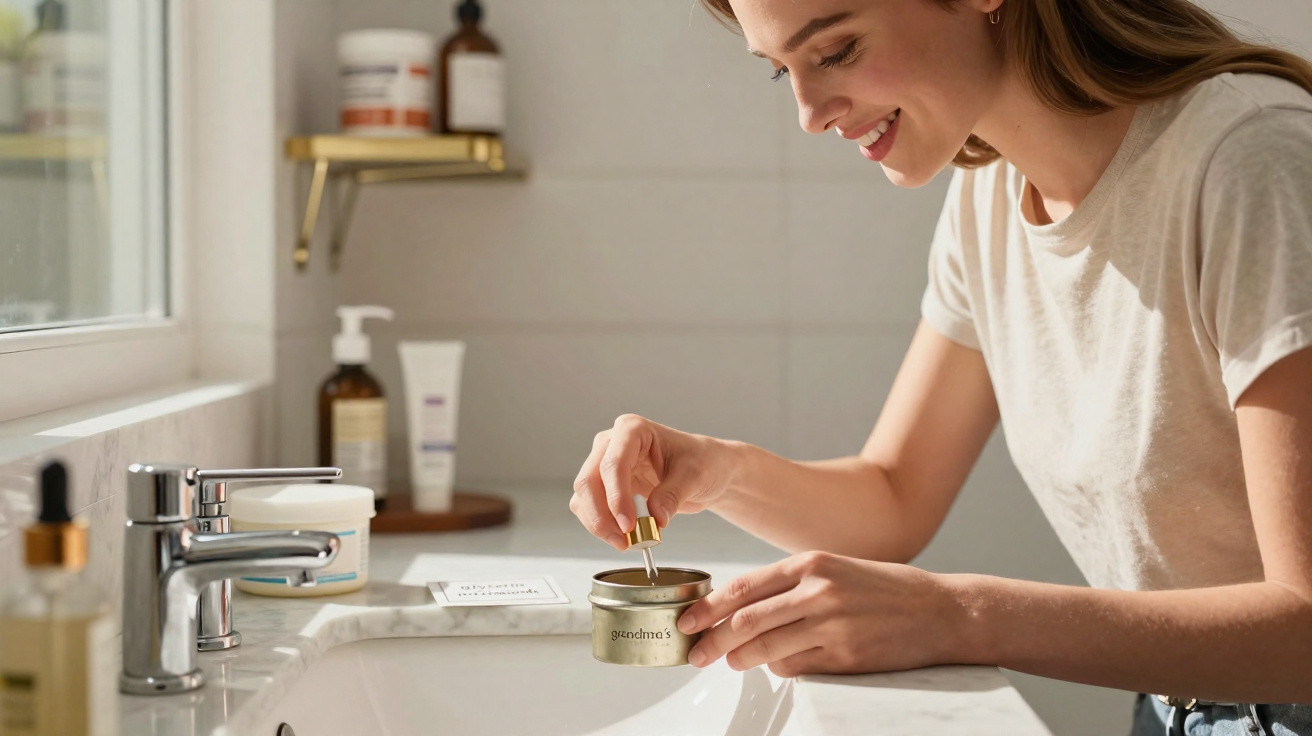
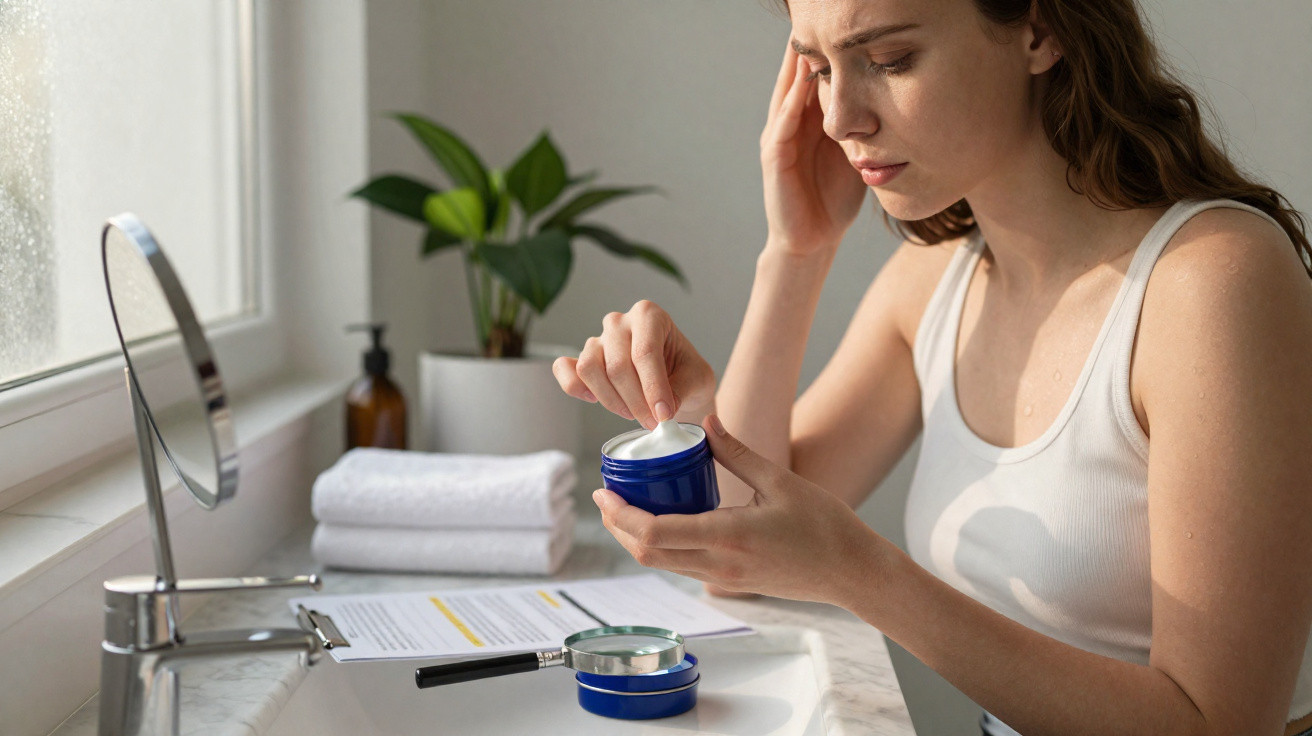
My evening ritual soon became a carefully repeated sequence. After washing with a mild, non-foaming cleanser, I patted my face dry but left it faintly damp. The left side received… nothing at all. For the right side, I used a pea-sized amount of Nivea, warming it between my fingers until it changed from firm to silky.
Rather than rubbing it in, I pressed the cream over my cheek, the right side of my nose, part of my temple and just beneath the eye area, staying away from my lashes. It created the slight sheen associated with the “slugging” look often shared on TikTok.
Before going to bed, I waited for a few minutes so that half of my experiment would not simply end up on the pillowcase.
If you are considering the same half-face trial, my advice would be to take it slowly. This is a very rich cream. Applying a thick layer immediately to combination or oily skin can feel suffocating and may cause clogged pores.
A lighter application, kept to the driest areas, is more forgiving. Another potential mistake is applying it on top of harsh actives, such as powerful exfoliating acids or high-strength retinol, on the same evening. That combination may cause irritation, while the occlusive layer then traps it in. Not fun.
We have all had that moment of layering product after product at night, assuming more product means better results, only to wake up with skin that feels confused and angry.
During this week, I learned something I didn’t expect from a 3-euro tin: sometimes the simplest product in the bathroom is the one that teaches you the most about your own skin.
Use it as a targeted night mask
Apply a thin layer only to dry areas, such as the cheeks and around the mouth, over your usual lightweight moisturiser. This can improve comfort without overwhelming your entire face.Avoid it on highly acne-prone areas
If your T-zone breaks out easily, keep the blue cream away from the centre of your face and treat it more as a targeted remedy for dryness.Try it on one small area for at least a week
Judging a full-face application after one night reveals very little. Using it on one cheek for seven nights showed me much more about my skin’s behaviour.Combine it with gentle rather than aggressive routines
Use a mild cleanser, avoid stinging scrubs and do not constantly layer acids. The cream performs best when your skin barrier is not already under pressure.Pay attention to your skin’s texture in the morning
Waking up greasy and uncomfortable probably means you applied too much. If your skin feels softly comfortable, you are likely close to the right amount.
After seven nights: was Nivea blue cream worth it?
By the end of the week, my face resembled a slightly uneven split screen. On the right, the Nivea side had a softer appearance, like an image with the sharpness reduced by a single setting. Fine dehydration lines around my smile area were less obvious, and my cheek felt almost cushion-like when touched.
The left side showed nothing extreme - just its usual pattern of slight dullness, on-and-off redness and the look of a face that spends too many hours in front of a screen. The difference was subtle rather than miraculous, but I could no longer ignore it.
In reality, nobody maintains this perfectly every day. Nobody applies cream in exactly the same way indefinitely. Still, this small and rather strange experiment changed more than one week of hydration.
I began viewing my skincare products differently. Rather than pursuing the newest fashionable active, I started asking a more useful question: “Is my skin actually hydrated or just temporarily smoothed by silicones?” With its old-fashioned chemist-style appearance, the Nivea tin reminded me that the skin barrier responds well to consistency, not drama.
The emotional turn came from a small moment: one morning, still half asleep, I automatically spread the cream over my entire face. For a moment, I panicked, thinking I had spoiled the test. Then I realised that this was the whole point. The trial had persuaded me enough that I no longer wanted to divide my face into two sides.
That evening, both cheeks received their blue layer. I shut the tin, switched off the bathroom light and felt unexpectedly comforted by this ordinary, slightly sticky cream, which had suddenly become a quiet gesture of care.
| Key point | Detail | Value for the reader |
|---|---|---|
| Visible difference in one week | After seven nights of Nivea blue cream, one side appeared more hydrated, smoother and calmer | Offers a realistic sense of what this cream can genuinely achieve in everyday life |
| Best use: night occlusive | It works effectively as a final step to seal in moisture on dry areas, rather than as an all-day, full-face cream for everybody | Helps prevent heaviness, clogged pores and disappointment |
| Keep the routine simple | Combining it with gentle cleansing and minimal actives helps support the skin barrier | Readers can follow a low-cost, low-effort routine that still feels effective |







Comments
No comments yet. Be the first to comment!
Leave a Comment