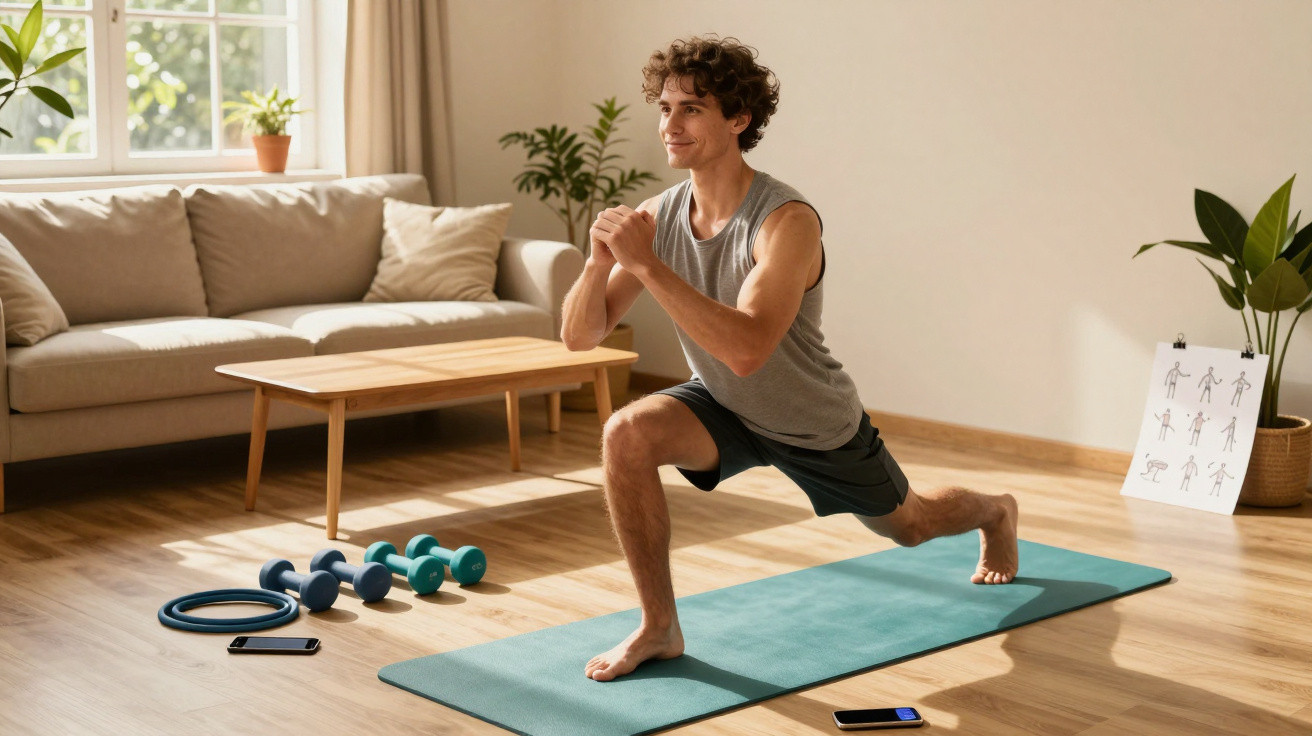
Many people have had enough of it – and are finding that they make far quicker progress in their own living room.
Anyone rushing through traffic after work to secure a free machine in a packed gym often loses more patience than calories. A growing number of people are turning away from that routine in favour of a minimalist home training concept. No equipment, no pressure to perform, but clear exercises that challenge the whole body and can make a noticeable difference in just 15 to 20 minutes a day.
Why home training works surprisingly well
For many people, working out at home initially seems like the “light version” of proper exercise. In reality, the opposite is often true: people who train at home tend to do it more regularly, find fewer excuses and frequently develop a better feel for their bodies.
The most important resource in training is not strength or endurance, but consistency – and that is easier to achieve in the living room.
There is no journey, no hunt for a parking space and no concern about other people watching. The barrier to simply getting started becomes minimal. Put on your jogging bottoms, move the coffee table aside, and you are ready. This low level of “starting friction” is precisely why sessions are no longer missed just because the day was stressful or the weather was dreadful.
Mental benefits: less pressure, greater staying power
At the gym, comparisons can happen quickly: who lifts more? Who looks fitter? At home, that social pressure disappears. It reduces performance anxiety, allowing beginners in particular to exercise more calmly. You do not stop because you are “too slow” – you complete the session at your own pace.
There is another advantage: a short workout before breakfast, ten minutes during a lunch break or a small session in the evening can all fit into daily life without having to reorganise everything. After a few weeks, many people realise that the difference is not made by the length of each session, but by how often they train.
Why bodyweight exercises are so effective
The belief that only heavy weights can build real muscle remains stubbornly widespread. Bodyweight exercises prove otherwise impressively. They always involve several muscle groups at once while also improving stability, balance and coordination.
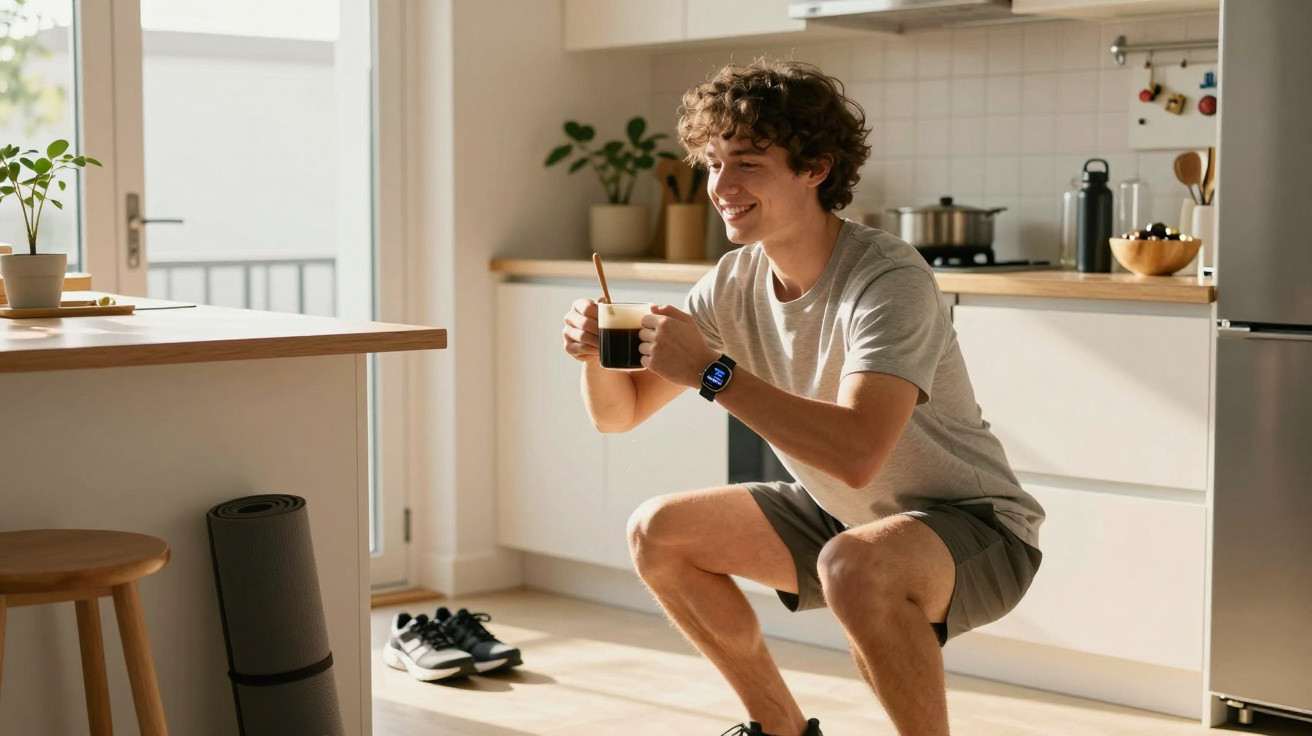
Take a squat performed freely in the room, for example: your core, hips and feet must remain stable throughout the movement. When training on machines, the equipment takes over some of that work. That can be useful, but functional everyday strength develops more strongly through free movements.
Bodyweight exercises do not only improve appearance; above all, they build usable everyday strength – from carrying the shopping to playing with children.
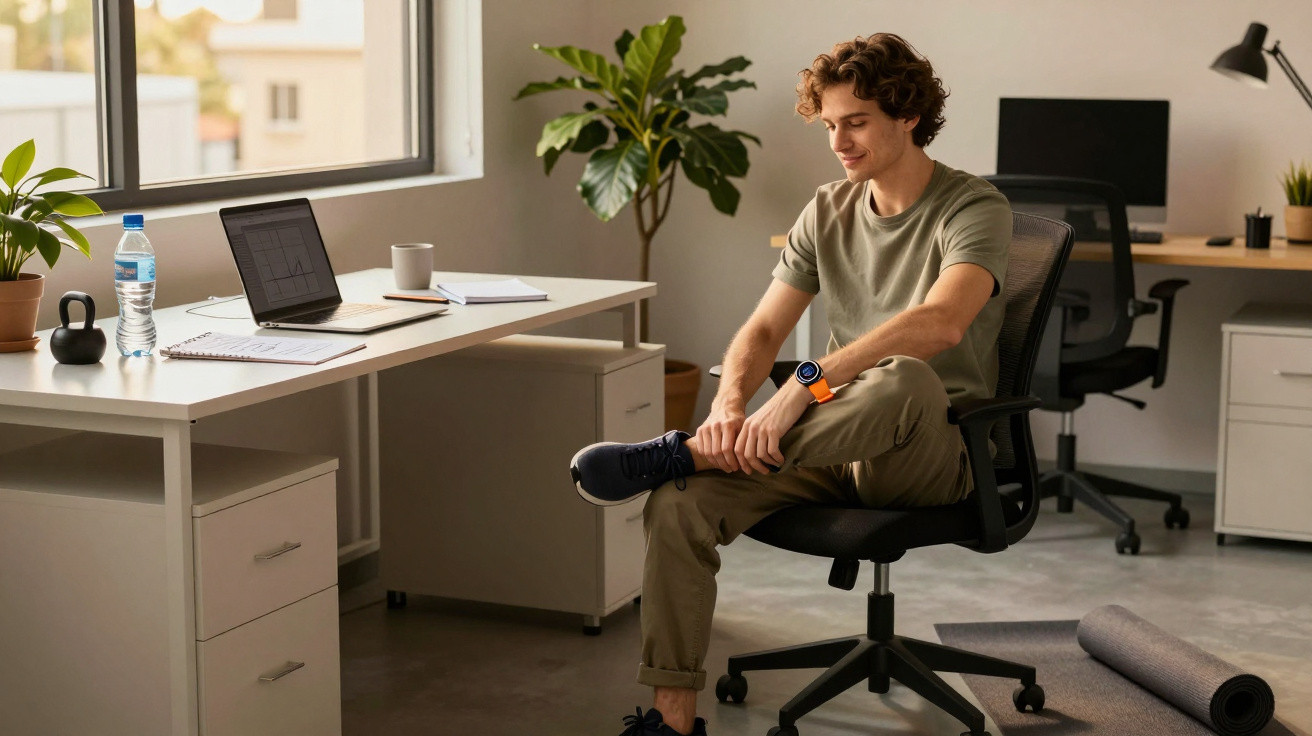
Another benefit is that joints are subjected to less harsh stress, provided the technique is correct. The body learns to move through sensible movement patterns. This lowers the risk of injury and improves posture – a real concern for anyone who spends a lot of time sitting down.
The 10-exercise circuit: turn your living room into a mini training zone
The programme below works the entire body and requires no equipment. It can be completed as a circuit: perform each exercise for 30 to 45 seconds, rest for 15 seconds, then do one to three rounds depending on your fitness level.
Block 1: get your legs and cardiovascular system moving
This block focuses on the lower body and cardiovascular system. It is ideal at the beginning of the workout because it warms the body up quickly.
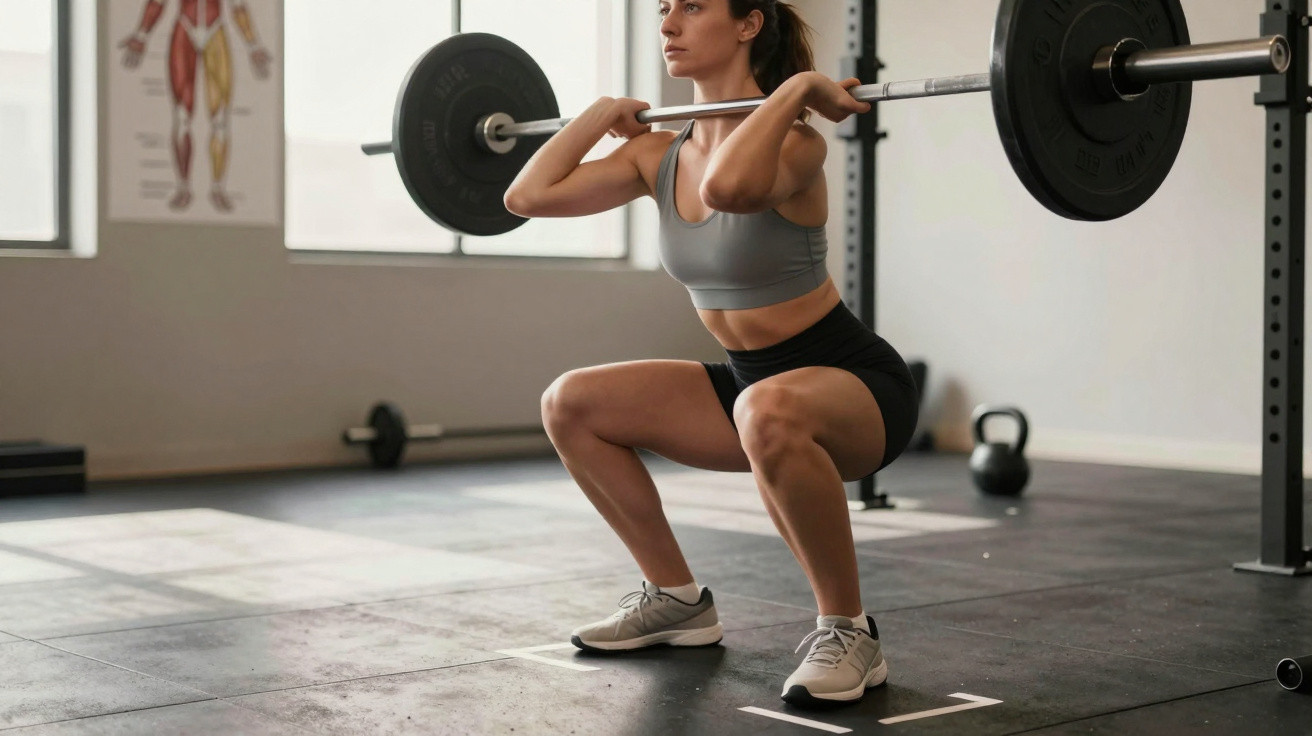
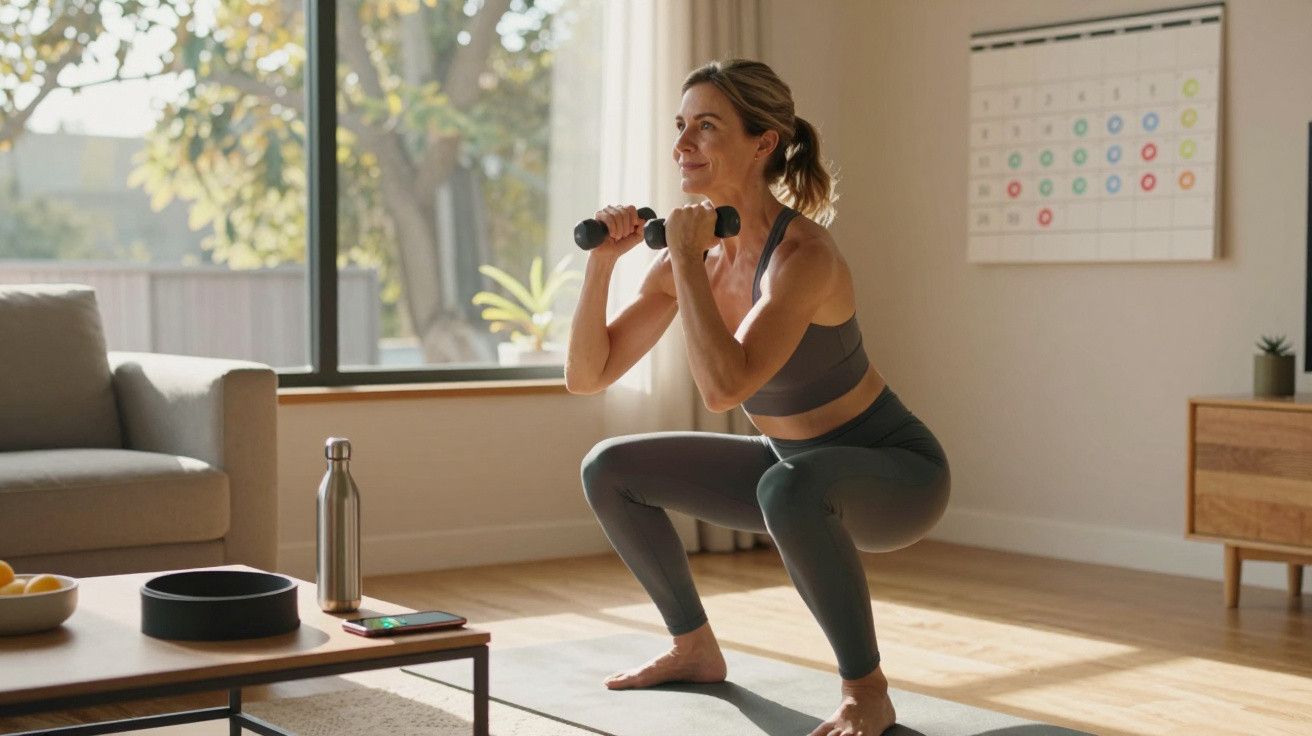
- Squats: Stand with your feet shoulder-width apart, send your bottom backwards as if sitting down on a chair, keep your back upright and leave your heels on the floor. This strengthens the thighs and glutes while improving stability.
- Reverse lunges: Step one leg well back, keep the front knee above the ankle, then change sides. They work the glutes and legs, train balance and are kind to the knees when performed with good technique.
- High knees on the spot: Alternately draw your knees towards your chest at a brisk pace, swinging your arms with the movement. Ideal for raising your heart rate without needing much space.
- Hip raises (bridge): Lie on your back with your feet hip-width apart, press your hips upwards, squeeze your glutes, hold briefly and lower down again. This activates the posterior chain and eases the lower-back feeling caused by “office sitting”.
- Side steps or jumping jacks: Anyone with joint problems should choose quick side steps with slightly bent knees, while more advanced exercisers can do classic jumping jacks. Both options get oxygen flowing through the body.
Block 2: build a stable core and upper body
After the lower body comes the control centre: the core and shoulder girdle. Here, clean technique determines whether the workout brings success or frustration.
- Forearm plank: Position your elbows beneath your shoulders, keep your body in one line from shoulders to heels, brace your stomach and avoid arching your lower back. It protects the back over time and strengthens the deep core muscles.
- Press-ups: Place your hands slightly wider than shoulder-width, lower your chest towards the floor and do not let the elbows flare fully outwards. To make them easier, begin against a wall or with your knees on the floor.
- Superman: Lie on your front with your arms stretched forwards or out to the sides, then raise your upper body and legs a few centimetres. This trains the spinal extensors, glutes and shoulders – a counter-exercise for slouched sitting.
- Chair-edge dips: Put your hands on the edge of a sturdy seat, keep your feet on the floor, bring your bottom in front of the chair, then bend and straighten your elbows. This primarily challenges the backs of the upper arms.
- Mountain climbers: Begin in a press-up position, then dynamically bring your knees towards your chest one at a time. They work the abdominals, shoulders and fitness levels simultaneously.
How to progress your training sensibly
The body adapts relatively quickly. When the ten exercises barely challenge you any more, that is a good sign – and exactly when you should make small adjustments to the right controls.
Simple but effective: pace, rests and variations
Three factors can be changed without any equipment:
| Factor | Example | Effect |
|---|---|---|
| Pace | Lower slowly into a squat, then rise explosively | More muscle tension, a stronger burn and a better stimulus |
| Rests | Reduce recovery from 30 to just 15 seconds | The cardiovascular system works harder and fitness improves |
| Variation | Turn lunges into jumping lunges | More power, coordination and leg muscle work |
The plank can also be made harder: lift one foot or one arm alternately without allowing your lower back to arch. Your obliques will notice straight away. For press-ups, move your hands closer together to involve the triceps more intensely.
Progress rarely comes from fancy new exercises, but from small, smart adjustments to the basics.
How to fit the 10-exercise circuit into everyday life
Many people give up because they think every session has to last an hour. With a busy schedule, 15 to 25 minutes is more realistic. That is exactly what makes this programme suitable.
One possible structure:
- Three sessions each week using all ten exercises as a complete circuit.
- On two additional days, complete only Block 1 or Block 2 as a ten-minute “mini workout”.
- Keep one day deliberately free from exercise – a walk is enough.
This creates several short training stimuli without constantly overloading the body. Anyone starting from scratch should begin with one round and gradually work towards two or three rounds.
Common mistakes and how to avoid them
Three stumbling blocks appear especially often when training at home:
- Starting too hard: Anyone trying to power through three rounds immediately after months without exercise risks frustration and muscle soreness. It is better to stay deliberately below your limit at first and build up.
- Ignoring technique: Knees collapsing in during squats or an arched lower back in the plank can lead to pain. Go more slowly, but perform the movements properly.
- All or nothing: Missing one session is not a disaster. A single rest day should simply not turn into a whole week.
What to consider for breathing, recovery and combining activities
Many people instinctively hold their breath when an exercise becomes difficult. A better approach is to breathe out during the demanding part of the movement – for example, when pushing up in a press-up – and breathe in as you lower yourself. This improves stability and prevents pressure in the head.
Recovery phases are part of the plan. Sleep, gentle walks and enough fluids help the muscles adapt. Anyone who wants to can combine the programme with easy runs, cycling or swimming on two days, as long as the joints feel good and the heart rate returns to normal.
What ultimately matters is not a perfect set-up with dumbbells, a mirrored wall and neon lighting, but the ability to follow your own programme consistently. Anyone who gives their living room ten clear exercises and repeats them regularly will soon notice that a strong, mobile body often requires less – just the decision to truly begin.









Comments
No comments yet. Be the first to comment!
Leave a Comment