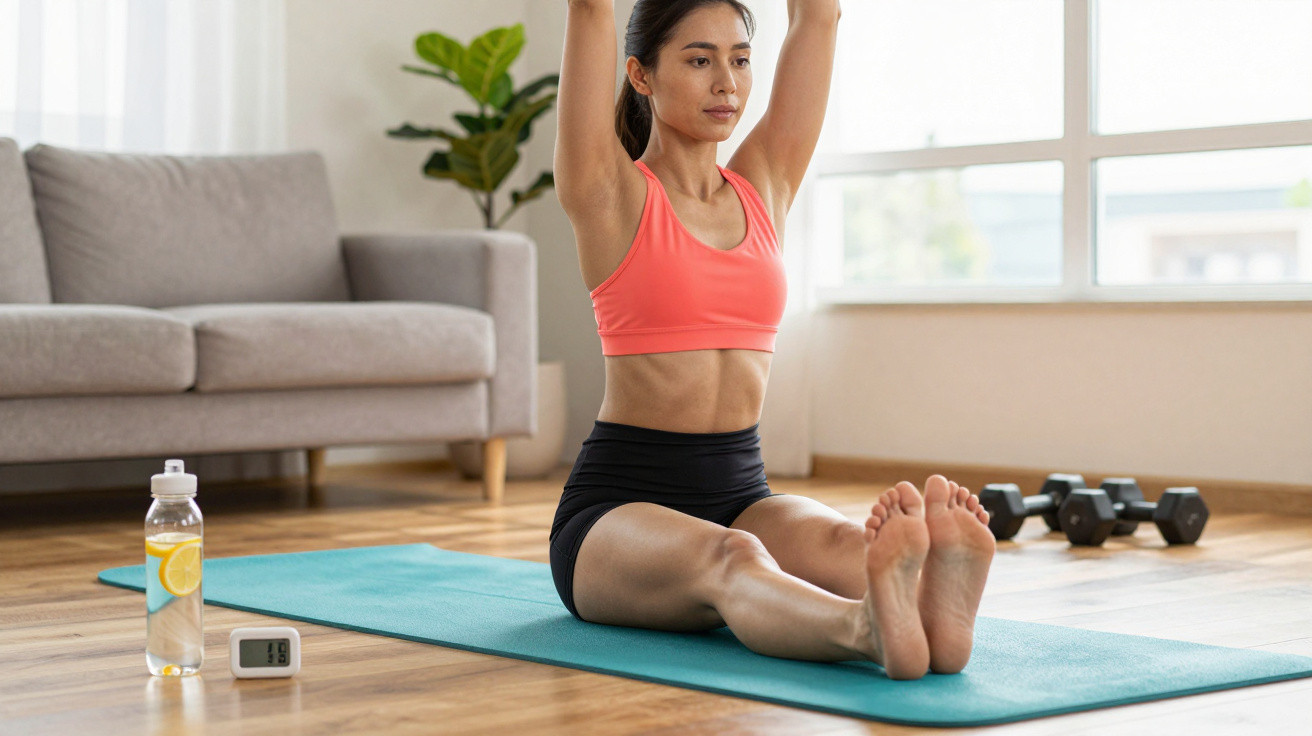
Many people struggle through crunches – then wonder why hardly anything changes around their stomach.
A different bodyweight workout can achieve far more.
Anyone aiming to lose stomach fat almost automatically turns to sit-ups and crunches. The issue is that the results are often disappointingly small, despite putting in consistent effort. Trainers now increasingly favour another movement that recruits more muscles at once and challenges the entire core: the V-up. When performed properly, it can be a game changer for a firmer stomach – provided nutrition, sleep and everyday habits are reasonably on track too.
Why stomach fat can be so stubborn
Stomach fat is not merely an aesthetic concern; it also matters for health. In particular, the deeper fat stores around the organs are considered especially risky in relation to cardiovascular disease and metabolic problems.
Several influences are involved:
- Hormones: The stress hormone cortisol, the thyroid and sex hormones affect where the body stores fat.
- Lifestyle: Prolonged sitting, too little sleep, high sugar intake and alcohol can encourage fat storage around the stomach.
- Mental wellbeing: Ongoing stress and emotional eating can quickly throw calorie balance off course.
A flatter stomach is not created in the gym alone, but through the interaction of exercise, nutrition, recovery and stress management.
It is not possible to ‘train away’ fat locally from one specific part of the body. What does work very well is raising overall energy expenditure while specifically strengthening the muscles around the midsection. This is exactly where V-ups come in.
V-ups instead of crunches: how the exercise works
V-ups are among the classic bodyweight exercises used in athletic training. Unlike crunches, they work the entire core, including the deeper muscle layers.
The main target muscles are:
- the rectus abdominis (the well-known ‘six-pack’ muscles)
- the obliques at the sides of the torso
- the hip flexors
- the transverse abdominal muscle (the deep ‘corset muscle’ that provides stability)
Step-by-step guide to proper V-ups
Here is how to perform the exercise with sound technique – without equipment, using only an exercise mat or carpet:
- Lie flat on your back, with your arms extended overhead and your legs straight.
- Lightly brace your abdominal and glute muscles, keeping your lower back close to the floor.
- Exhale and lift your upper body and legs at the same time, until your body and legs form a ‘V’.
- Aim your hands towards your toes; your shoulders should clearly lift away from the floor.
- Briefly hold the end position without over-arching through the lumbar spine.
- Lower your arms and legs again slowly and with control. They should hover just above the floor, rather than resting fully on it.
The tempo is crucial: slow, controlled V-ups challenge the core far more than fast, sloppy repetitions.
How often and for how long should you train?
For beginners, a moderate starting volume is enough. A realistic recommendation is:
- Starting point: 2 sets of 10–12 repetitions, with 45–60 seconds’ rest between them.
- Progression: 3 sets of 15 repetitions or 3 sets of 30–45 seconds, completing as many clean repetitions as possible.
- Frequency: 2–3 sessions each week, with at least one rest day in between.
Once your technique is reliable, increase the difficulty, for example by slowing the movement down, adding brief holds at the top in the V position, or combining it with other core exercises in a circuit.
Common V-up mistakes – and how to avoid them
As the exercise is demanding, poor form can easily creep in. Avoid the following points:
- Using momentum from the back: If you ‘launch’ yourself upwards with momentum, the hip flexors and back take over the work. Instead, curl up calmly while exhaling.
- An arched lower back: Allowing the lower back to arch increases strain on the lumbar spine. Keep your abs braced and gently draw your navel towards your spine.
- Lowering too far: Fully resting your arms and legs causes you to lose tension. It is better to stop just above the floor.
- Doing too much too soon: Starting immediately with high repetition counts can quickly reinforce poor movement patterns. Quality before quantity.
If you have acute back problems, disc complaints or have recently had surgery in the abdominal area, seek approval from a doctor before starting V-ups.
Three more bodyweight exercises for stomach fat
Relying on V-ups alone would waste potential. Combining stability, strength and light cardio produces much more. These three exercises are ideal additions to V-ups:
1. Plank for deep stability
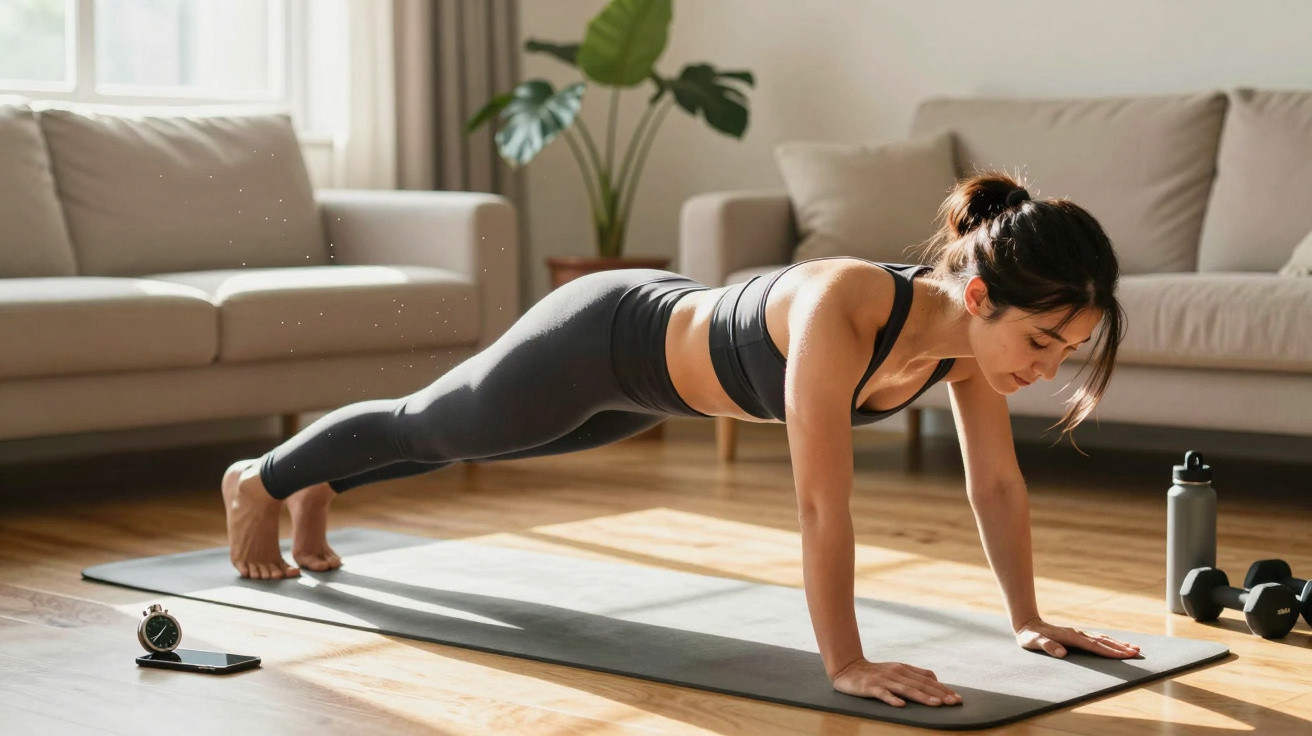
The classic forearm plank trains the transverse abdominal muscle, back and shoulders. Do it as follows:
- Support yourself on your forearms and toes, with your elbows directly beneath your shoulders.
- Keep your body in a straight line from head to heels.
- Brace your abs, without pushing your glutes upwards or allowing your body to sag.
- Hold for 20–40 seconds, completing 3–4 rounds.
More advanced options include the dynamic plank, alternating between forearms and hands, or the side plank to involve the lateral core muscles more strongly.
2. Mountain climbers for core and heart rate
Mountain climbers combine core work with a small cardio boost.
- Begin in a high press-up position, with your hands beneath your shoulders.
- Brace your core and alternately draw one knee towards your chest.
- Move your legs at a brisk but controlled pace, without letting your lower back arch.
- Continue for 30–45 seconds, for 3–4 rounds.
This raises calorie expenditure and adds pace to the workout, which supports fat loss over time.
3. Reverse crunches for the lower stomach
During standard crunches, many people mainly feel their neck. The reverse variation is kinder to the neck and places greater emphasis on the lower stomach:
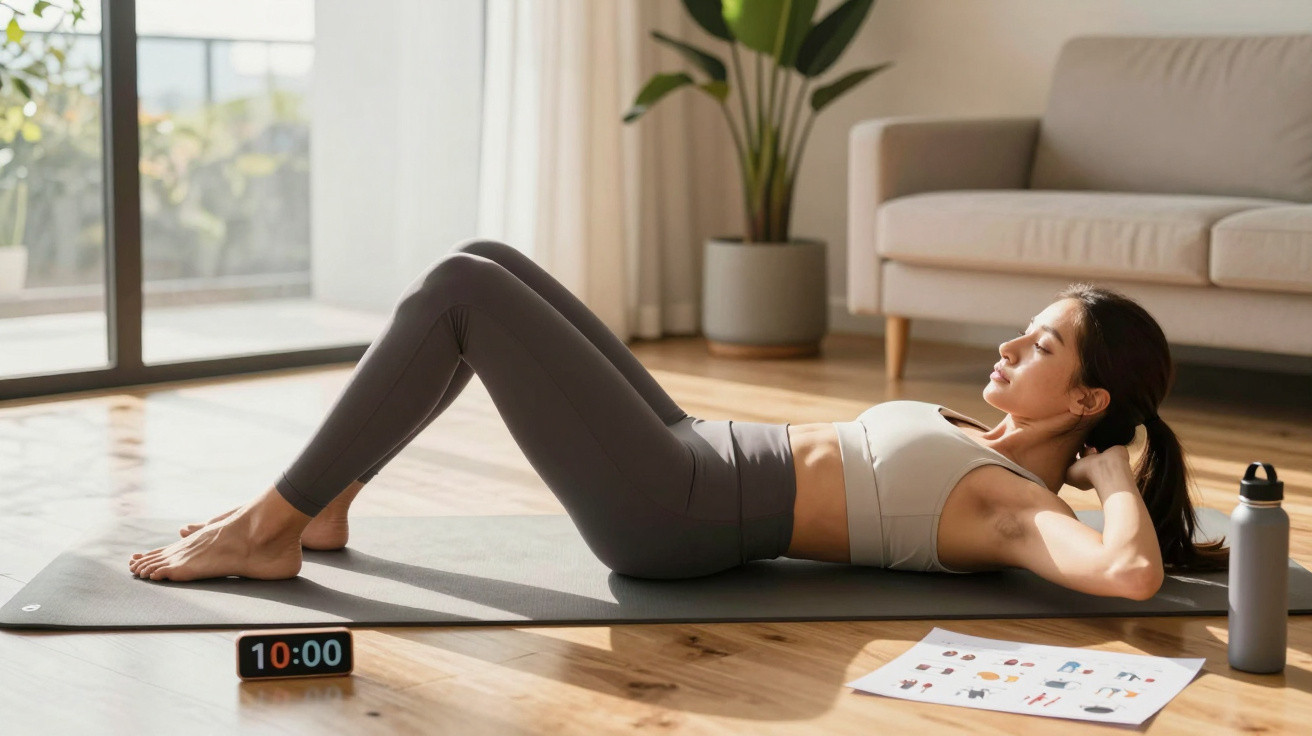
- Lie on your back with your knees bent and feet lifted off the floor.
- Place your hands by your sides or underneath your pelvis.
- Draw your knees towards your chest and gently tilt your pelvis away from the floor.
- Lower slowly without momentum: 12–15 repetitions for 2–3 sets.
A short circuit of V-ups, planks, mountain climbers and reverse crunches trains the entire core – in less than 15 minutes.
How an abdominal workout really burns fat
All of these exercises shape and strengthen the muscles. The actual reduction in stomach fat occurs when your calorie balance is slightly negative over the course of the day and the body increasingly draws on its fat reserves.
Practical adjustments for everyday life include:
- Increase protein: Sufficient protein from yoghurt, cottage cheese, pulses, eggs or fish is filling and helps protect muscle.
- Fluids: 1.5–2 litres of water or unsweetened tea support metabolism without adding extra calories.
- Reduce sugar: Limit soft drinks, sweets and highly processed snacks as much as possible.
- Move more day to day: Take the stairs instead of the lift, walk short distances and take brief walks after meals.
- Lower stress: Short breaks, mindful breathing or an evening walk can curb the appetite for ‘stress snacks’.
How to fit V-ups smartly into your weekly plan
Anyone who already does strength or endurance training should make V-ups and the core circuit a fixed part of their routine. For example:
| Day | Training |
|---|---|
| Monday | Full-body strength training + 10-minute core circuit with V-ups |
| Wednesday | Easy jogging, cycling or brisk walking, 30–40 minutes |
| Friday | Interval training (e.g. sprints) + 10-minute core circuit |
Consistency matters more than the perfect programme. Those who work on their midsection with focus for a few minutes two to three times a week, while making small adjustments to their eating habits, may notice tangible changes within a few weeks: better posture, greater body tension and a less ‘bloated’ stomach.
It can help to do your core exercises at roughly the same time each day – directly after getting up, for instance, or in the evening after work. This establishes a routine that does not have to be fought for afresh every week.
If you are unsure whether your form is correct, initially seek feedback using a mirror, a smartphone video or a brief online consultation. Small corrections to posture and breathing often have more impact than an additional set of V-ups.








Comments
No comments yet. Be the first to comment!
Leave a Comment