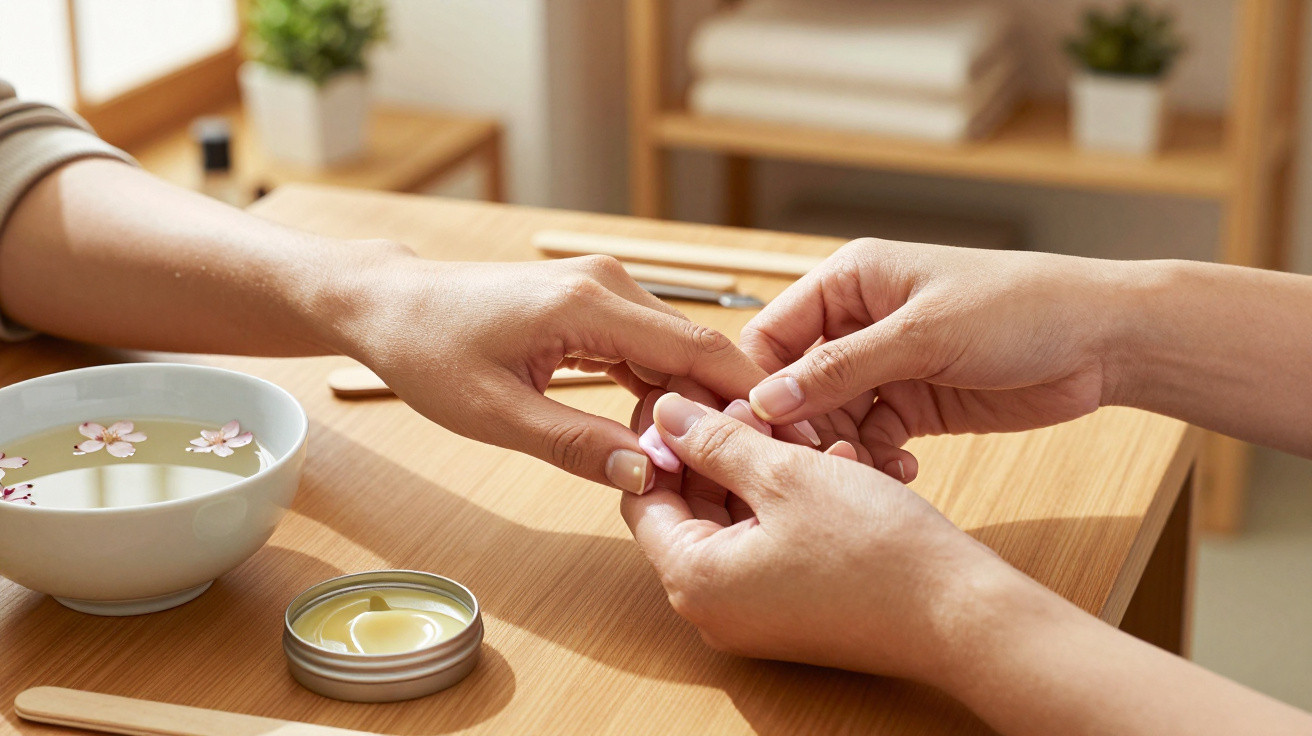
As colourful gel nails and elaborate nail art gradually lose their appeal, a quieter, well-groomed alternative is taking centre stage: the Japanese manicure. It promises strong, glossy nails without an artificial coating, harsh products or continual salon appointments. Rather than creating an effect, it focuses on restoration.
What the Japanese manicure really involves
The Japanese manicure is less about styling and more of a treatment. This technique comes from traditional Japanese nail-care rituals, where nails are polished rather than painted. Its aim is to make the natural nail plate so healthy and smooth that it looks elegant without any colour.
The treatment is based largely on natural ingredients, commonly including:
- Beeswax, which forms a protective film
- Keratin-containing ingredients intended to reinforce the nail structure
- Minerals such as silicon compounds, which smooth the surface
- Vitamins that help care for brittle nails
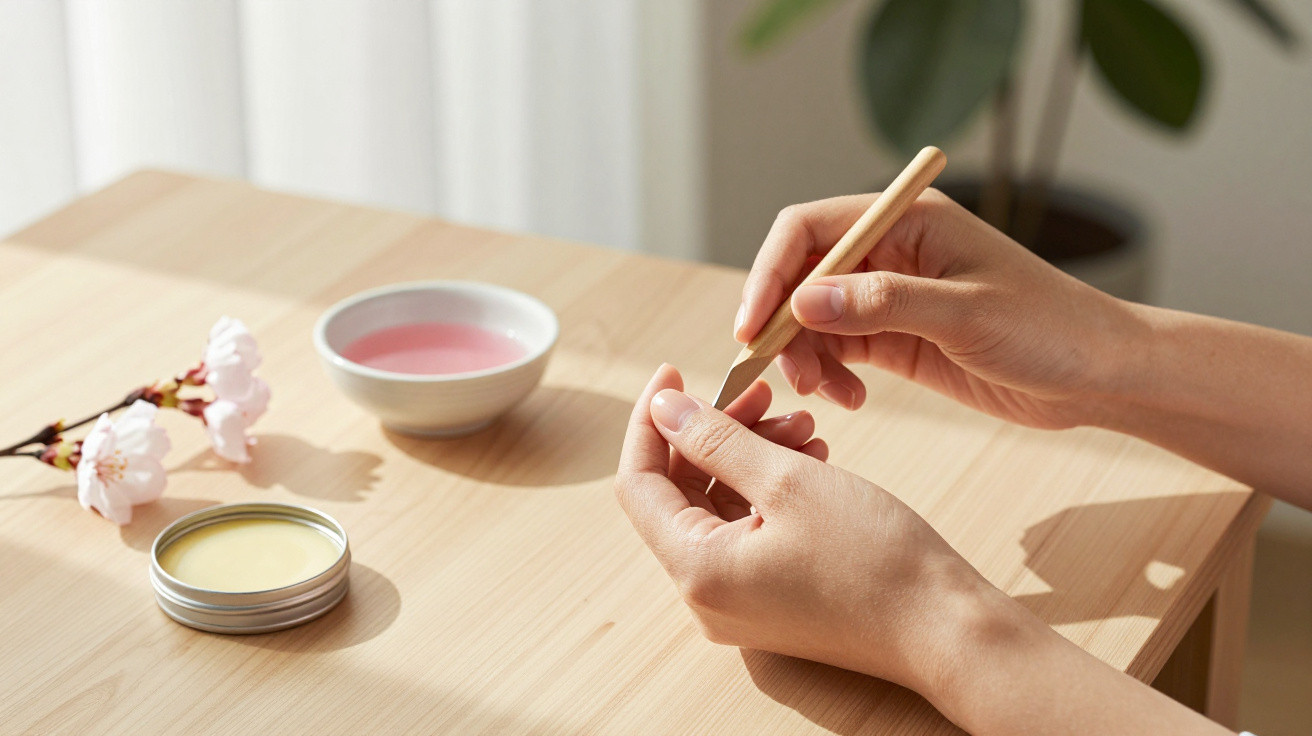
At its heart is a two-stage ritual. First, a paste-like treatment is massaged into the cleaned nail plate. This paste contains the nourishing ingredients. A fine powder or layer of wax is then buffed in to act as a seal. The friction created during polishing produces the characteristic pearly shine.
“The Japanese manicure is not a nail coating, but an intensive care process that works directly within the natural nail.”
As a result, the finish does not look ‘applied’. Nails appear pink, subtly pearlescent and exceptionally neat - more ‘naturally perfect’ than ‘straight from the nail salon’.
Why the trend is proving so popular now
Many people who have relied on gel, acrylic or other artificial nail systems for years are experiencing the downside: thin, brittle nails, discolouration and constant infill appointments. At the same time, there is a growing preference for simplicity, fewer chemicals and beauty treatments that care for nails rather than merely decorate them.
The Japanese manicure fits this mood precisely. It:
- significantly reduces product use
- avoids harsh removal methods or filing processes
- works without a UV or LED lamp
- uses ingredients with a more ‘natural’ character
For many, it offers a genuine route out of the endless cycle of new sets, infills and removal. Those wishing to return to their own nails after years of artificial extensions often use the Japanese manicure as a rehabilitation programme for the nail plate.
How a Japanese manicure is carried out step by step
Details vary from one salon to another, but the process generally follows a similar pattern.
Preparing the nails
First, the nail technician removes any old product residue, then washes and sanitises the hands. The cuticles are gently pushed back or trimmed minimally, without cutting or causing injury. The nails are then shaped into a natural outline - short, softly rounded shapes are often popular, as they can promote stability.
Massaging in the nourishing blend
A nutrient-rich paste is then applied to the dry, lightly buffed nail plate. It is gently worked in using a specialist polishing tool - usually deer leather or a very fine buffing block. This movement stimulates circulation and helps work the caring ingredients into the layers of the nail.
Sealing with powder and polish
The second stage uses a fine powder or wax, which is also rubbed in and polished. This creates the familiar mirror-like shine. Unlike polish or gel, there is nothing that can chip because no true coating is formed.
“The shine grows out with the nail rather than peeling away - and that is what makes this method so practical for everyday life.”
Depending on lifestyle, the effect remains visible for two to three weeks. Anyone who washes up frequently or works with cleaning products should wear gloves to help the shine last longer.
Japanese manicure compared with gel, BIAB and traditional nail polish
| Method | Durability | Impact on the nail | Look |
|---|---|---|---|
| Japanese manicure | 2–3 weeks of shine, grows out with the nail | low, as no harsh removal is needed | natural, pink-pearl |
| Gel / BIAB | 3–4 weeks, requires infills | medium to high due to filing and removal | flawless, sometimes very artificial |
| Traditional nail polish | 3–7 days, depending on wear | low, but solvents should be considered | varied colours, glossy or matte |
Anyone who loves bold colours, long nails or nail art will not be satisfied with the Japanese option alone. It is better suited to those who want tidy, understated hands and place greater value on nail health than statement designs.
Who is the Japanese manicure particularly suitable for?
This method is particularly recommended for people with:
- thin, brittle or splitting nails
- damaged nails after years of gel or acrylic
- sensitive nail beds or a tendency towards irritation
- jobs where noticeable artificial nails are impractical
- a minimalist, ‘clean’ style
Pregnant or breastfeeding people also often choose this form of manicure because the products used are generally formulated much more mildly than conventional systems. What remains important, of course, is exactly which products the salon uses and how hygienically the treatment is carried out.
At-home care tips to keep the effect looking good for longer
Anyone having a Japanese manicure done at a salon can support the result at home:
- Massage nail oil regularly into the nail plate and cuticles
- Wear gloves while cleaning and washing up
- Avoid over-buffing with metal files or coarse buffers
- Avoid acetone-based removers if polish is applied over it
Some brands sell Japanese manicure kits containing paste, powder and a specialist polisher. Those with experience and a feel for gentle pressure can achieve the look themselves. However, inexperienced users risk thinning their nails too much by polishing too firmly. If in doubt, an initial visit to a professional salon is worthwhile to see the technique performed correctly.
Risks to know about despite the natural focus
Although this method appears gentle, it is not entirely risk-free. Anyone who already has very thin nails should not repeat the polishing stages too frequently, otherwise the nail plate may lose further substance. People with fungal infections, open areas or severely inflamed cuticles should avoid any type of polish until the skin has healed.
‘Natural’ does not automatically mean well tolerated either: beeswax or certain plant ingredients can trigger allergic reactions. Reputable salons will name every component used when asked - anyone prone to allergies should make this clear at their appointment.
How the trend can fit into everyday life
Interestingly, the Japanese manicure works across different style preferences. Minimalists can let the pearly shine speak for itself. Others pair it with ultra-fine details, such as a barely-there French line or one tiny area of glitter on each hand. This keeps the nail plate protected while allowing the look to remain individual.
Those who enjoy experimenting with fashion can deliberately use their nails as a calm counterpoint to striking outfits. Against strong colours, prints or statement jewellery, understated nails with a healthy shine look surprisingly modern - almost like a ‘no-make-up look’ for the hands.
There is another aspect, too: many people report picking at or biting their nails less with this form of manicure. The even shine and groomed feel encourage them to treat their hands better. In this way, the ritual becomes not only a beauty trend, but also a small prompt for greater mindfulness in everyday life.







Comments
No comments yet. Be the first to comment!
Leave a Comment